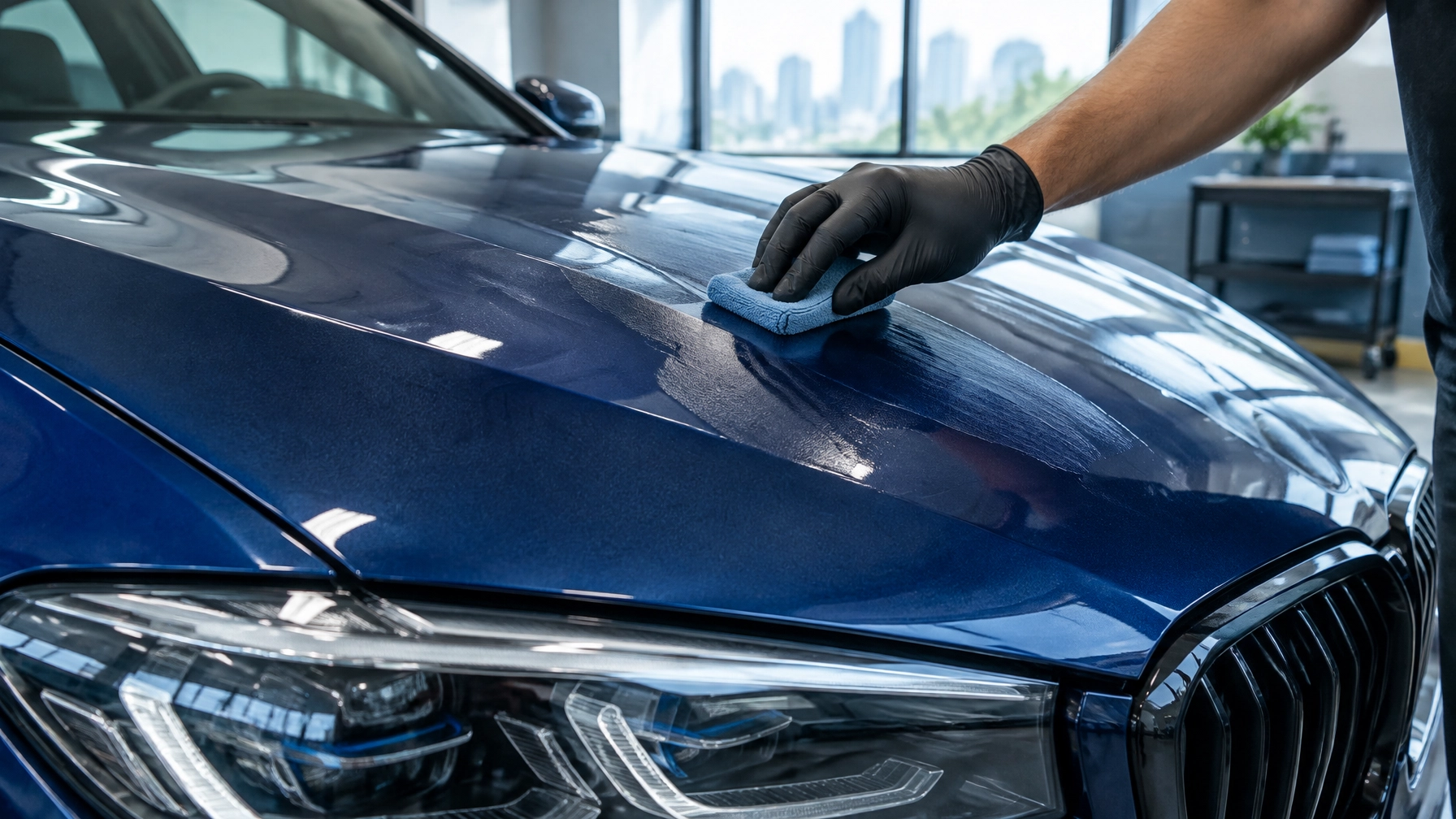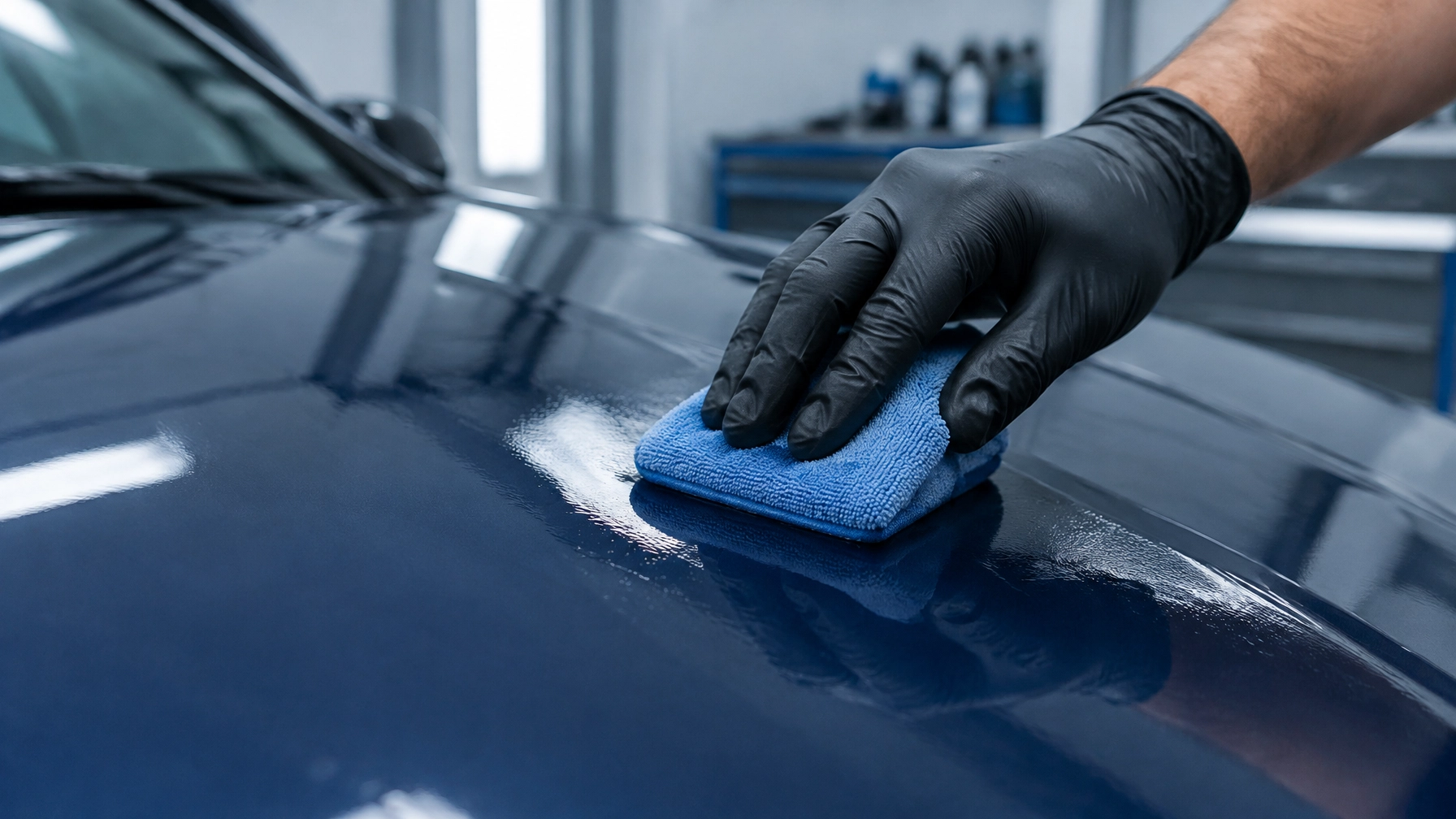
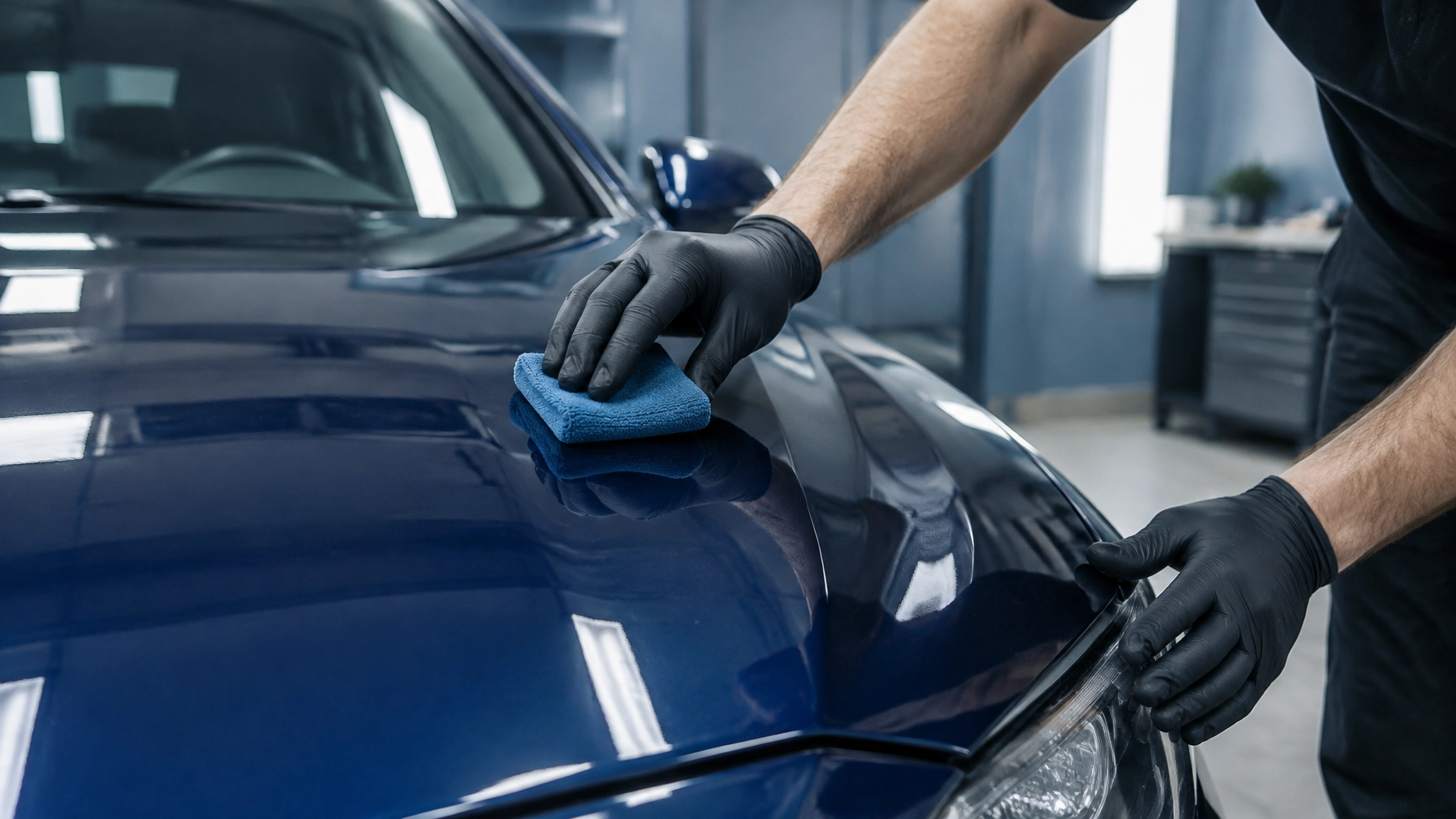
For Houston drivers, winter is a smart time to plan paint protection: a controlled shop bay helps create consistent application conditions, while an early appointment leaves time for the coating to cure before spring pollen arrives.
Ceramic coating enhances gloss, adds hydrophobic properties, and makes routine paint care easier. But the result depends on more than the product. Surface preparation, temperature, humidity, and a clean place for the coating to cure all matter.
How does a controlled shop bay make winter a smart time for ceramic coating in Houston?
A controlled shop bay makes application more predictable by keeping the vehicle away from outdoor temperature swings, direct sun, wind, and airborne dust. That matters because ceramic coatings need to be applied and leveled within a product-specific working window.
Temperature and humidity affect how quickly a coating flashes. The point when it begins to set and needs to be leveled. For example, NXTZEN’s professional application instructions recommend 70–75°F and 45–50% relative humidity for that product. The exact requirements vary by coating, so the installer should follow the selected product’s instructions rather than assume one set of conditions applies to every formula.
Houston’s winter weather can change from mild to cold. In-shop application helps separate the work from those outdoor swings. The vehicle’s paint and the shop environment can be assessed before application, supporting steady, panel-by-panel work.

What can happen when summer heat and humidity are uncontrolled?
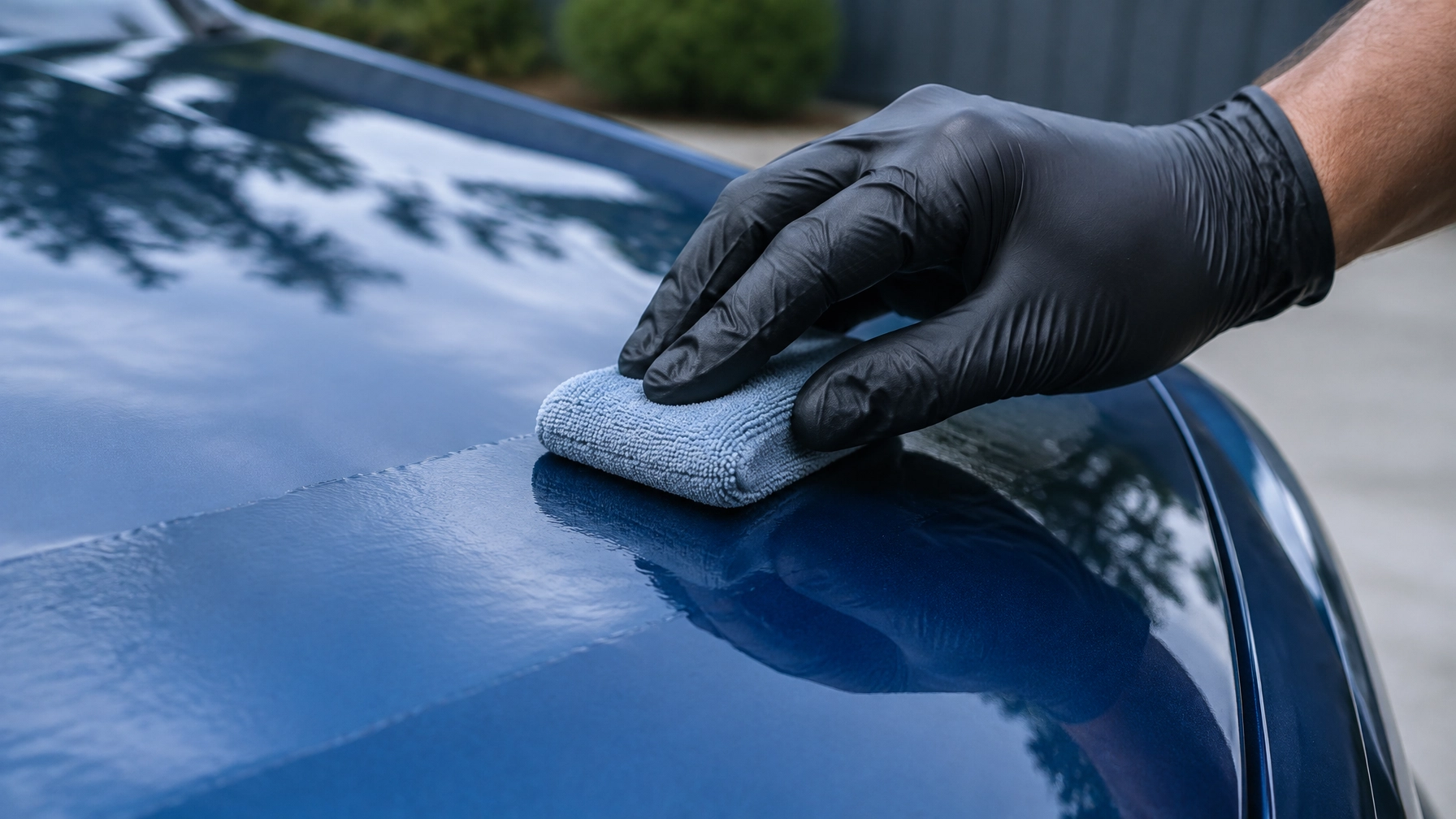
High heat can shorten a coating’s working time, while humidity can also affect how quickly it flashes. In an uncontrolled bay, a warm panel may cause the product to set before the installer has enough time to level it evenly.
That is when visible streaks or high spots can become a concern. These are areas where coating residue has not been leveled consistently. The issue is not that summer makes ceramic coating unsuitable; it is that changing or unsuitable conditions can make careful timing more demanding.
A controlled indoor environment helps the installer work in manageable sections, inspect the finish under proper lighting, and adjust to the coating’s behavior. Careful timing protects the appearance of the finish. It also helps avoid rushed work.
How does winter booking leave time before spring pollen?
Booking in winter gives you a chance to plan ahead instead of trying to arrange paint protection when spring pollen is already settling on vehicles. Houston’s pollen season brings frequent surface contamination. Pollen left on paint can become harder to remove after exposure to sun, and washing it away carelessly can add unnecessary contact with the finish.
A coating needs time after application to cure, and its exact care instructions depend on the product. As one example, NXTZEN recommends an environment cure of 15–24 hours and advises waiting seven days before washing. Follow the instructions for the coating applied to your vehicle.
Planning ahead gives the coating its required initial cure time before the busier spring season. It also leaves room to arrange the appointment and any paint preparation in advance. No need to wait for pollen to become the reason you start searching for “ceramic coating near me.”
Which protection should come first: liquid paint protection film or ceramic coating?
Liquid Paint Protection Film (LPPF) is the primary choice when your main concern is rock impacts and road debris. Ceramic coating is a complementary option for gloss, hydrophobic behavior, and easier routine maintenance.
LPPF is applied by hand and cures into a protective layer over the paint. If a rock impact leaves a blemish in the LPPF, the affected area can be re-leveled to restore a smoother finish. Learn more about Liquid Paint Protection Film in Houston.
Ceramic coating can pair seamlessly with LPPF as part of a broader exterior protection plan. It bonds to a properly prepared surface and creates water-repelling behavior that helps water and some contaminants release more readily. It is not a substitute for impact-focused protection, but it can complement LPPF based on your vehicle and priorities.

How does surface preparation help ceramic coating bond?
Decontamination and paint preparation create a cleaner, more consistent surface for coating application. Road film, embedded particles, and residue can interfere with the finish if they remain beneath the coating.
Preparation begins with an assessment, followed by thorough washing and decontamination. A clay treatment may be used where bonded contaminants remain. If the paint has swirls or light scratches, polishing can improve clarity before the coating is applied. A coating protects the prepared finish; it does not remove defects already present.
That is why paint condition should be reviewed before booking. Paint correction can address suitable defects and help reveal a sharper, mirror-like finish before protection is added. The right amount of correction depends on the vehicle’s paint and the result you want.

Can drivers outside Houston book in-shop paint protection?
Yes. Ceramic Enthusiasts serves vehicle owners in Houston and surrounding communities, including Pearland, League City, Pasadena, Deer Park, South Houston, Galveston, Clear Lake, Webster, Friendswood, and Alvin.
All work is performed in-shop by advance appointment. The business is owner-operated, with over 10 years of experience and a one-car-at-a-time approach. That means the work receives focused, meticulous attention rather than being rushed through a high-volume process.
Whether you commute through Houston traffic or drive regularly along regional roads, the right protection starts with an assessment of your paint, driving habits, and priorities. Ask about automotive ceramic coating and how it may complement LPPF.
Do ceramic coatings need maintenance after application?
Yes. A coating can make routine washing easier, but it does not eliminate the need to remove contaminants. Brake dust, road film, and pollen can build up on the surface and affect how water behaves.
Use the maintenance guidance provided for your specific coating. Regular, careful washing helps keep the surface clean, while periodic decontamination can address contamination that a basic wash does not remove. Learn about the decontamination maintenance wash for ongoing exterior coating care.
Winter is a practical time to plan the full process: assess the paint, correct defects where appropriate, apply protection in controlled shop conditions, and allow the coating its required cure time before spring pollen.
To discuss whether ceramic coating, LPPF, or a combination is the right fit for your vehicle, call 281-626-9384. Appointments are booked ahead, on weekends, and performed in-shop: one car at a time.