Houston holiday travel brings long freeway miles, busy construction corridors, and road debris. Thanksgiving week and the Christmas run are the two heaviest stretches of the year on I-45, I-10, and the Grand Parkway, and both put the front of your vehicle directly in the line of fire. Book hand-applied Liquid Paint Protection Film (LPPF) ahead of the trip, then allow time for careful preparation and curing.

What does LPPF do for Houston drivers before a road trip?
Liquid Paint Protection Film creates a protective layer over properly prepared paint. It is applied by hand and cures into a smooth finish designed to help guard against everyday wear, including light-to-moderate road debris, bug residue, and environmental contaminants. It also delivers gloss and helps make routine cleaning easier.
That makes LPPF a strong first protection option for drivers who want more than a ceramic coating alone. It is not a promise that paint will be chip-proof: impact protection depends on the product, the installation, the panel, and the force of the debris. The advantage is an additional protective layer that can be inspected and, for certain blemishes, re-leveled rather than leaving the damaged area untreated.
Booking ahead of Thanksgiving leaves breathing room. Paint assessment, decontamination, and polishing take time; so does allowing a freshly applied product to cure as directed. A single appointment squeezed in the day before departure does not leave room for any of it. Two weeks of buffer is the sensible order, and that window is open right now.
How do Houston roads and holiday travel put paint at risk?
Freeway driving increases exposure to debris kicked up by trucks and traffic. Around Houston, heavy commuter routes and construction zones can mean loose aggregate, dust, and road grime landing on the hood, bumper, mirrors, and front fenders. Stop-and-go traffic adds close-following exposure, while bugs and rain leave residue that can become harder to remove if neglected.
The holiday run compounds all of it. A Thanksgiving drive north to Dallas on I-45, a Christmas trip west toward San Antonio, or a weekend down to Galveston stacks hundreds of extra freeway miles onto the front of the car in a matter of days. Add a gravel shoulder at a tree farm, a tight parking garage downtown, and a loaded roof rack, and the bumper and hood take marks that a normal commute never produces. A protective layer applied before departure is working for the entire trip, not just the morning commute.
The weather matters too. Houston’s sun and humidity do not take a holiday when temperatures ease in late November. UV exposure, warm afternoons, and sudden thunderstorms continue to challenge exterior surfaces. Without a protective layer, contaminants can cling to paint, and repeated washing can add fine marks over time.
Before departure, check current route conditions through Houston TranStar. Routes and closures change; planning ahead helps you anticipate delays and avoid rushed, last-minute vehicle preparation.
Which option makes sense: LPPF, PPF, or ceramic coating?
For drivers prioritizing added paint protection and a seamless appearance, LPPF is the first option to discuss. Compared with ceramic coating, it forms a thicker protective layer intended to provide more resistance to everyday wear and light-to-moderate debris. Its hand-applied finish avoids the seams associated with physical film.
Traditional PPF is a separate, physical film product. It is designed for impact protection, and material thickness and installation differ from liquid-applied protection. No protection system guarantees that a fast-moving stone cannot chip paint. If your trip involves frequent gravel roads or unusually high debris exposure, ask a professional to assess which protection best fits your vehicle and driving habits.
Ceramic coating remains a valuable complement. Its thin, bonded layer is known for gloss, hydrophobic behavior, and resistance to common chemical contaminants; water beads and rolls away, and washing becomes more straightforward. It is not designed to absorb rock impacts on its own. For a straightforward overview of liquid protection and product claims, see the manufacturer’s Opti-Shield product information, and review independent discussion of liquid-film impact protection from Dr. Beasley’s.
In short: LPPF is the primary conversation when you want a thicker, seamless layer; ceramic coating can add complementary gloss, water behavior, and easier maintenance. The right combination depends on product compatibility and the condition of your paint.

How does Ceramic Enthusiasts prepare and apply LPPF?
Good protection starts before the product reaches the paint. The vehicle is assessed, then washed and decontaminated to remove bonded residue that can interfere with a clean, even finish. If the paint has swirls, scratches, or oxidation, polishing can improve clarity and prepare the surface for protection.
That is why paint correction and protection work together. Applying a protective layer over visible defects will not erase them. A tailored paint correction service can restore clarity before LPPF or ceramic coating is applied.
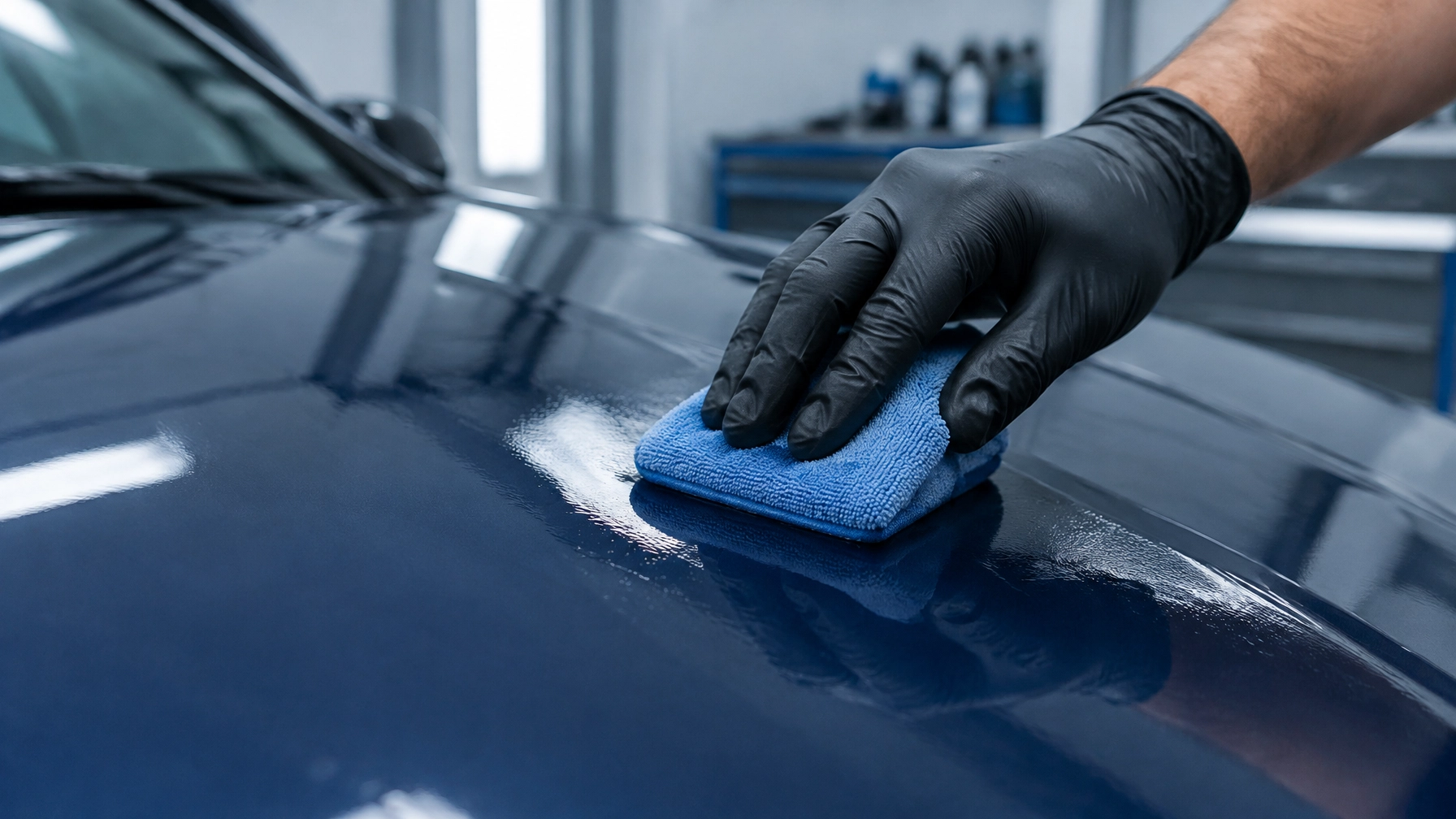
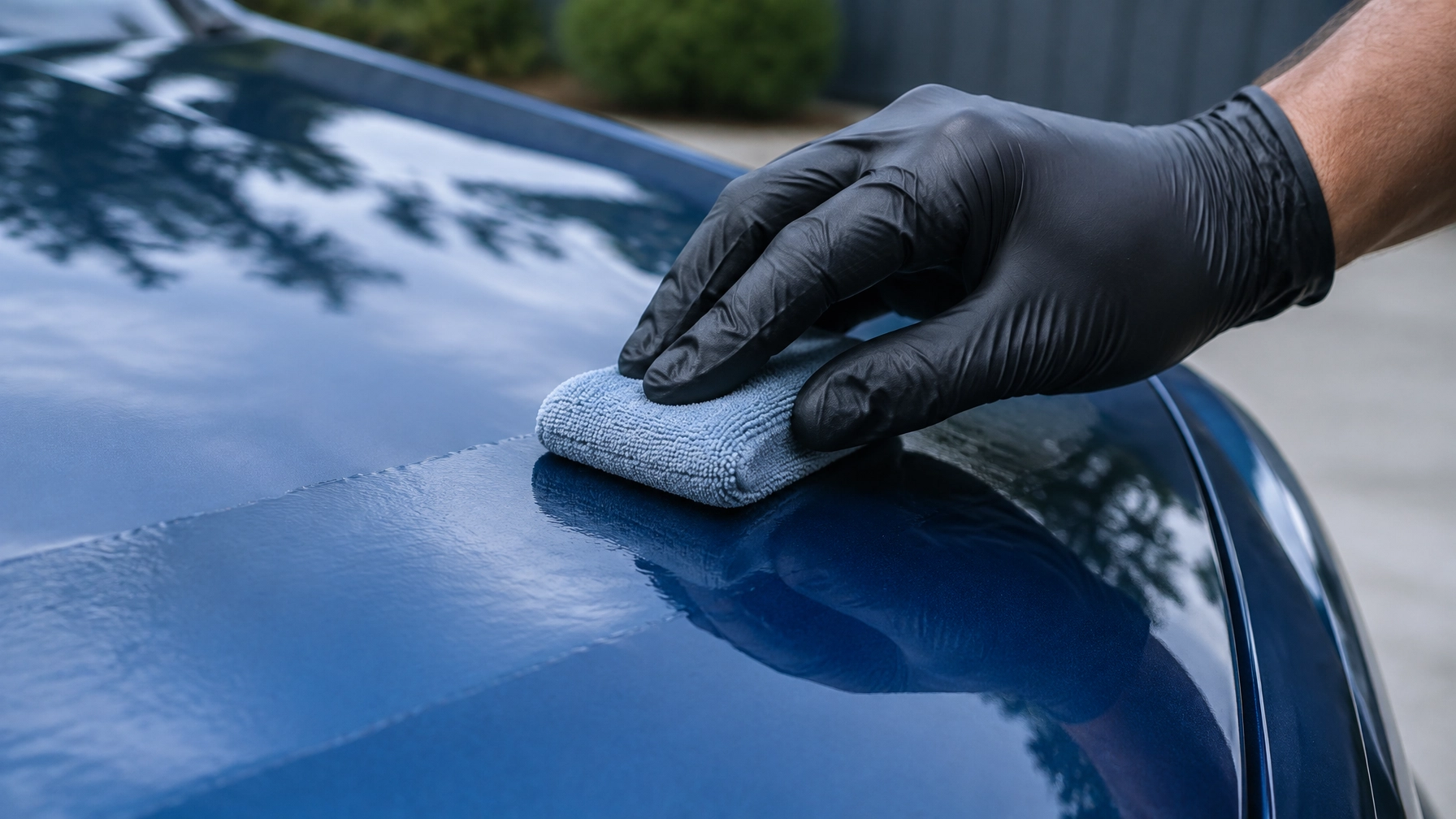
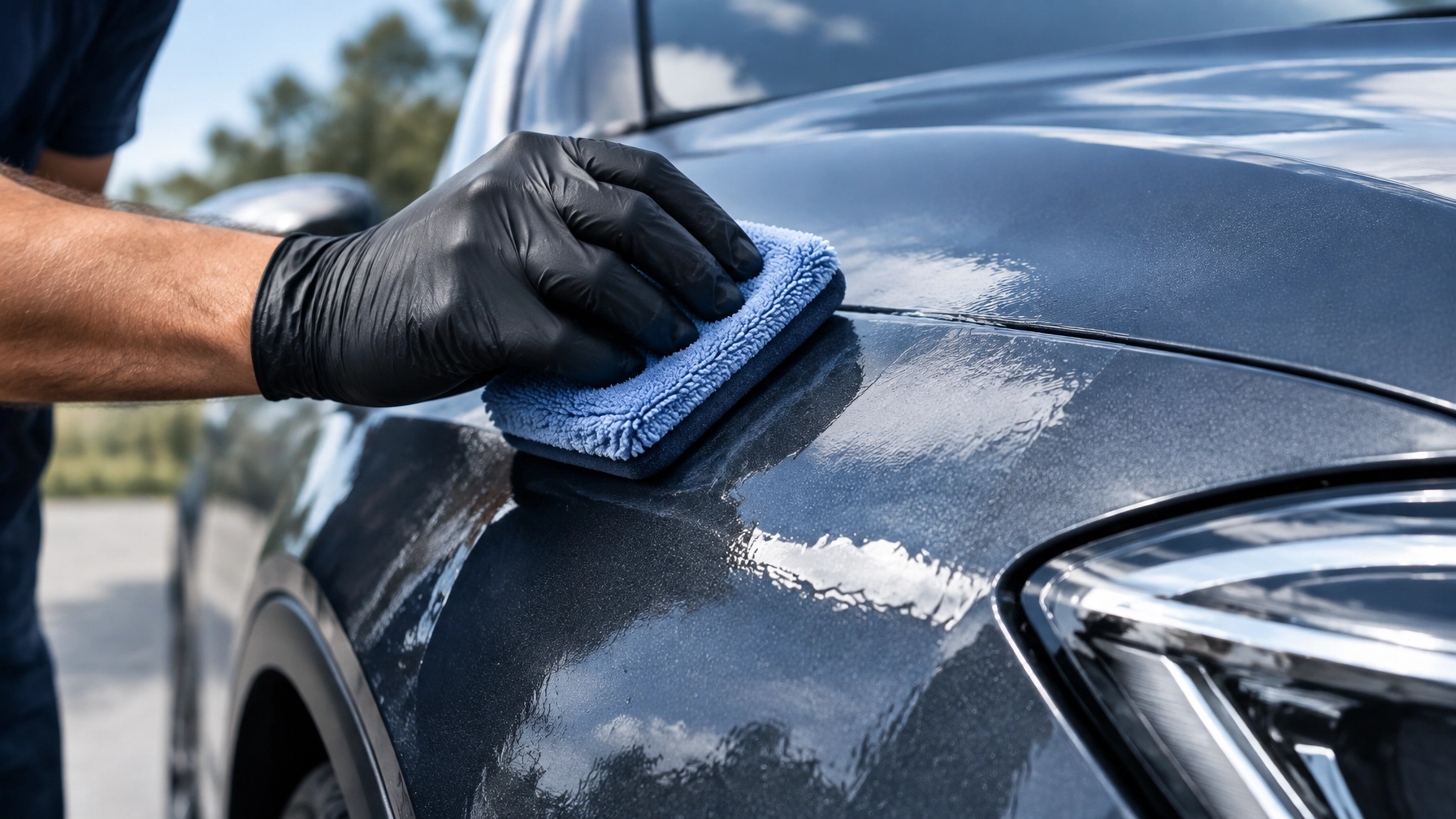
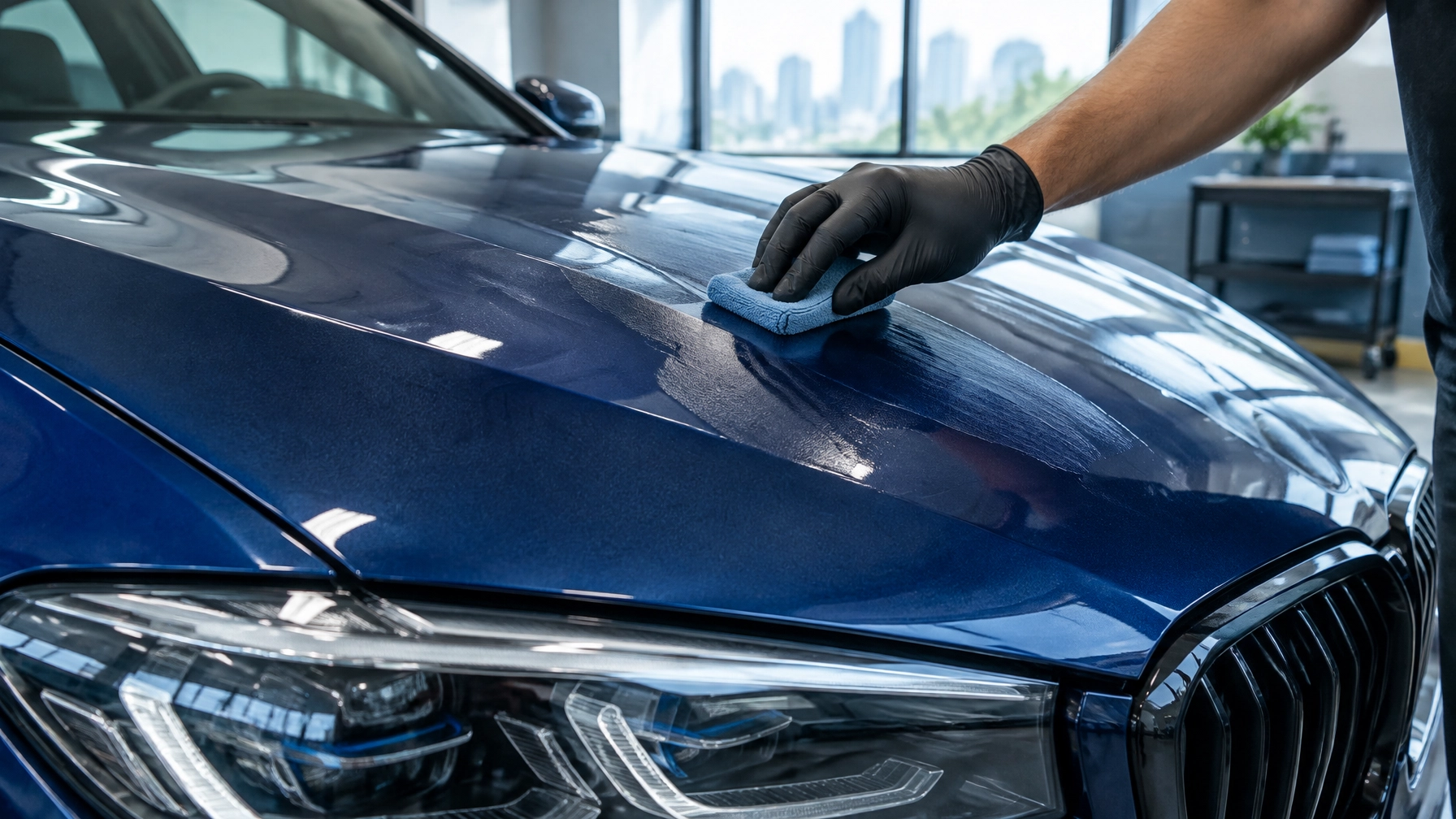
LPPF is then applied by hand, panel by panel, using a careful technique and a microfiber applicator. The work is completed in-shop, with one vehicle receiving focused attention at a time, not split attention across multiple cars. As an owner-operated business with over 10 years of experience, Ceramic Enthusiasts brings meticulous oversight to each stage.
Explore the Liquid Paint Protection Film service to review coverage options, or learn more about the team’s owner-operated approach.
Can a rock-impact blemish be re-leveled?
Yes, certain blemishes in the LPPF layer can be addressed through re-leveling. If a rock impact marks the protective layer without causing damage that requires a different repair, the area can be evaluated and worked to restore a smoother surface. Re-leveling refers to correcting the affected protection layer; it does not mean every impact can be reversed or that the underlying paint is always untouched.
That distinction matters. A deep impact may penetrate the protective layer and damage paint beneath it. Prompt inspection helps determine what happened and what repair is appropriate. The LPPF service page explains the re-leveling benefit in more detail.

What should you consider before leaving Houston?
Book early enough for surface preparation, installation, and the product’s required cure period. Ask what care restrictions apply after your appointment, including when the vehicle can be washed or exposed to rain. Follow the specific instructions provided for your application.
After driving through construction or heavy rain, rinse away loose grit before washing. Use a gentle wash process and avoid rubbing dried residue across the paint. Check the front bumper, hood, mirrors, and fenders for new marks; early attention makes it easier to assess whether a blemish is in the protective layer or the paint.
Consider protection add-ons during the same visit. Wheel ceramic coating can make brake-dust cleanup easier, while glass ceramic coating supports water beading on windows. For drivers comparing coverage options, automotive ceramic coating pairs seamlessly with the broader protection discussion when product compatibility is confirmed.
Whether you commute through Houston or travel from Pearland, League City, Pasadena, Deer Park, South Houston, Galveston, Clear Lake, Webster, Friendswood, or Alvin, a planned in-shop visit helps you head into holiday miles with a protected, easier-to-maintain finish. If you are getting your vehicle protected before holiday travel, start with a consultation to determine which protection fits your vehicle.
How can you schedule an LPPF consultation?
Call 281-626-9384 to discuss your vehicle, upcoming route, and protection goals. We’ll help determine whether hand-applied LPPF, ceramic coating as a complementary layer, paint correction, or a combination is the right fit before your holiday trip.