Houston drivers face rock debris, construction grit, intense UV exposure, heavy rain, and industrial fallout every day. Liquid Paint Protection Film (LPPF) shields painted forward-facing surfaces, while glass ceramic coating helps keep the windshield clearer and easier to maintain.
That combination protects the areas most exposed to Houston roads without confusing two different technologies.
If you are searching for windshield protection film Houston, it helps to understand where each product performs best. LPPF protects painted panels. Glass ceramic coating bonds to exterior glass. Dedicated windshield protection film is a separate impact-focused product that may reduce chip and pitting risk, but no film stops every crack or replaces insurance coverage.
What Does Windshield Protection Film Mean for Houston Drivers?
Windshield protection film is a clear sacrificial layer designed to reduce damage from rocks, gravel, and road debris striking exterior glass.
Houston’s I-45, I-610, and Beltway 8 corridors expose windshields to loose aggregate, truck debris, and construction-zone grit. A dedicated film adds a physical barrier between those impacts and the glass.
It does not guarantee that a windshield will never crack.
It also does not replace comprehensive insurance or professional glass repair when damage occurs. Its role is risk reduction: helping reduce chips, pitting, and surface wear while extending the useful life of the windshield.
Glass ceramic coating serves a different purpose. It creates a hydrophobic bond that causes water to bead and run off more efficiently, making the glass easier to clean during Houston’s frequent thunderstorms.
For painted areas ahead of the windshield, LPPF is the primary protection choice.

How Does Liquid Paint Protection Film Protect the Areas Ahead of the Windshield?
Liquid Paint Protection Film protects painted surfaces by curing into a flexible polyurethane and acrylic polymer layer that absorbs everyday wear and helps defend against light to moderate rock impacts.
The most exposed areas include:
- Front bumpers
- Hoods and front fenders
- Headlights
- Side mirrors
- A-pillars
- The leading roof edge above the windshield
- Rocker panels and door edges
These surfaces take the first hit from freeway debris. Without protection, one piece of gravel can create a chip that exposes the underlying paint to moisture, oxidation, and additional deterioration.
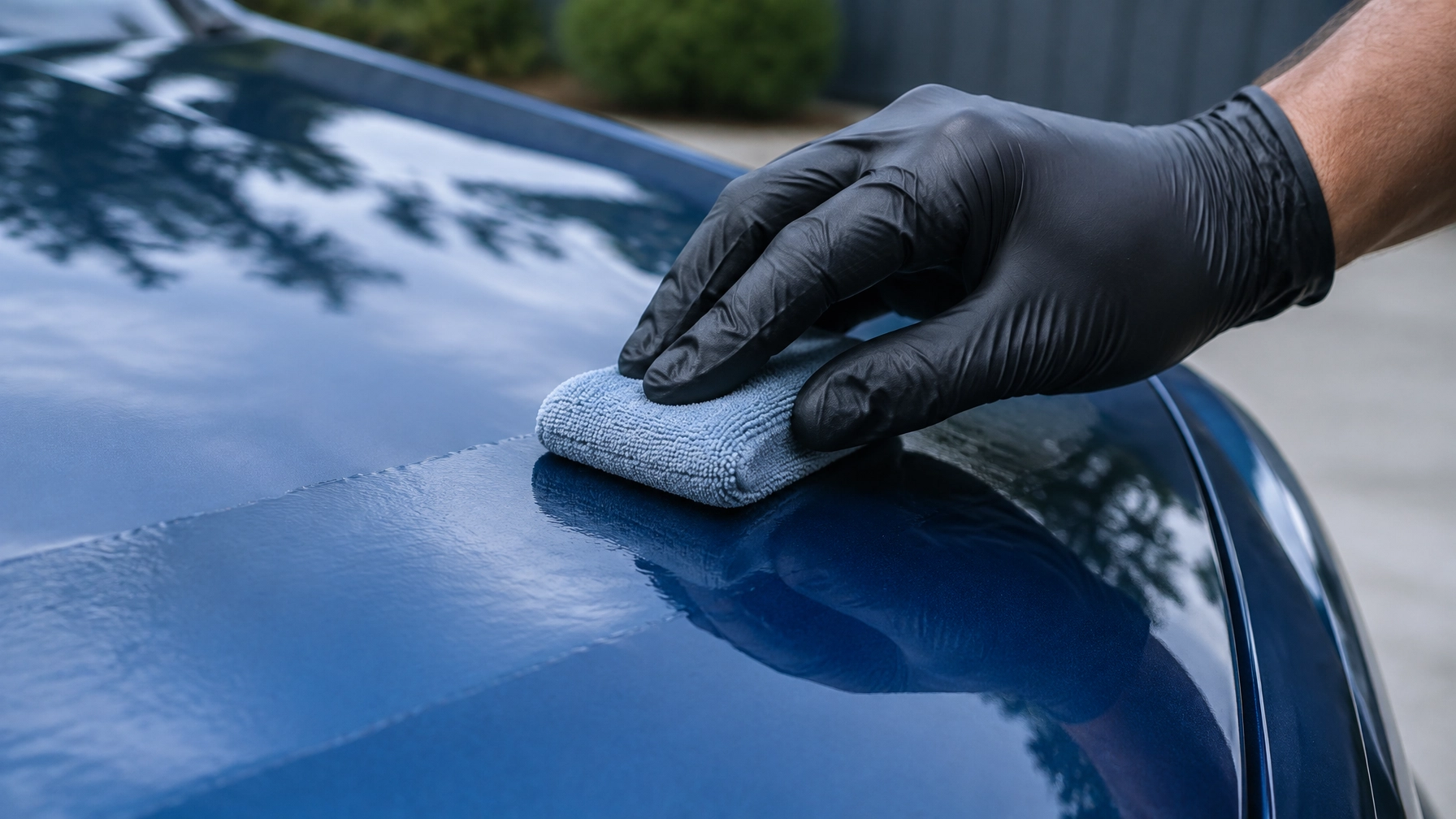
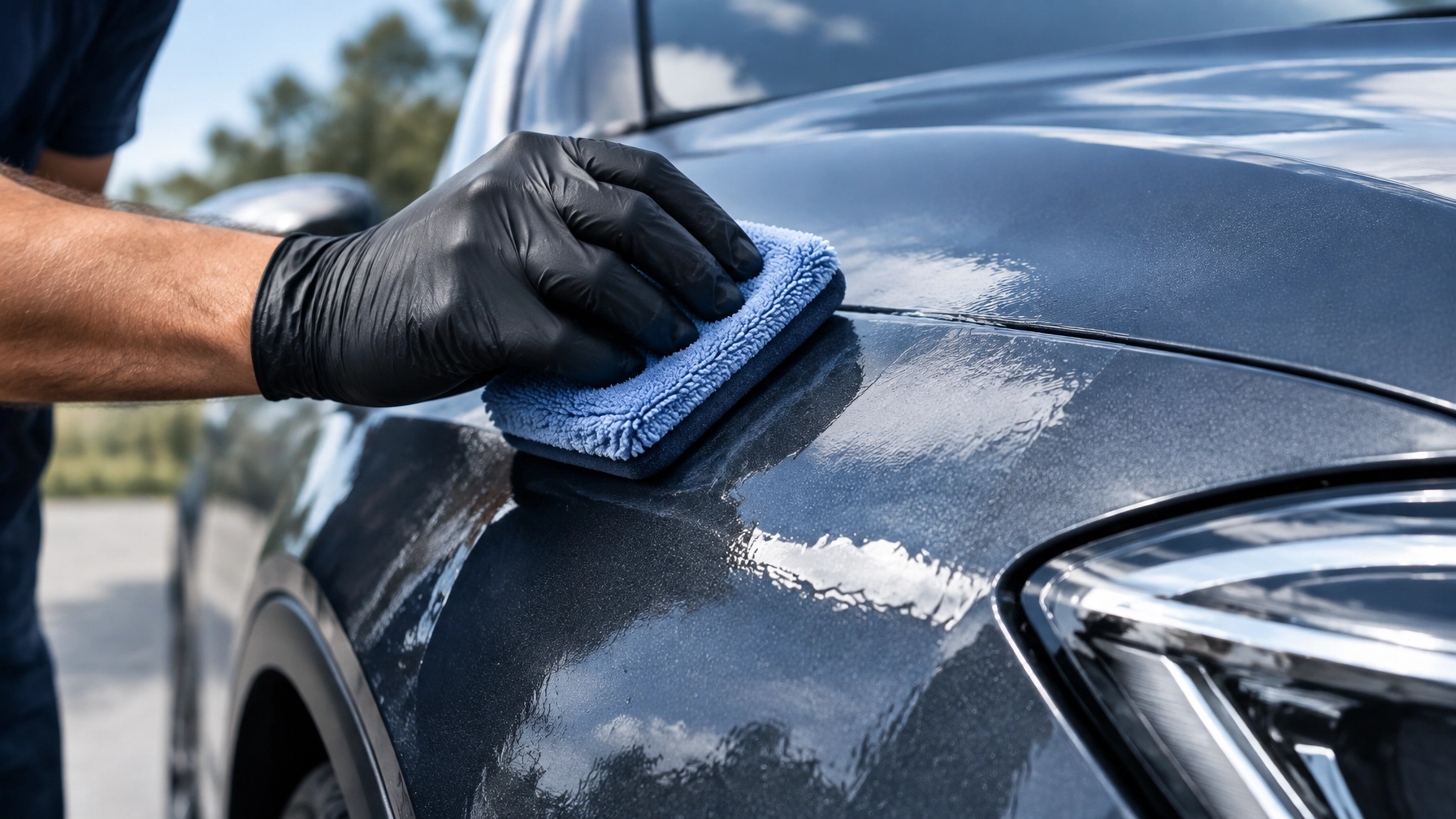
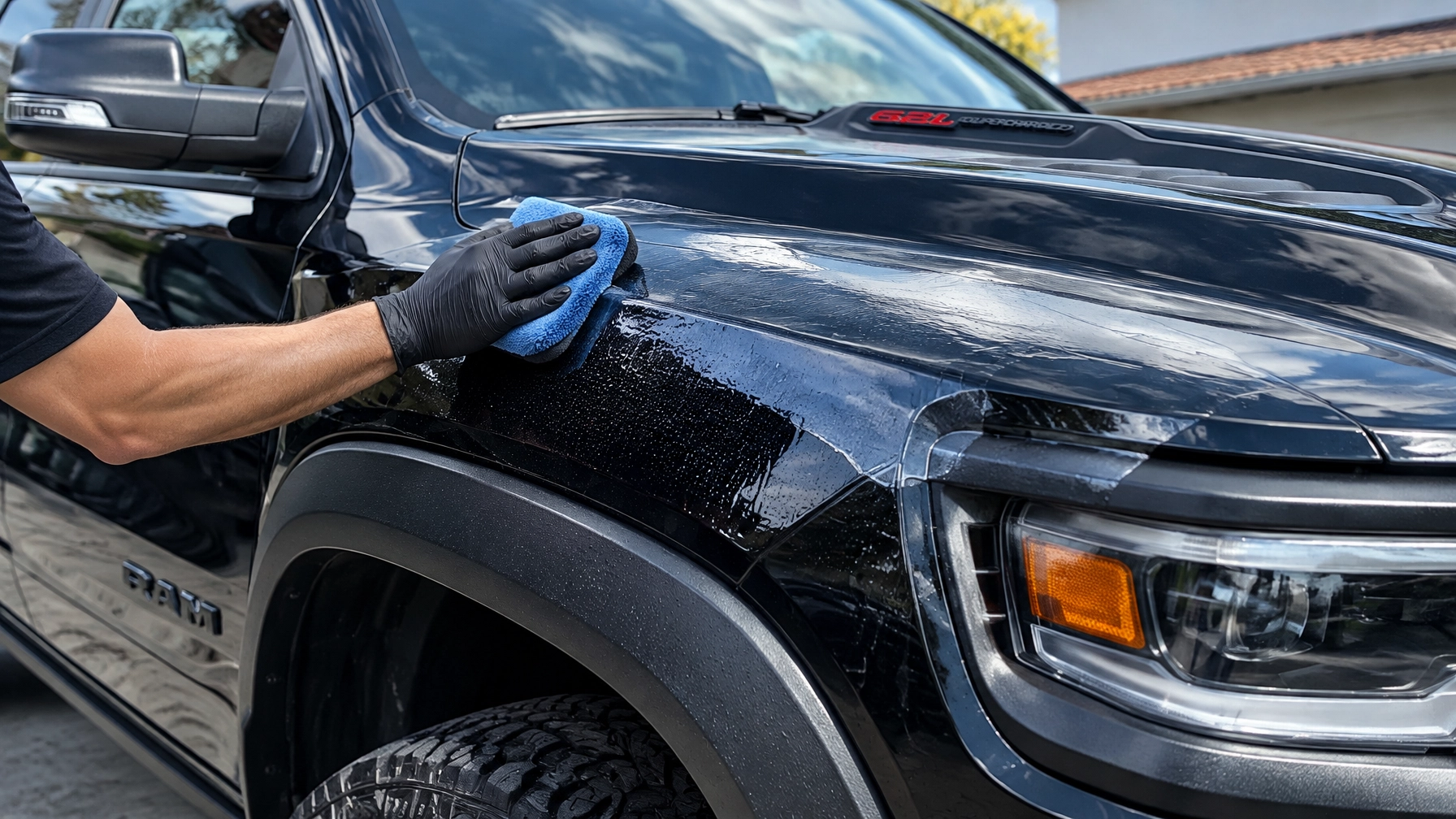
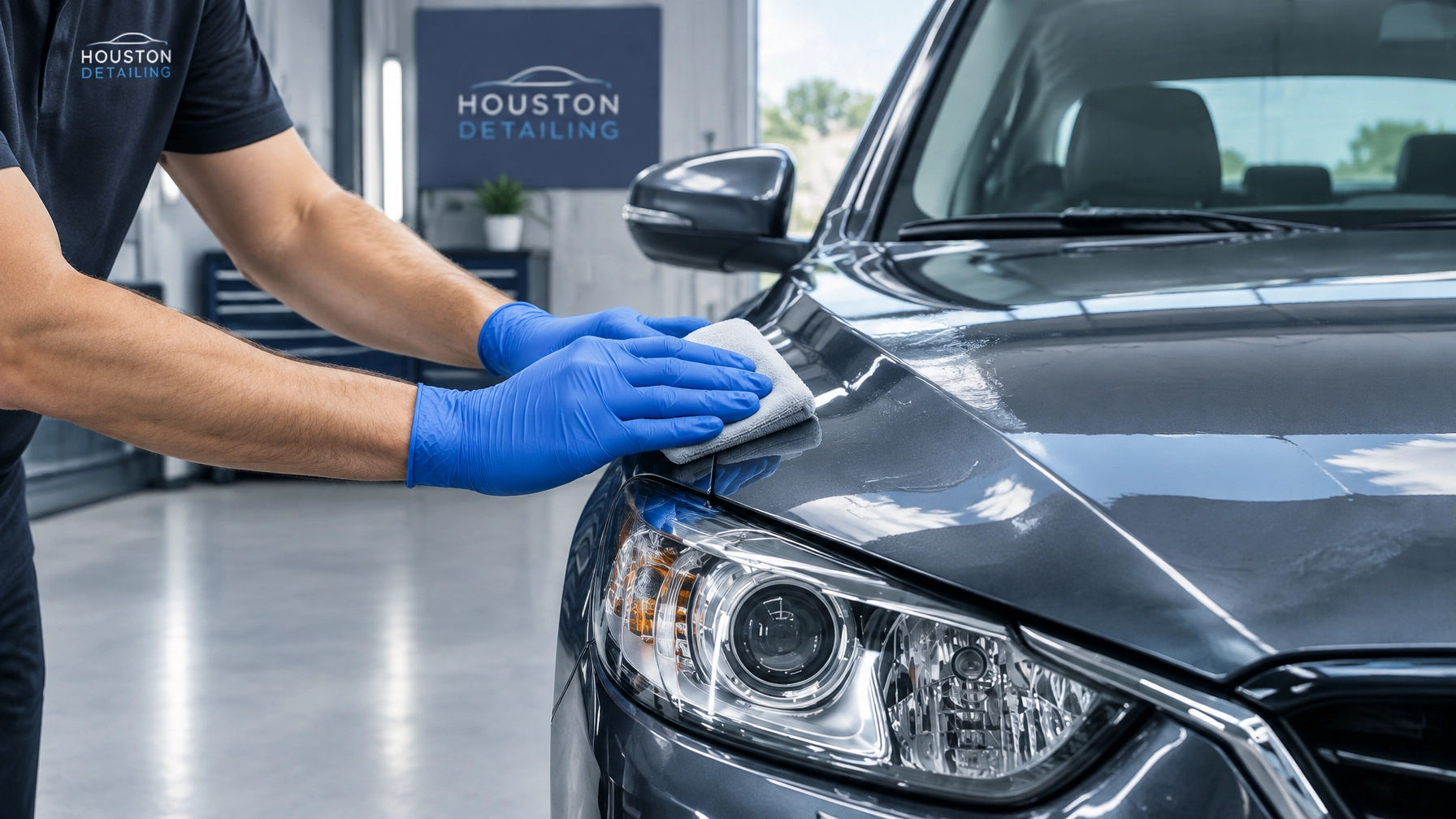
LPPF is applied by hand, one vehicle at a time. An experienced installer prepares the surface, works the product evenly with professional microfiber applicator pads, and checks the finish under controlled lighting.
The process is not a pre-cut film installation.
There are no visible seams, film edges, or traditional film sheets placed over the bodywork. Once cured, LPPF delivers a smooth, glossy protective layer that complements the vehicle’s original finish.
A key advantage is re-leveling. If a rock impact leaves a blemish in the LPPF, the affected area can be re-leveled to restore a smooth finish without removing an entire panel.
That makes LPPF especially practical for Houston commuters who regularly travel construction routes or shipping corridors.
Learn more about Liquid Paint Protection Film in Houston.
Which Protection Belongs on Glass, Paint, and Wheels?
LPPF belongs on painted surfaces that receive direct road impact. Glass ceramic coating belongs on the windshield and exterior glass. Wheel ceramic coating belongs on wheels exposed to brake dust, road grime, and high braking temperatures.
Each product solves a different problem:
| Vehicle area | Main threat | Best-fit protection |
|---|---|---|
| Hood, bumper, fenders, mirrors | Rocks, gravel, scratches, UV exposure | Liquid Paint Protection Film |
| Windshield and exterior glass | Rain, water spots, grime, wiper residue | Glass ceramic coating |
| Wheels and calipers | Brake dust, heat, tar, road contaminants | Wheel ceramic coating |
Ceramic coating for automotive paint adds a chemically bonded, hydrophobic layer that helps resist UV exposure, bird droppings, bug acids, and environmental contaminants.
It complements LPPF rather than replacing it.
LPPF provides the primary physical defense against road debris. Ceramic coating adds slickness, gloss, and easier cleaning. When applied over compatible LPPF, the combination helps maintain a mirror-like finish through years of Houston weather cycles instead of only a few months of appearance improvement.
How Does Glass Ceramic Coating Improve Houston Windshield Visibility?
Glass ceramic coating improves wet-weather visibility by bonding to properly prepared glass and lowering surface tension, which encourages water to bead and move away from the driver’s sightline.
On a 95-degree Houston afternoon, the windshield collects dust, pollen, road film, and evaporated mineral residue. During a sudden Gulf Coast storm, that contamination combines with water and wiper movement to create streaks and glare.
Without proper glass preparation, those residues remain bonded to the surface.
A professional application begins with deep decontamination. Oils, traffic film, mineral deposits, and residue are removed before the glass receives a dedicated coating. The product is then applied evenly by hand and leveled for a clear, streak-free finish.
The result is noticeable from the first rainstorm:
- Water beads and sheds more quickly
- Wipers move across a cleaner surface
- Road film becomes easier to remove
- Water spotting is reduced
- Glass maintenance takes less time
Glass ceramic coating does not add the impact barrier of windshield protection film. It is designed for hydrophobic performance, visibility, and easier maintenance.
That makes it a smart complementary add-on after addressing painted forward-facing surfaces with LPPF.
Explore glass ceramic coating for Houston vehicles.
What Houston Roads and Weather Attack Your Vehicle?
Houston’s environmental conditions create different damage patterns across the same vehicle.
Drivers on I-45 and Beltway 8 encounter loose gravel, heavy traffic, and debris from commercial vehicles. Construction zones around Houston and the surrounding suburbs increase the chance of sand and aggregate striking the hood, bumper, mirrors, and windshield.
Pasadena and Deer Park drivers also face industrial fallout and airborne contaminants that can settle on paint and glass. In Clear Lake and Galveston, salt air adds another persistent contaminant to exterior surfaces.
Then come the heat and humidity.
A painted panel exposed to intense UV radiation can fade and oxidize over time. High humidity and repeated rain cycles keep contaminants active on the surface longer. When temperatures reach 95 degrees or more, bonded bug residue, bird droppings, and road film become harder to remove safely.
LPPF protects the paint before those contaminants become a larger correction problem. Glass coating makes the windshield easier to clean before residue becomes a visibility issue.
The protection works best when it is planned around how and where you drive.
Can Wheel Ceramic Coating Complete a Houston Protection Plan?
Yes. Wheel ceramic coating completes the protection plan by addressing one of the vehicle’s most difficult maintenance areas.
Brake dust contains abrasive particles that bond to hot wheel surfaces. Stop-and-go traffic through Houston, Pearland, Pasadena, South Houston, and League City increases braking frequency and heat buildup.
Without protection, brake dust can bake onto the finish and require aggressive scrubbing. Repeated scrubbing can dull painted, powder-coated, or polished wheel surfaces.
Wheel ceramic coating creates a slick, high-temperature barrier that helps brake dust and road grime release faster during washing. It does not eliminate buildup, but it reduces the effort required to remove it.
Preparation includes cleaning and decontamination before the coating is applied by hand. Each spoke and accessible surface receives meticulous attention in a one-car-at-a-time process.
Add wheel ceramic coating when you want the wheels to stay cleaner between services.

How Should Houston Drivers Prepare for These Services?
Proper preparation determines how well protection bonds and how long it performs.
For painted surfaces, the process may include washing, chemical decontamination, clay treatment, paint inspection, and polishing. If swirl marks, oxidation, or light scratches remain, they should be corrected before protective products are applied.
Coating over defects preserves those defects beneath the new layer.
A state-of-the-art paint correction service restores clarity and creates a cleaner foundation for LPPF and ceramic coating. The correction level is matched to the paint condition, preserving as much clear coat as practical.
For glass, preparation focuses on removing oils, minerals, and traffic film. For wheels, brake dust, tar, and road contaminants must be removed before coating.
This is where an owner-operated approach matters. With over 10 years of experience, Ceramic Enthusiasts focuses on one car at a time instead of rushing vehicles through a high-volume process.
That means more inspection, more controlled application, and more meticulous attention to the areas Houston driving affects most.
What Should You Ask Before Choosing Auto Detailing in Houston?
Ask which product protects each surface, how the vehicle will be prepared, and whether the service matches your driving conditions.
A reliable consultation should clarify:
- Whether LPPF is appropriate for your hood, bumper, mirrors, A-pillars, and roof edge
- Whether glass ceramic coating is the right choice for your windshield maintenance goals
- Whether windshield protection film is available and suitable for your vehicle
- How existing chips, pitting, oxidation, or scratches will be handled
- What maintenance is recommended after application
- How the vehicle will be scheduled for in-shop service, one car at a time
Whether you commute through Deer Park, drive from Friendswood to Houston, travel between Alvin and League City, or regularly visit Galveston, the best plan starts with the surfaces receiving the most abuse.
Review the About Ceramic Enthusiasts page to learn more about the owner-operated, one-car-at-a-time approach.
How Can You Schedule the Right Protection Plan?
Start with a consultation to determine whether LPPF, glass ceramic coating, wheel ceramic coating, paint correction, or a combination fits your vehicle and driving habits.
LPPF should lead the plan for painted forward-facing areas. Glass ceramic coating then adds hydrophobic protection to the windshield and exterior glass. Wheel ceramic coating completes the exterior maintenance strategy.
Contact Ceramic Enthusiasts at 281-626-9384 to discuss your vehicle, commute, and protection goals.
Schedule a consultation for professional auto detailing in Houston and determine the right next step for your vehicle.
Ready to protect your investment? Call Ceramic Enthusiasts at 281-626-9384 to schedule your in-shop consultation, and learn more about our hand-applied Liquid Paint Protection Film and automotive ceramic coating.