What is Houston humidity actually doing to your paint when you can’t see it?
It’s keeping contaminants active on the surface, accelerating oxidation, and driving moisture into every small chip in the clear coat.
That’s the part most people miss.
Houston routinely sits in extreme humidity, and your vehicle faces that moisture load every day whether you’re in Pearland, Pasadena, Friendswood, or stuck in traffic on I-45. Warm, moisture-heavy air combines with UV exposure, refinery fallout, road film, bug acids, and mineral-rich rainwater. Those contaminants stay wetter longer. They stay reactive longer.
Here’s why it matters: once your clear coat gets breached by a rock chip, the damage does not stay cosmetic. The progression is predictable. Chip leads to exposed primer. Exposed primer allows moisture intrusion. Moisture intrusion starts oxidation creep. Oxidation creep eventually becomes visible corrosion and rust.
Without a physical barrier on the paint, Houston humidity keeps feeding that cycle every time the surface gets wet, heats up to 95 degrees, cools overnight, and loads back up with moisture the next morning.
How does humidity turn a small paint chip into oxidation and rust?
Humidity accelerates the exact chain reaction you want to stop early: contamination retention, moisture intrusion, and oxidation spread.
And it happens quietly.
- Contamination retention: High humidity keeps road film, salt residue, industrial fallout, and bug remains active on the paint instead of letting them dry out and release cleanly.
- Moisture intrusion: When a rock chip opens the clear coat, damp air and standing water work down into the damaged spot and stay there longer.
- Oxidation creep: Once the exposed area starts oxidizing, corrosion expands beyond the original chip and begins undermining the surrounding finish.
Without protection, that tiny chip can keep growing under Houston weather cycles because the surface never gets a real break from heat, UV exposure, and moisture.
That’s why a breach in the paint should never be treated like “just a small nick.”
What are the early warning signs Houston humidity is already affecting your paint?
It shows up in small ways first.
Most Houston drivers ignore them until the damage spreads.
Look for these:
- Rock chips that stay dark or damp-looking after rain
- Etching or water spotting that seems to come back faster
- Rough paint texture from bonded contamination
- Dullness around chip edges where oxidation has started to creep
- Orange-brown discoloration in deeper impacts on exposed metal panels
- Staining that clings harder after freeway driving or storms
If you’re commuting from South Houston to downtown, or parking outside near shipping corridors and refineries, you’re also dealing with extra airborne fallout. That grime mixes with humidity, stays active on the panel longer, and makes cleanup slower and less safe without proper protection.
How is hand-applied Liquid Paint Protection Film different from a basic wax or wash?
It creates a physical barrier over the paint instead of just improving appearance for a short time.
That’s the difference that counts in Houston.
A basic wash removes loose contamination. A wax adds short-lived gloss. Neither one seals off vulnerable paint from repeated moisture exposure, rock impacts, and oxidation pressure.
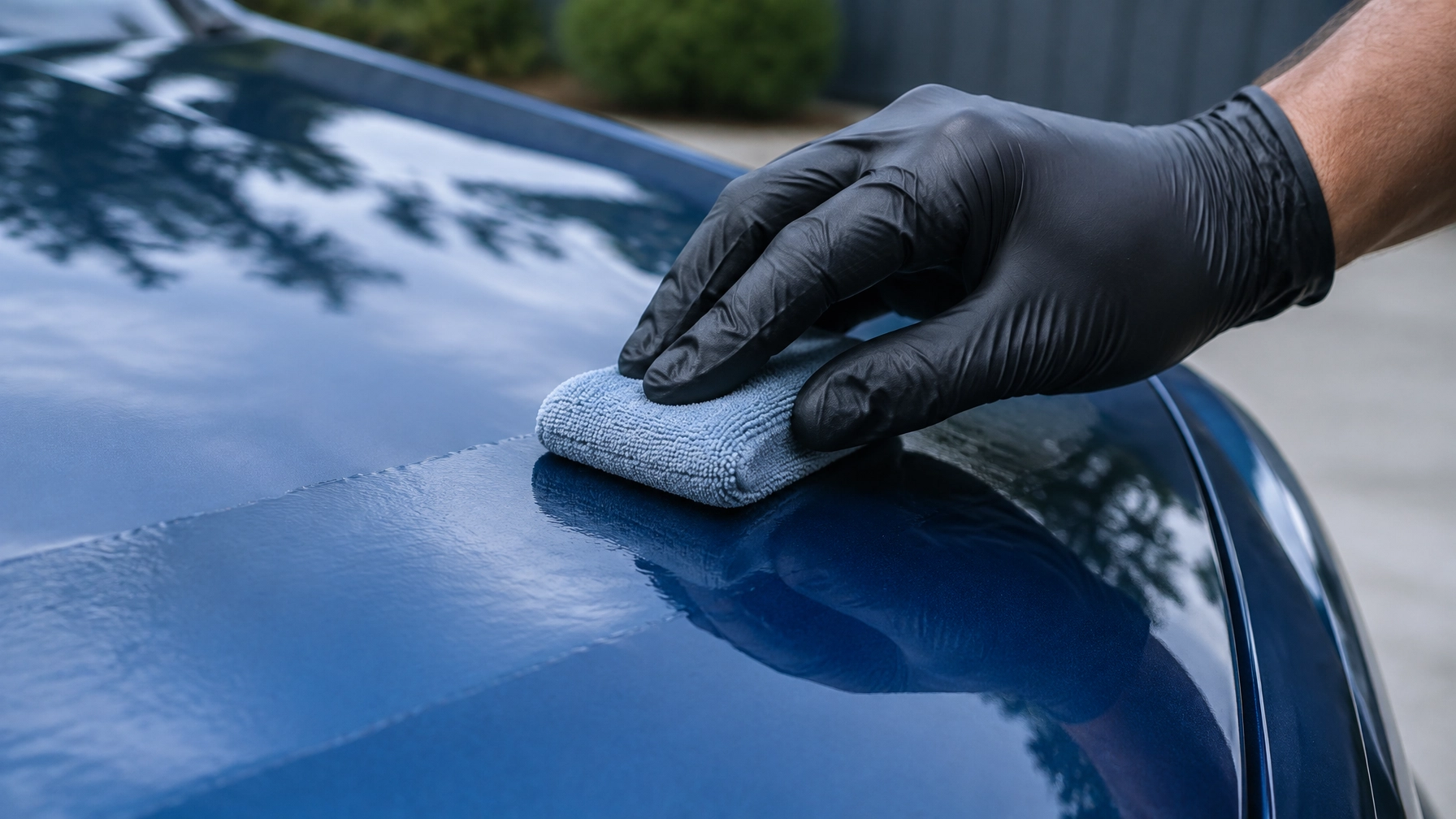
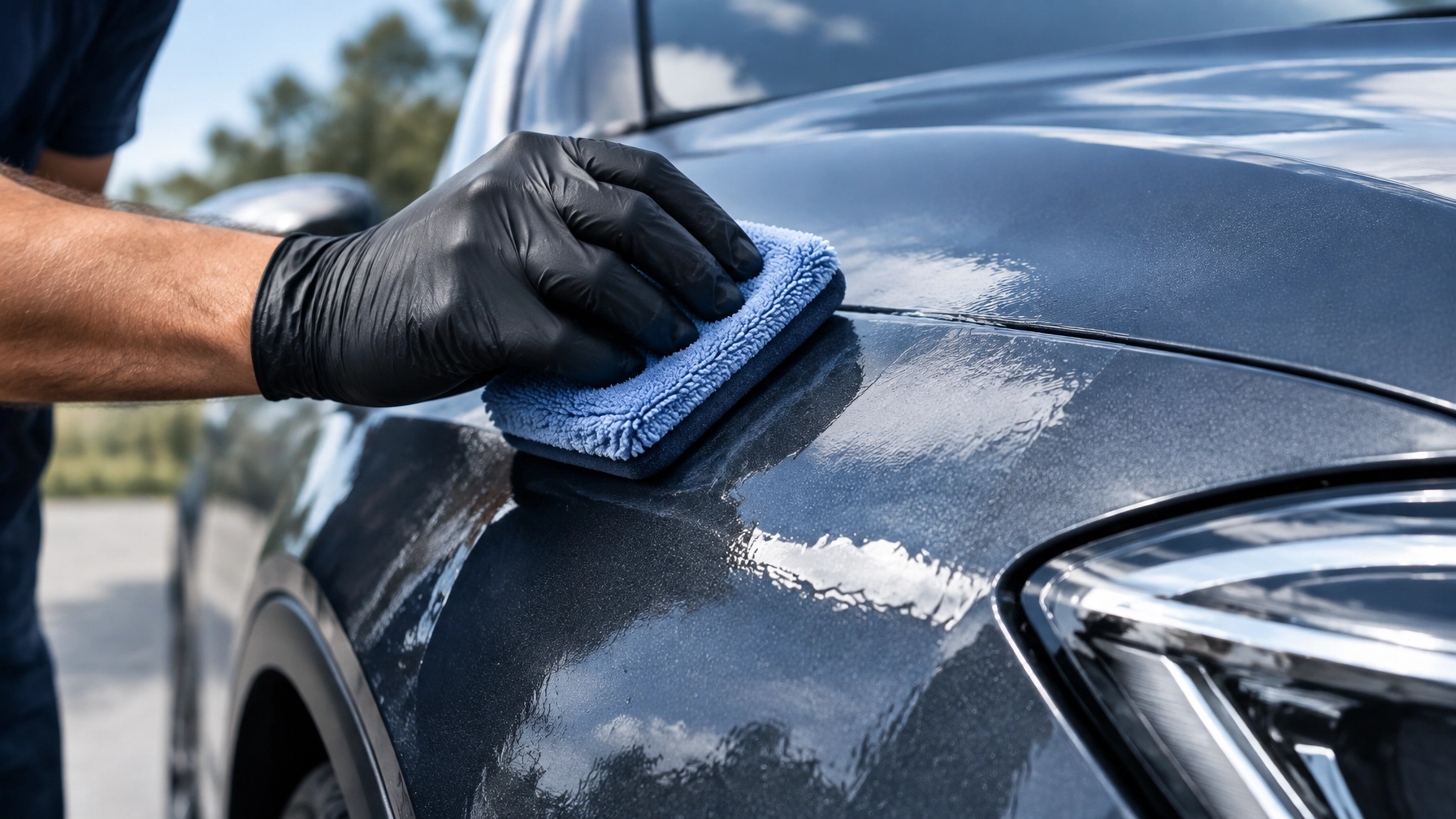
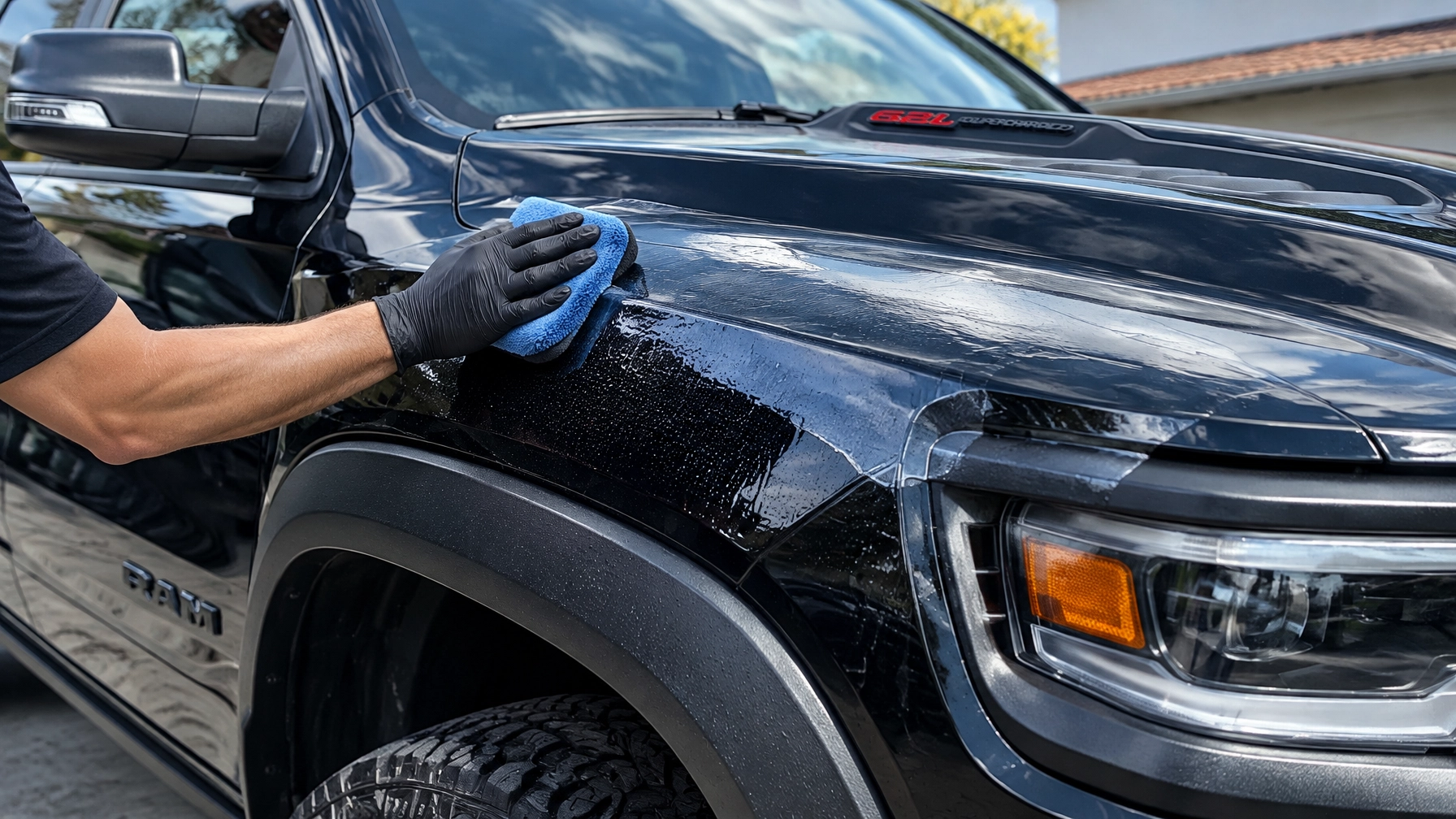
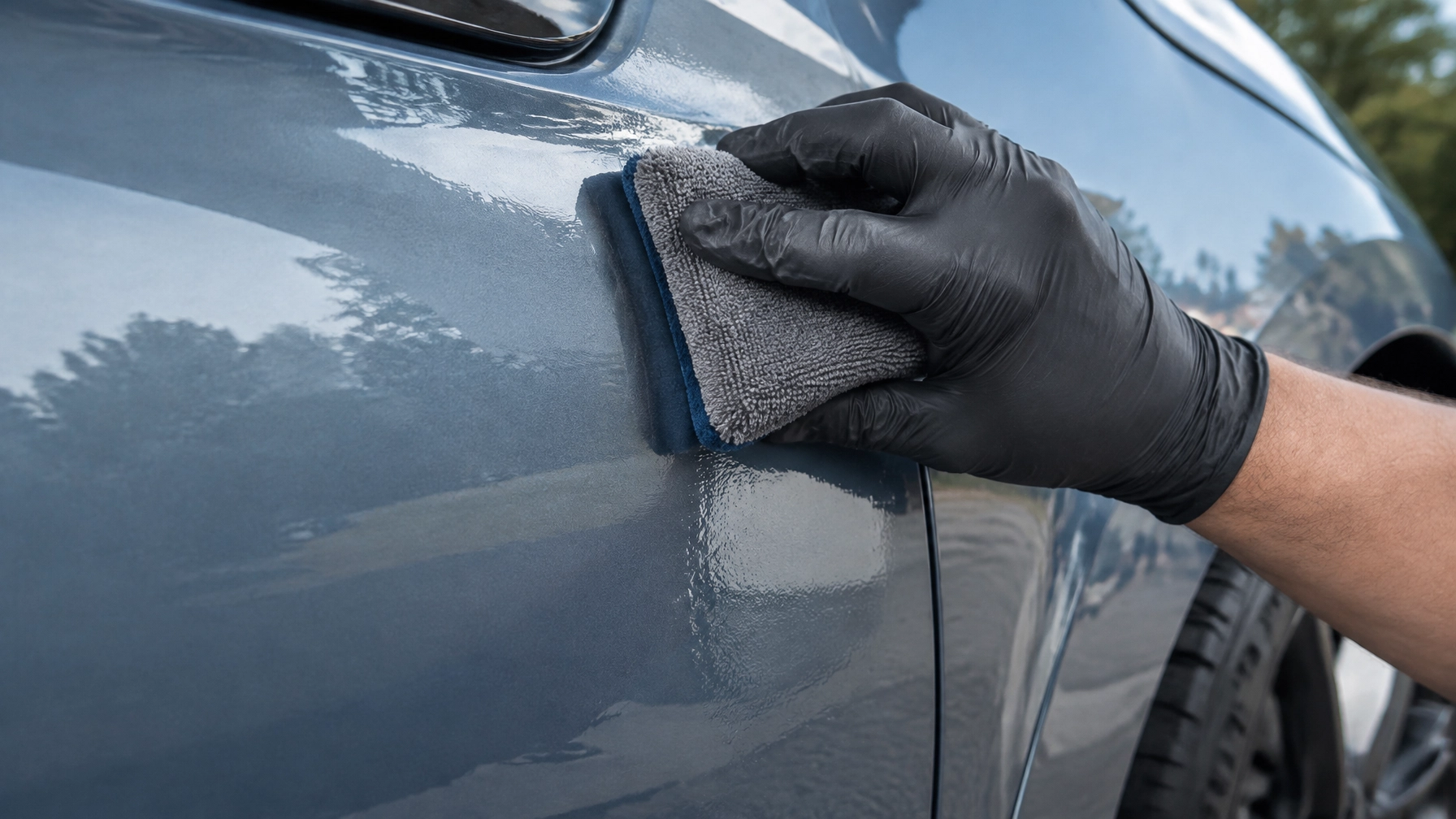
A proper exterior protection plan starts with hand-applied Liquid Paint Protection Film (LPPF), using a methodical surface-prep and application process that matches Houston conditions:
- Decontamination washes to remove road film, fallout, and embedded grime
- Clay treatment and polishing when needed to level contamination and improve bonding
- Hand-applied LPPF to create the primary barrier against chips, UV stress, and moisture intrusion
- Optional ceramic coating on top to improve hydrophobic behavior, lower surface tension, and help contaminants release faster
At Ceramic Enthusiasts, LPPF comes first because it delivers the physical protection layer your paint needs in Houston heat and humidity. Ceramic coating pairs seamlessly with it as the complementary layer for easier maintenance and better water behavior.
Which exterior areas get hit the hardest in Houston humidity and road conditions?
Front-end impact zones show it first, horizontal panels bake the hardest, and lower sections collect the worst grime.
All three need protection.
Front bumper, hood edge, and front fenders:
These areas take the brunt of freeway debris. Once a chip breaks through the clear coat, humidity pushes moisture into that opening and speeds up deterioration.
Hood, roof, and trunk lid:
These horizontal panels absorb the most UV exposure and standing moisture. In Houston sun, oxidation pressure builds faster on surfaces that bake all afternoon.
Rocker panels and lower doors:
They collect dirty runoff, road splash, brake dust, and industrial grime. In humid conditions, that contamination stays active longer and bonds harder.
Bottom line: the panel changes the stress pattern, not the need for protection.
What should a humidity-proof exterior protection routine look like between services?
It keeps contamination from staying active and keeps small defects from turning into bigger repairs.
You don’t need complicated maintenance. You need consistency.
Here’s a simple routine that works for Houston drivers:
- Weekly or biweekly: wash off road film, bug residue, and mineral deposits before they bake in
- After rainstorms: rinse standing contamination off horizontal panels
- Monthly: inspect the front bumper, hood edge, and mirrors for fresh impacts
- Avoid letting bird droppings or bug acids sit through a hot afternoon
- Schedule protection before visible oxidation starts, not after
If you’re searching for paint protection “near me” because you’re tired of Houston weather working against your finish, that’s exactly the point of a protection-first plan. It is easier to stop moisture intrusion than to correct corrosion later.

How do Liquid Paint Protection Film and ceramic coating work together on Houston vehicles?
LPPF handles the physical defense first, and ceramic coating adds the maintenance advantage on top.
That combination makes sense in Houston.
Liquid Paint Protection Film (LPPF) is the primary recommendation when:
- you drive freeways where rock chips are common
- you park outside in heat and humidity
- you want a barrier that helps stop chip-to-corrosion progression
- you want blemishes from rock impacts to be easier to address with re-leveling
It is a hand-applied process designed to stand between your paint and the environment.
Ceramic coating is the complementary option when:
- you want stronger hydrophobic performance
- you want lower surface tension so grime releases easier
- you want faster, safer maintenance washes
- you want water behavior that is noticeable from the first rainstorm
Houston life is busy. This pairing protects the finish at the surface and makes ongoing care more manageable.
You can see the protection options here: https://www.ceramicenthusiasts.com/liquid-paint-protection-film and https://www.ceramicenthusiasts.com/ceramic-coating
What does an exterior protection service need to include to actually stop humidity-driven paint damage?
It needs decontamination, correction where needed, and a true barrier layer.
Anything less is temporary.
The damage problem is usually underappreciated because the chip is small while the progression underneath is not. Once the clear coat is breached, water and oxygen keep working below the surface.
The effective approach includes:
- Thorough wash and decontamination to strip off bonded grime and fallout
- Clay treatment when needed to remove embedded contamination
- Paint correction or polishing to improve clarity and prep the surface properly
- Hand-applied Liquid Paint Protection Film to form the primary protective layer
- Optional ceramic coating to boost hydrophobic performance and reduce contaminant adhesion
- Post-service inspection so fresh impacts and weak spots do not get ignored
That process matters in Houston. Without a proper barrier, repeated humidity cycles keep feeding oxidation in places you will not notice until the damage expands.

How do Houston neighborhoods and driving patterns make exterior paint damage happen faster?
They add more contamination, more impact exposure, and more humidity cycles.
That combination sticks.
Driving around Houston is not just “heat.” It is heat plus freeway debris, sudden thunderstorms, industrial fallout, and long stretches of stop-and-go traffic. If you’re near:
- Pasadena and refinery areas: more airborne industrial contamination
- South Houston and busy commercial routes: more grime, splash, and road film
- Friendswood and Pearland neighborhoods: more outdoor parking and overnight humidity exposure
- League City, Clear Lake, Webster, Alvin, and Galveston routes: more moisture, salt-laced air, and storm-driven contamination
- Downtown and loop traffic: more time behind vehicles kicking debris into your front end
Humidity makes that contamination cling longer. Every wet-dry cycle gives bonded residue and exposed chips more time to do damage.
Without regular protection, those surfaces lose gloss faster and become harder to maintain safely.
Can ceramic coating help in Houston if Liquid Paint Protection Film comes first?
Yes. Ceramic coating absolutely helps, but it works best as the complementary layer over an LPPF-first strategy.
The roles are different.
In a humid environment, ceramic coating needs to do a few specific things:
- Reduce surface tension so water, grime, and road film release easier
- Improve hydrophobic behavior so drying is faster and spotting risk is lower
- Make maintenance safer by lowering how aggressively contamination bonds
- Preserve gloss and clarity through repeated weather cycles
That’s why we position ceramic coating behind hand-applied LPPF in Houston. LPPF gives you the physical barrier. Ceramic coating adds the slick, hydrophobic performance that makes ongoing care easier and more effective.
If you want to see real work, not just finished-car glamour shots, check the gallery: https://www.ceramicenthusiasts.com/gallery
Do you really need professional paint protection in Houston, or can you DIY this?
You can handle basic washing, but humidity punishes missed protection.
Professional service is what closes the gap.
DIY works when:
- you wash contaminants off quickly
- you inspect chips early
- you use safe wash methods
- you keep protection maintenance consistent
DIY falls short when:
- you leave chip-prone paint exposed through Houston weather cycles
- you rely on short-term products for long-term barrier protection
- you do not correct contamination before applying protection
- you do not have time to stay ahead of bug residue, rain spotting, and industrial fallout
Professional application makes the right process realistic. It is also the smart move if you commute daily, park outside every day, or want years of protection instead of months.
Which service should you book if your paint already has chips, dullness, or early oxidation?
Liquid Paint Protection Film is the correct starting point when Houston conditions are already working on exposed paint.
Ceramic coating is the smart complementary layer once the barrier is in place.
If your vehicle already shows front-end chips, rough contamination, or dull spots around impact areas, the priority is surface prep plus hand-applied LPPF to stop that chip → exposed primer → moisture intrusion → oxidation creep progression from continuing unchecked. If a rock impact leaves a blemish in the LPPF, the re-leveling advantage helps restore a smoother finish without treating the damage like the end of the panel.
Ceramic Enthusiasts is owner-operated with over 10 years of experience, and every vehicle is handled one car at a time with meticulous attention because paint protection does not reward rushed shortcuts.
To determine the right fit, use the contact page or call/text 281-626-9384: https://www.ceramicenthusiasts.com/contact
If you’re in Houston, Pearland, League City, Pasadena, Deer Park, South Houston, Galveston, Clear Lake, Webster, Friendswood, or Alvin and you’ve been searching for paint protection near me, this is your sign to stop humidity-driven paint damage before a small chip turns into a much bigger repair.