Houston drivers expose their wheels to brake dust, road grime, humidity, and extreme heat every day. A basic wash removes loose dirt, but it does not create a protective barrier against the contaminants that repeatedly bond to your wheel finish.
Wheel ceramic coating provides that added layer of protection. It creates a slick, hydrophobic surface that helps brake dust and road film release faster during routine washing.
The result is less scrubbing, easier maintenance, and a cleaner-looking wheel finish for longer.
What damages wheels on Houston roads?
Brake dust is one of the most persistent sources of wheel contamination. Every time you slow down in Houston traffic, friction between the brake pad and rotor releases fine particles containing metal and other abrasive material.
Those particles settle on the wheel face, spokes, and inner barrel. Heat from braking can cause them to bond more firmly to the surface. Once baked on, brake dust becomes difficult to remove without stronger chemicals and aggressive scrubbing.
Road grime adds another layer of trouble. Tire residue, asphalt oils, sand, construction debris, and industrial fallout from shipping corridors near Pasadena, Deer Park, and South Houston can accumulate on the finish.
Houston weather intensifies the problem. Summer temperatures can push exterior surfaces well beyond 95 degrees, while high humidity and frequent thunderstorms keep moisture around contaminants for extended periods.
Without protection, repeated exposure can contribute to staining, oxidation, pitting, and deterioration of the wheel’s clear coat or painted finish.
How does wheel ceramic coating protect against brake dust?
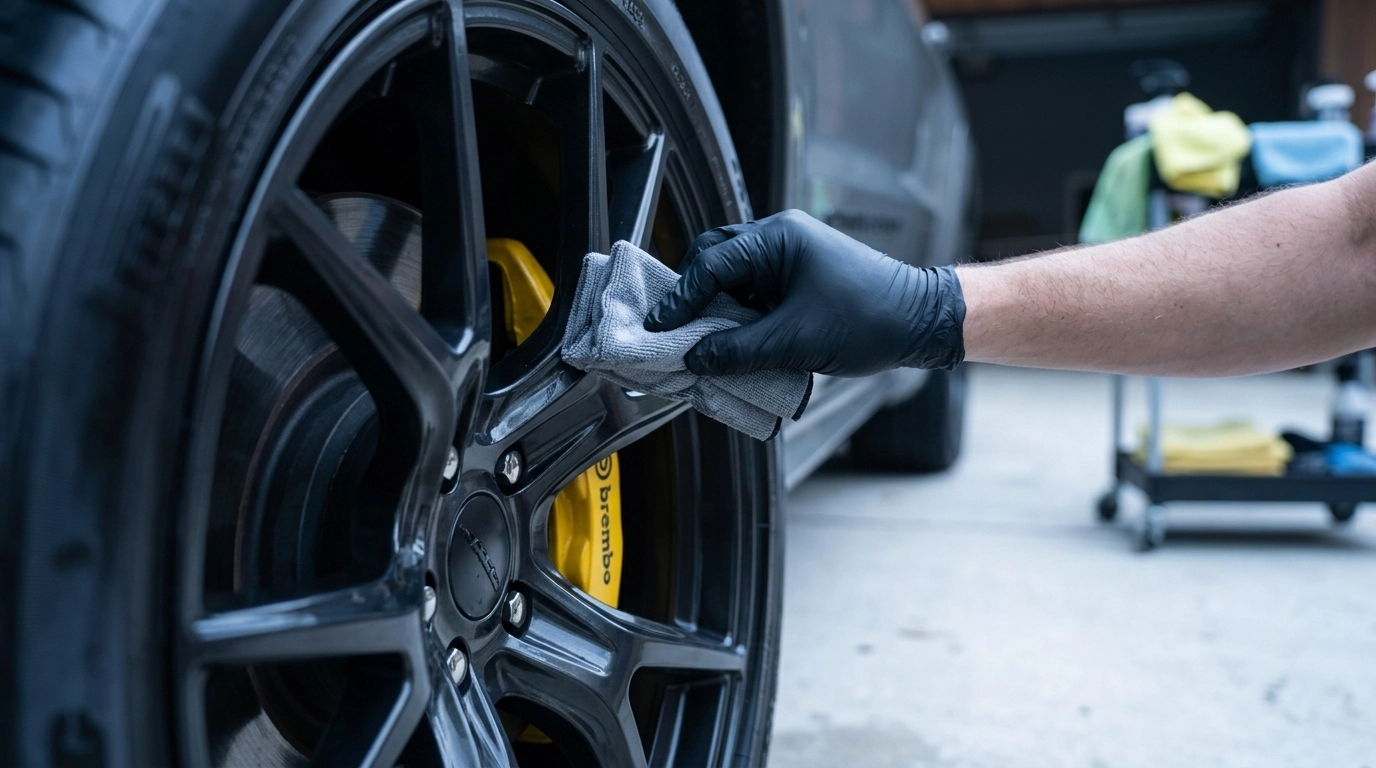
Wheel ceramic coating bonds to a properly prepared wheel surface and forms a durable, low-energy layer. Its hydrophobic properties reduce the surface’s ability to hold water, dirt, and oily road residue.
Brake dust still forms. The difference is how strongly it attaches.
Instead of embedding as firmly into the finish, much of the contamination remains on top of the coating. A rinse and gentle wash can remove more of the buildup without relying on harsh chemicals or excessive pressure.
The coating also creates a smoother surface with lower friction. That makes it easier for a microfiber mitt or soft wheel brush to lift away remaining residue during maintenance.
This benefit is especially noticeable for daily commuters traveling through stop-and-go traffic on Interstate 45, the Gulf Freeway, Highway 288, or the Sam Houston Tollway.

Which Houston vehicles benefit most from wheel ceramic coating?
Daily-driven vehicles benefit the most because their wheels experience repeated exposure to heat, dust, water, and traffic contaminants.
Wheel ceramic coating is a practical option for:
- Commuter vehicles driven through Houston, Pearland, and League City
- Luxury vehicles that require frequent appearance maintenance
- Trucks and SUVs exposed to construction zones and freeway debris
- Performance cars that generate heavier brake dust
- Vehicles parked outside in direct Texas sunlight
- Cars traveling between Clear Lake, Webster, Friendswood, Alvin, and Galveston
Drivers who wash their vehicles regularly will notice the greatest maintenance advantage. The coating works with consistent care, helping each wash become faster and safer.
It is also useful for owners who delay cleaning because the wheels become difficult to scrub. Regular light maintenance is still best, but a coated wheel is more forgiving when road grime accumulates between washes.
What happens during professional wheel ceramic coating?
Professional wheel coating starts with preparation, not the coating itself. Brake dust, tar, embedded road grime, and other contaminants must be removed before the protective product can bond evenly.
The process includes:
- Thorough wheel cleaning to remove loose dirt, brake dust, and surface grime.
- Chemical decontamination to dissolve bonded iron particles and road residue.
- Mechanical decontamination when necessary to remove remaining contamination safely.
- Surface inspection to identify existing staining, oxidation, clear-coat failure, or finish damage.
- Drying and preparation so moisture does not interfere with the application.
- Hand-applied ceramic coating across the wheel face, spokes, and accessible surfaces.
- Leveling and inspection to ensure consistent coverage and a uniform finish.
Ceramic Enthusiasts uses a one-car-at-a-time process with meticulous attention from preparation through final inspection. This owner-operated approach, backed by over 10 years of experience, avoids the rushed coverage common in high-volume detailing environments.
The wheel must be clean enough for the coating to form a consistent bond. Preparation determines performance.
Learn more about wheel ceramic coating in Houston.
Can wheel ceramic coating withstand Houston heat and humidity?
Yes. High-temperature wheel ceramic products are designed for the stress generated by braking systems and hot road surfaces.
Houston’s climate adds continuous environmental pressure. Strong UV exposure can accelerate fading and oxidation, while humidity and rain allow moisture to remain on wheels between drives.
A ceramic coating helps reduce that exposure by creating a hydrophobic barrier. Water beads instead of spreading across the finish, and contaminants have less opportunity to remain in direct contact with the surface.
The protection does not make wheels immune to corrosion or chemical damage. However, it helps reduce the time that moisture, brake dust, and road film remain attached.
You may notice the hydrophobic response from the first rainstorm after the coating has properly cured. Over time, the easier release of grime also reduces the need for aggressive cleaning.
For broader paint protection against UV rays, oxidation, and Houston contaminants, wheel coating pairs seamlessly with automotive ceramic coating. If rock chips and freeway debris are the primary concern for painted body panels, consider hand-applied Liquid Paint Protection Film (LPPF) first, with ceramic coating serving as a complementary finish and maintenance layer.
What are the realistic limitations of wheel ceramic coating?
Wheel ceramic coating is a maintenance aid and protective barrier. It is not an impact shield.
It will not prevent:
- Curb rash
- Rock impacts
- Deep scratches
- Bent wheels
- Severe corrosion already present
- Brake dust from forming
- Damage caused by neglected contamination
The coating can resist minor surface abrasion, but it does not make the wheel scratch-proof. Aggressive brushes, abrasive automatic car wash equipment, and harsh chemicals can still wear down the protective layer.
Strong acidic or highly alkaline wheel cleaners may shorten coating performance. Frequent track use, off-road driving, heavy braking, and neglected maintenance can also reduce durability.
Wheel coatings typically provide approximately six to twelve months of performance, depending on driving habits and care. Daily-driven wheels facing Houston traffic often require more frequent evaluation than lightly used vehicles.
The best expectation is simple: the coating makes wheels easier to clean and helps preserve their finish. It does not remove the need to wash them.
How should you maintain ceramic-coated wheels?
Maintenance should be regular, gentle, and consistent. Waiting until heavy brake dust has baked onto the wheel defeats much of the coating’s convenience.
Follow these practices:
- Rinse wheels regularly to prevent brake dust and sand from sitting on the surface.
- Use a pH-neutral, ceramic-safe wheel cleaner or car shampoo.
- Clean one wheel at a time so soap and contaminants do not dry in the Houston heat.
- Use soft microfiber mitts and wheel brushes.
- Avoid stiff, abrasive, or metal cleaning tools.
- Avoid automatic car washes with aggressive wheel brushes.
- Dry wheels with clean microfiber towels to reduce water spots and mineral deposits.
- Remove bird droppings, bugs, and tree sap promptly.
- Do not clean wheels immediately after hard driving when they are excessively hot.
- Follow the installer’s curing instructions after application.
Ceramic-coated wheels generally become easier to maintain with a gentle rinse and pH-neutral wash. Routine cleaning protects both the coating and the underlying finish.
For more vehicle-care guidance, review these ceramic coating aftercare tips.

Do you need wheel ceramic coating before your next detail?
Wheel ceramic coating makes sense when brake dust returns quickly, your wheels require frequent scrubbing, or the finish is becoming harder to keep clean.
It is also worth considering before a new vehicle accumulates months of contamination. Applying protection while the wheel finish remains healthy reduces the amount of restoration required later.
If your wheels already have severe staining, oxidation, or baked-on brake dust, preparation may require additional decontamination or correction. A surface evaluation determines whether the existing finish can be coated or needs restoration first.
Wheel ceramic coating can also be added during a larger exterior service. It pairs naturally with paint correction, full detailing, and mobile detailing because the vehicle is already being prepared for long-term protection.
Ceramic Enthusiasts brings professional service to customers in Houston and surrounding areas, including Pearland, Pasadena, Friendswood, League City, South Houston, Deer Park, Clear Lake, Webster, Alvin, and Galveston.
How can Houston drivers determine if wheel coating is right for them?
The right choice depends on your driving habits, wheel finish, cleaning routine, and protection goals.
Wheel ceramic coating is a strong fit if you want to spend less time scrubbing brake dust, protect a wheel finish from Houston’s climate, and maintain a cleaner appearance between washes.
It is not the right replacement for repair when wheels already have structural or severe cosmetic damage. It also cannot replace careful washing or protect against curb impacts.
A professional consultation provides a practical recommendation based on the condition of your wheels and how you use your vehicle.
For a personalized evaluation, contact Ceramic Enthusiasts to discuss wheel ceramic coating or a complete exterior protection plan.
Call 281-626-9384 to schedule a consultation and determine the best service for your wheels.