Pasadena and Deer Park commuters face industrial fallout, truck-route debris, and intense Houston weather every day, making hand-applied Liquid Paint Protection Film a strong first line of defense for vehicle paint.
Highway 225, Beltway 8, I-45, Highway 146, and Spencer Highway connect drivers through one of the busiest industrial and shipping corridors in the region.
That daily exposure adds up.
Heavy trucks throw gravel and road grit toward front bumpers. Rail activity contributes airborne metallic particles. Refinery and industrial operations can release smoke, soot, dust, and other contaminants that settle on paint. Houston’s heat, humidity, thunderstorms, and UV exposure then accelerate the damage.
Ceramic coating remains an excellent complementary layer for chemical resistance, gloss, and easier maintenance. However, it does not replace impact protection.
For commuters in Pasadena, Deer Park, South Houston, Pearland, League City, Clear Lake, Webster, Friendswood, Alvin, and Galveston, the protection strategy should begin with the layer built to absorb road abuse: Liquid Paint Protection Film.
What Does Industrial Fallout Do to Unprotected Paint in Pasadena and Deer Park?
Industrial fallout bonds to unprotected paint and becomes more damaging when heat and moisture remain on the surface.
Fine soot, metallic dust, rail dust, hydrocarbon residue, and airborne particles can settle on a vehicle while it is parked near a refinery, traveling through a shipping corridor, or sitting outside a workplace. These contaminants may feel like roughness when you wash or dry the vehicle.
The problem becomes worse when contamination remains on the surface through a Houston summer afternoon.
At temperatures approaching 95 degrees, heat increases the speed at which residues dry and bond to the clear coat. High humidity keeps surfaces exposed to moisture, while UV radiation continuously stresses the paint system. Rain can make the surface look cleaner while leaving mineral deposits and dissolved contaminants behind.
Unprotected paint may develop:
- Embedded industrial fallout and rail dust
- Chemical staining from smoke, residue, and contaminants
- Etching from acidic or reactive deposits combined with moisture
- Swirl marks from wiping abrasive particles across dry paint
- Oxidation and fading from repeated UV exposure
- Rough, contaminated surfaces that no longer feel smooth
A contaminated surface is not only a cosmetic concern. It is a weaker foundation for future protection.
Regular washing helps, but it cannot prevent every rock impact or remove every bonded particle. That is why a physical protective layer matters for drivers who spend their week in stop-and-go traffic near the Houston Ship Channel.
How Does Highway 225 Road Debris Damage a Vehicle’s Paint?
Road debris creates impact damage before a driver has time to react.
A gravel fragment lifted by a commercial truck can strike the hood, bumper, mirror, fender, or windshield-side pillar at freeway speed. Larger debris can leave a visible chip, while smaller particles create repeated micro-impacts that dull the finish over time.
The front end receives the highest level of exposure because it meets every object moving through the vehicle’s path.
Drivers on Highway 225 and Spencer Highway often share lanes with heavy trucks serving refineries, plants, warehouses, rail terminals, and the Port of Houston. Beltway 8 and I-45 add additional traffic volume, lane changes, construction zones, and loose aggregate.
Without impact protection, the clear coat and paint can absorb the full force of each strike.
A ceramic coating improves surface resistance and helps contaminants release during washing, but its cured layer is not designed to absorb rock impacts. It can help protect against UV exposure, bird droppings, bug residue, and chemical contamination. It does not function as a chip-resistant impact barrier.
That distinction matters when choosing protection for a daily commuter.

Why Is Hand-Applied Liquid PPF the Strongest First Line of Defense?
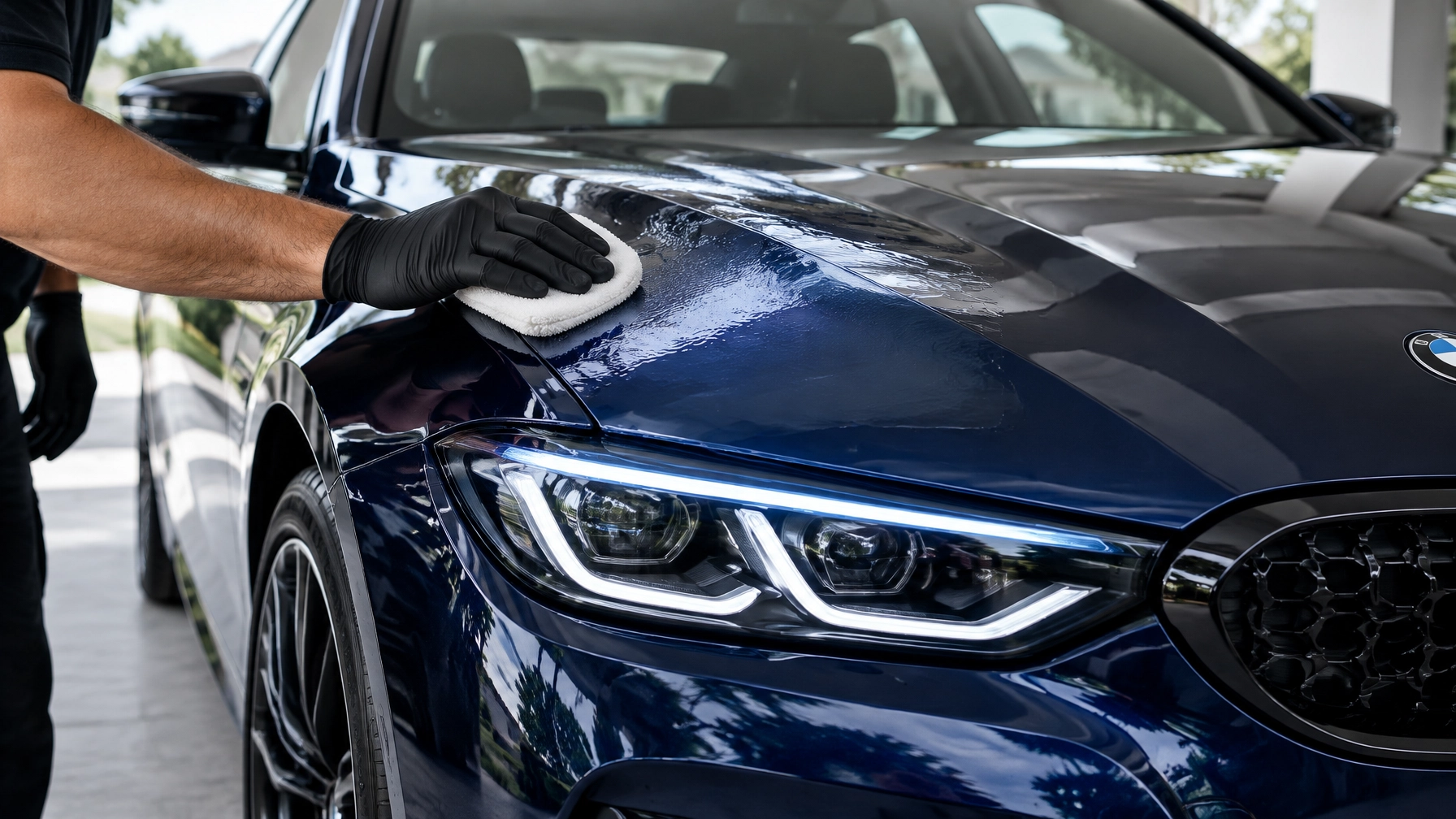
Liquid Paint Protection Film forms a flexible, solid-state polymer film over the vehicle’s paint after careful hand application and curing.
LPPF uses a polyurethane and acrylic polymer blend designed to create a resilient protective layer. The cured film provides more physical protection than ceramic coating alone because it is engineered to absorb light-to-moderate abuse from rocks and road debris.
The process begins with surface evaluation and preparation. Contamination must be removed before application so the LPPF can bond evenly to a clean surface. Depending on the vehicle’s condition, preparation may include washing, chemical decontamination, iron removal, clay treatments, and polishing.
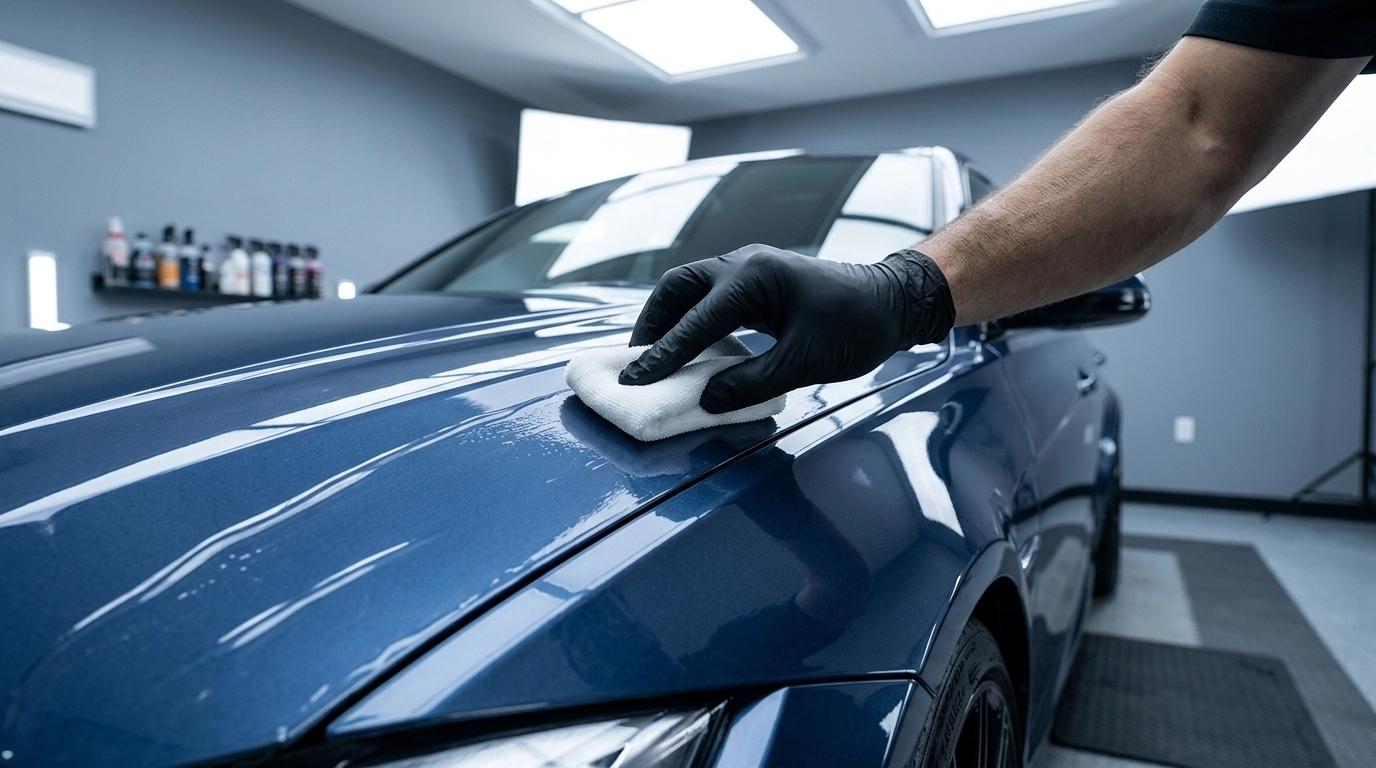
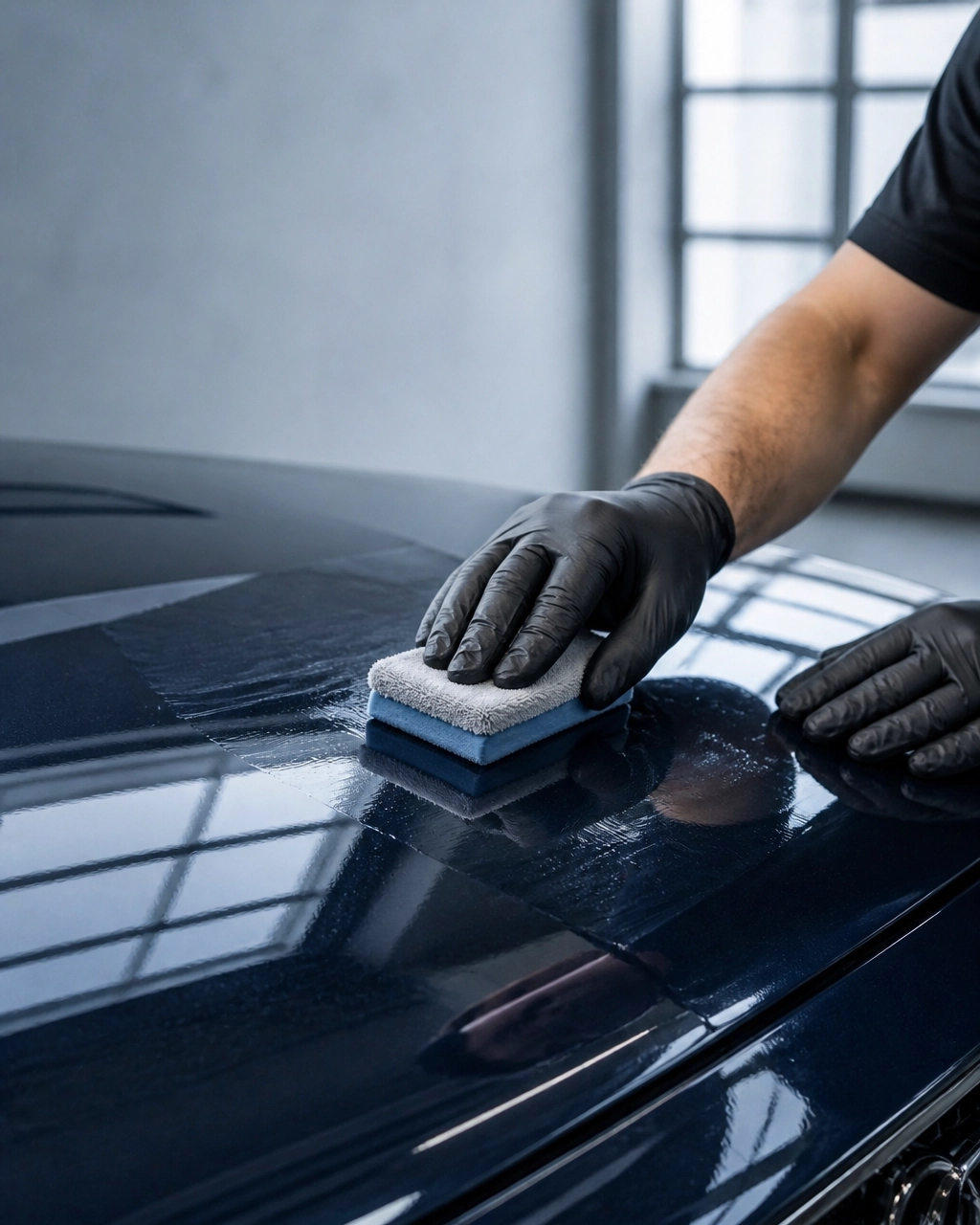
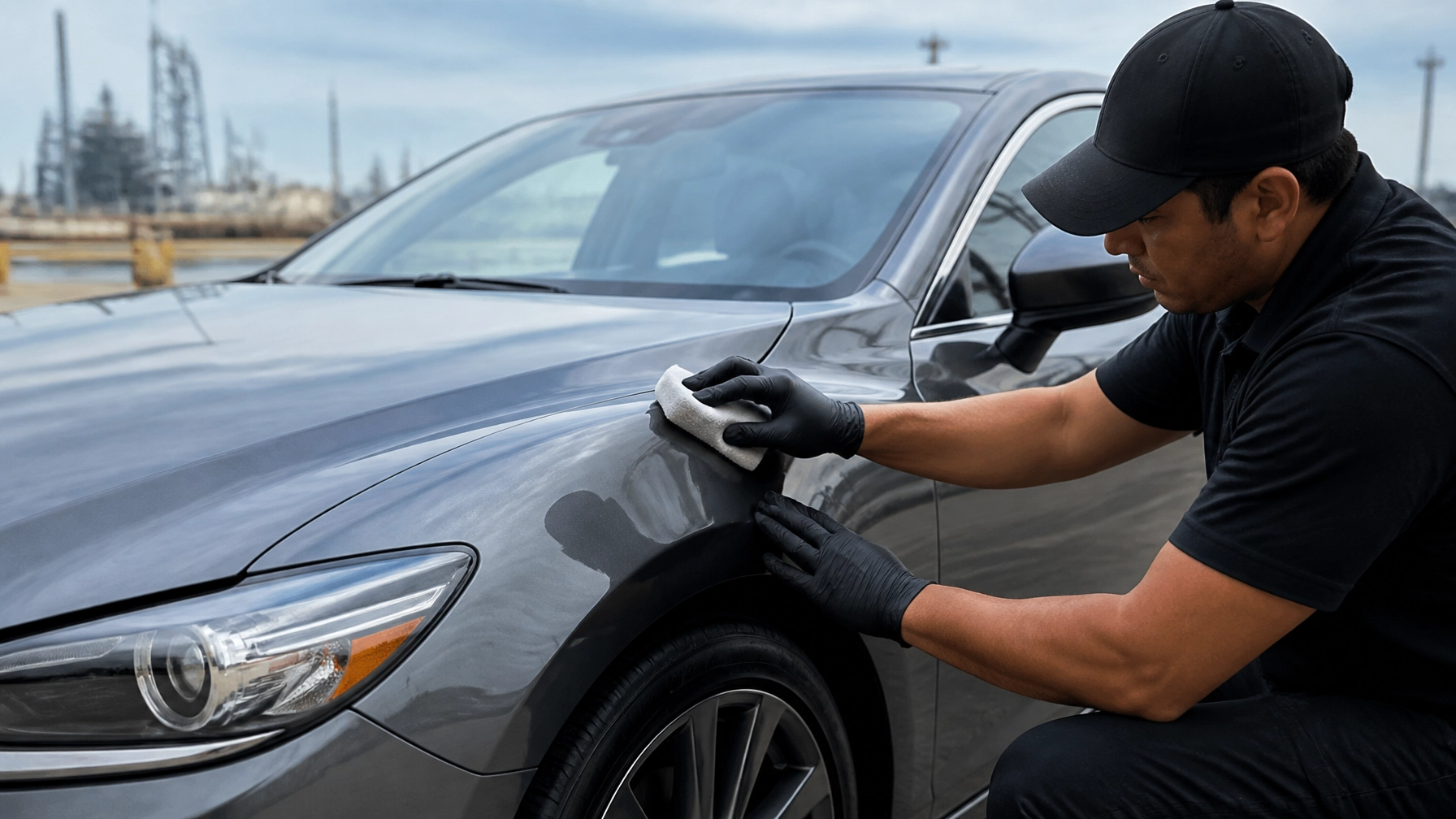
The film is then applied by hand with microfiber applicator pads.
This technique allows the installer to control coverage, pressure, and leveling across each panel. The process does not rely on pre-cut kits, seams, or panel-removal work. It creates a smooth protective surface over high-risk areas such as the hood, bumper, fenders, mirrors, rocker panels, and A-pillars.
LPPF helps protect against:
- Gravel and light-to-moderate rock impacts
- Road debris from heavy truck traffic
- Scratches and wash-related wear
- Bug acids and bird droppings
- UV-related fading and surface deterioration
- Industrial residue that would otherwise contact the paint directly
The practical advantage is straightforward: the protective film takes the abuse before your factory paint does.
Can Liquid PPF Be Re-Leveled After a Rock Impact?
Yes, LPPF can be re-leveled when a rock impact creates a blemish in the protective film.
That repairability is one of the most important advantages for commuters who regularly travel industrial routes. A rock can create a mark in the LPPF without requiring the entire panel to be stripped and protected again.
The affected area can be evaluated and re-leveled to restore a smooth finish without a complete re-install.
This is different from treating every impact as a permanent paint problem. The goal is to preserve the original finish beneath the protective layer and keep maintenance faster and safer over the vehicle’s service life.
Ceramic Enthusiasts states that LPPF includes a 10-year warranty. When ceramic coating is applied as the top layer, the warranty upgrades to a lifetime warranty, subject to the applicable service terms.
Protection should be repairable, not disposable.
How Does Ceramic Coating Complement Liquid Paint Protection Film?
Ceramic coating adds chemical resistance, hydrophobic performance, and easier maintenance over the LPPF layer.
Once cured, a premium ceramic coating bonds to the prepared surface and changes the surface-energy characteristics of the exterior. Water forms tighter beads because surface tension causes droplets to pull together instead of spreading across the paint.
That hydrophobic behavior helps road grime, rainwater, and loose contaminants release more easily during proper washing.
For Pasadena and Deer Park commuters, ceramic coating adds protection against:
- Houston UV exposure
- Industrial residue and chemical contaminants
- Bug splatter and bird droppings
- Mineral deposits from frequent thunderstorms
- Road film and daily grime
- Heat and humidity-related surface contamination
The result is a slick finish that is easier to clean and maintains a mirror-like appearance through dozens of weather cycles.
The correct order is LPPF first, ceramic coating second.
LPPF provides the primary impact barrier. Ceramic coating becomes the complementary top layer that improves chemical resistance, water behavior, gloss, and maintenance. This combination is especially useful for daily drivers that encounter both gravel impacts and industrial fallout.

What Preparation Does Paint Need Before LPPF Application?
Paint needs to be clean, smooth, and properly corrected before LPPF is applied.
Industrial fallout can remain bonded even after a basic wash. Decontamination removes embedded particles that would otherwise interfere with adhesion or remain trapped beneath the protective layer.
The preparation process may include:
- Thorough exterior cleaning
- Chemical decontamination for bonded contaminants
- Iron-removal treatment for metallic particles and rail dust
- Clay treatment when surface texture remains
- Paint inspection under controlled lighting
- Precision polishing when swirls, oxidation, or light scratches are present
- Final panel cleaning before hand application
Paint correction is especially valuable when the vehicle has already spent years on Highway 225, I-45, or Beltway 8. Polishing removes or reduces surface defects while preserving as much clear coat as possible.
LPPF protects the condition underneath it. Surface correction should happen before protection, not after.
A properly prepared surface delivers stronger bonding, cleaner appearance, and a more consistent finish for years, not merely months.
Which Areas Should Pasadena and Deer Park Commuters Protect First?
The front end should receive priority because it absorbs the most direct road debris.
A partial-front LPPF package can protect the partial hood, partial fenders, front bumper, headlights, side mirrors, A-pillars, and the leading roof edge above the windshield.
A full-front package extends protection across the entire hood and fenders while covering the bumper, headlights, and mirrors.
Drivers with high mileage, frequent industrial-corridor travel, or long freeway commutes may benefit from broader coverage. Rocker panels, door edges, door cups, rear quarter panels, trunk ledges, and complete exterior paint can receive protection based on the vehicle’s use.
The right coverage depends on where your vehicle takes abuse.
Whether you drive from Deer Park to Houston, commute from Pasadena through South Houston, or travel between Pearland, Friendswood, League City, and Clear Lake, the consultation should focus on actual mileage, routes, parking conditions, and paint condition.

How Does Owner-Operated Service Improve the Protection Process?
Owner-operated service keeps quality control focused on one vehicle at a time.
Ceramic Enthusiasts brings over 10 years of hands-on experience to vehicle protection across Greater Houston. Each project receives meticulous attention instead of rushed, divided labor.
That matters during decontamination, paint inspection, polishing, hand application, curing, and final quality checks. Small surface irregularities are easier to identify when the process is handled with patience and precision.
Read more about the owner-operated Ceramic Enthusiasts team and its one-car-at-a-time approach.
Mobile convenience is also available for qualifying services and locations. You can discuss protection at your home or workplace in Pasadena, Deer Park, Pearland, League City, Friendswood, Alvin, or surrounding communities.
Do You Need Liquid PPF for Your Houston Commute?
Yes, LPPF is the appropriate starting point when your main concerns are rock chips, truck-route debris, and daily industrial-corridor exposure.
Ceramic coating remains a smart complementary add-on when you also want hydrophobic performance, chemical resistance, and easier cleaning. Automotive ceramic coating performs best when applied over properly prepared paint or LPPF.
If your vehicle already has etching, heavy contamination, oxidation, or visible chips, schedule an evaluation before selecting a package.
Contact Ceramic Enthusiasts at 281-626-9384 to discuss your routes, paint condition, and coverage needs. A consultation will determine whether partial-front LPPF, full-front protection, complete exterior coverage, or an LPPF-plus-ceramic system fits your daily drive.
Protect the paint before the next truck throws the next rock.