Vehicle owners across Houston, Pearland, Pasadena, Friendswood, League City, and South Houston face relentless environmental assaults every single day. Unforgiving summer temperatures exceeding 95 degrees, punishing UV exposure, heavy industrial fallout from local shipping corridors, and abrasive road debris turn daily commuting into a constant hazard for automotive paint. Protecting your vehicle investment requires choosing the right defense mechanism before damage occurs. Without proper protection, Houston's aggressive climate quickly oxidizes clear coats, etches paint surfaces with acidic pollutants, and peppers front ends with unsightly stone chips.
Ceramic Enthusiasts delivers owner-operated paint protection expertise backed by over 10 years of hands-on experience. Operating on a strict one-car-at-a-time approach, we provide meticulous attention that rushed, high-volume shops simply cannot match. When evaluating paint protection options, vehicle owners frequently debate traditional film versus advanced liquid alternatives. This comprehensive breakdown examines how each system performs under harsh Texas conditions to help you make an informed decision.
What Is Liquid Paint Protection Film and How Does It Work?
Liquid Paint Protection Film represents a revolutionary leap forward in automotive surface defense, delivering seamless, full-body shielding without the limitations of traditional pre-cut kits. As an owner-operated shop with over a decade of precision experience, Ceramic Enthusiasts champions Liquid Paint Protection Film (LPPF) as the premier recommendation for comprehensive vehicle preservation in Houston.
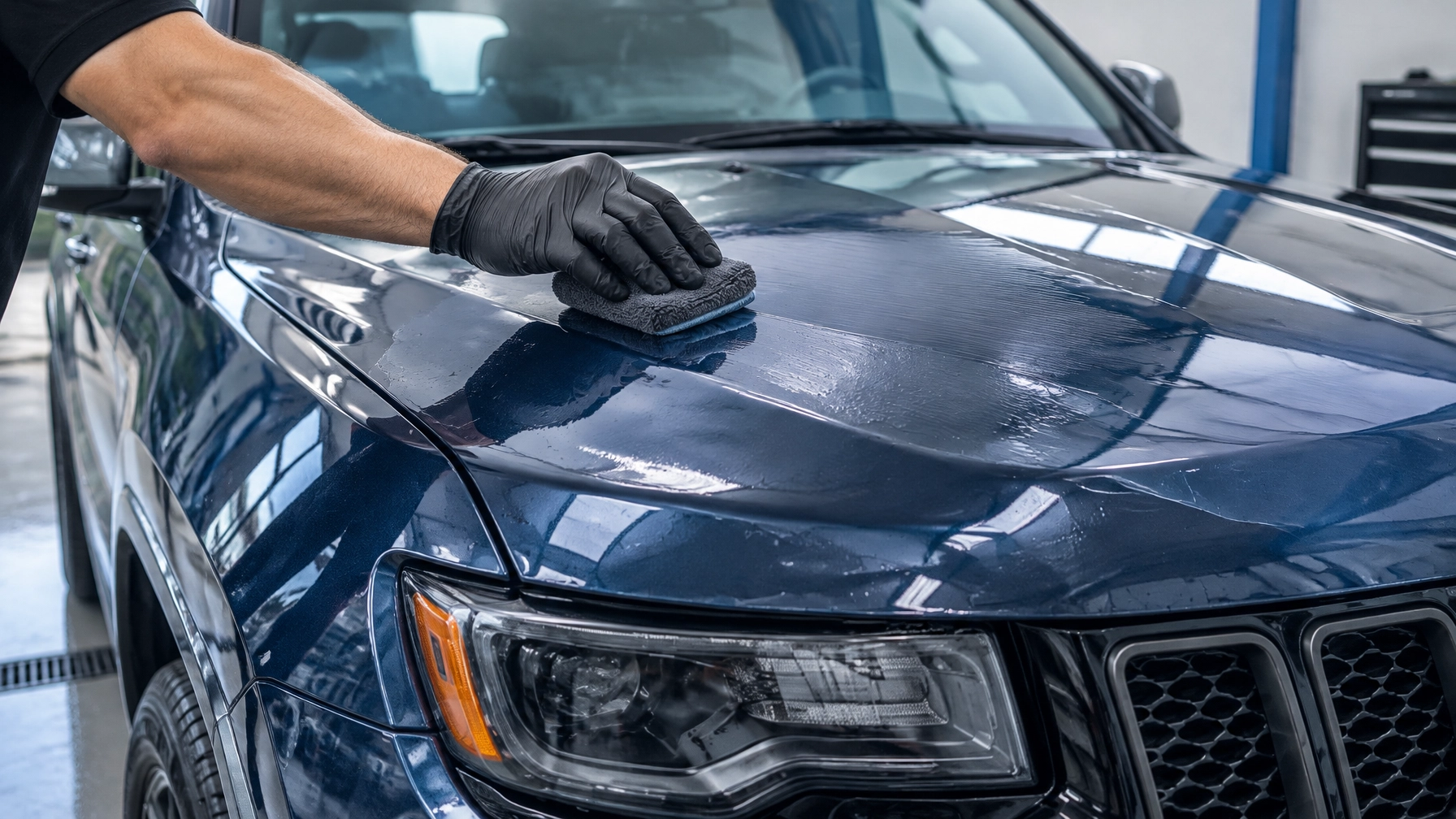
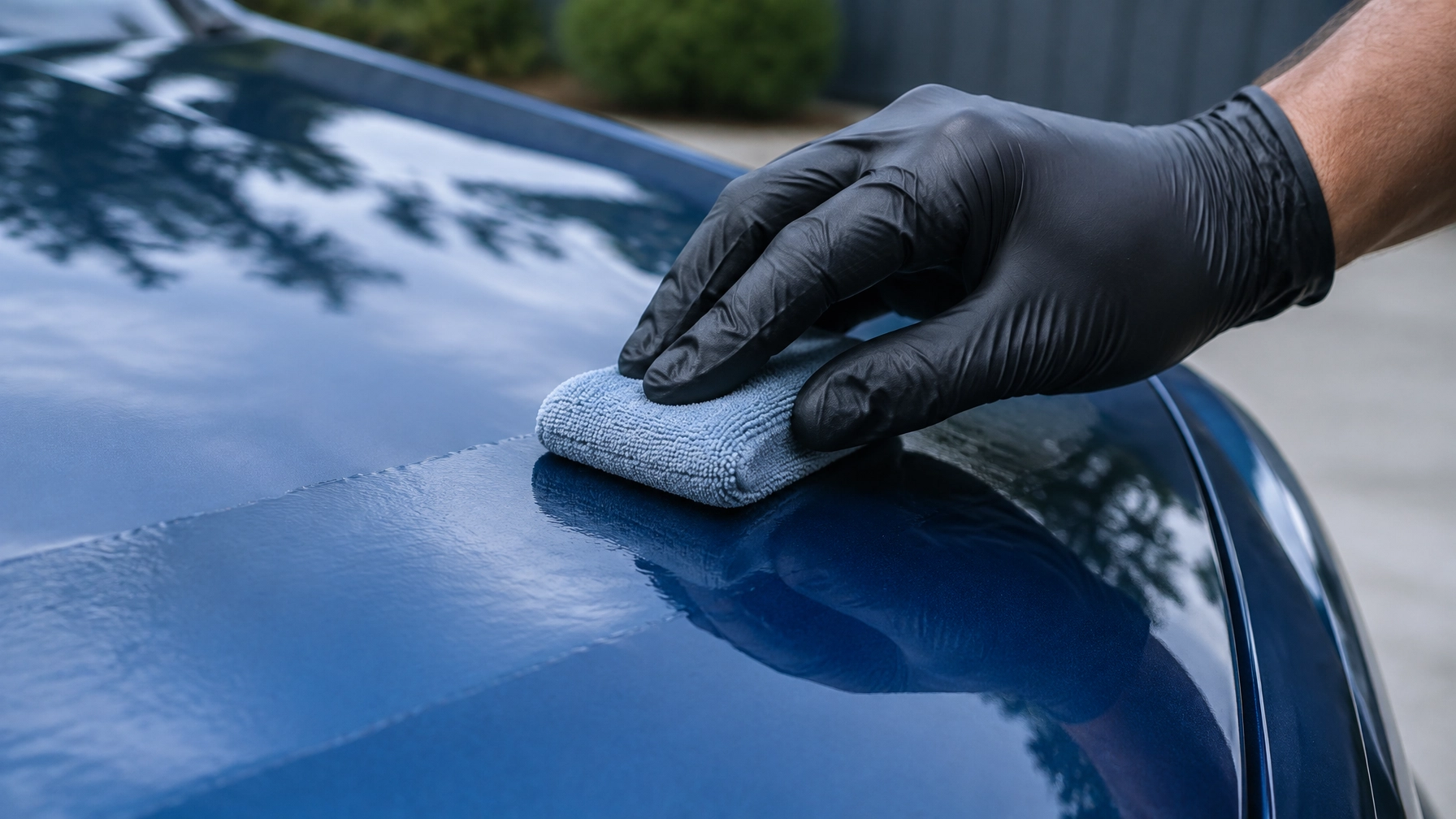
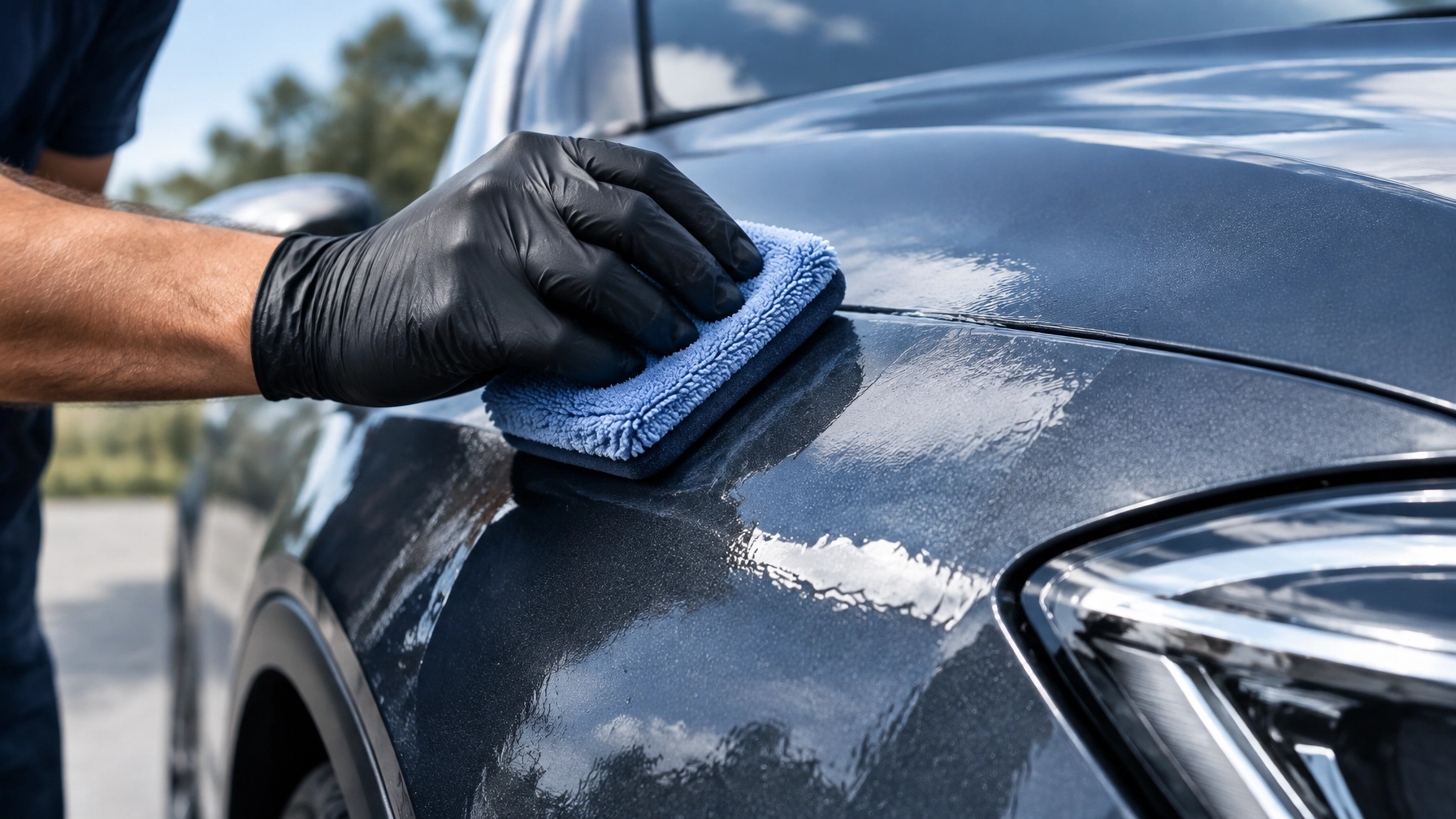
The application process is entirely hand-applied, utilizing professional installer hands, precision microfiber applicator pads, and specialized smoothing tools to lay down a thick, high-solids polyurethane polymer directly onto the prepared clear coat. This meticulous hand-applied method ensures the liquid film flows smoothly into every complex body contour, recessed door handle, and aggressive aerodynamic vent. Once cured, LPPF forms a resilient, multi-millimeter-thick barrier that bonds molecularly with the factory finish.
Unlike traditional sheets that rely on adhesive backing over flat surfaces, LPPF creates an uninterrupted, seamless defense layer across the entire vehicle body. It stands up to flying gravel, parking lot scuffs, and chemical fallout without lifting at the edges. Furthermore, LPPF features an extraordinary advantage when facing rock impacts: if a heavy stone causes a blemish on the surface, LPPF can be locally re-leveled and polished, restoring a flawless, smooth finish without requiring a full panel replacement.

How Does Traditional PPF Compare in Durability and Aesthetics?
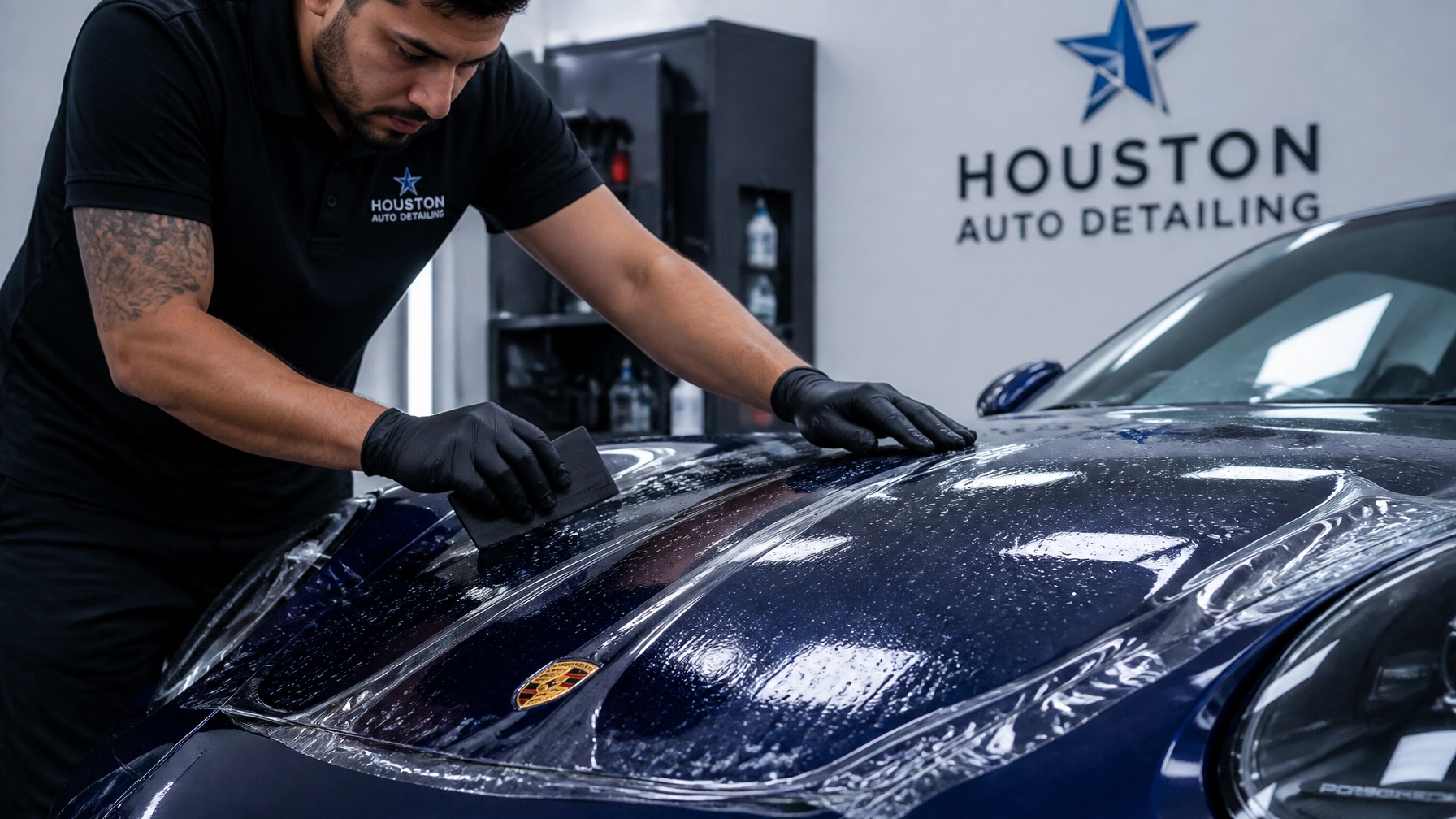
Traditional thermoplastic urethane film has long served as the industry benchmark for impact absorption on high-risk zones like front bumpers, hoods, and rocker panels. Traditional PPF consists of pre-cut sheets stretched and tucked over vehicle body panels using slip solutions and microfiber applicator pads.
While traditional film provides exceptional physical thickness to absorb direct rock strikes on highway corridors, it comes with distinct visual and structural drawbacks. Pre-cut kits and hand-wrapped edges inevitably leave visible seams, relief cuts, and lift lines, particularly on complex curves or dark-colored vehicles operating under intense Texas sunlight. Over months of exposure to high humidity and temperature swings, these exposed edges can collect microscopic dirt particles, leading to premature yellowing or edge lifting.
When traditional PPF suffers deep gouges or tearing from severe road debris, the damaged section must be entirely peeled away and replaced by stripping the affected panel. By contrast, our hand-applied LPPF approach eliminates edge lines entirely, wrapping every contour with pristine clarity while offering superior aesthetic integration.
Which Protection System Survives Houston's Climate Best?
Houston driving conditions test automotive finishes to their absolute limits. Daily commutes along busy freeways expose vehicles to relentless tire kick-up, airborne contaminants from refineries, and blistering solar radiation that accelerates clear coat degradation.
Traditional film acts as a rigid physical shield, but its adhesive borders remain vulnerable to thermal expansion caused by 95-degree summer days and torrential downpours. High humidity weakens traditional adhesives over time, causing edges to curl or trap moisture. Liquid Paint Protection Film resolves this vulnerability through direct molecular bonding with the paint surface. Because LPPF is meticulously hand-applied as a continuous, high-solids layer, it expands and contracts uniformly with the vehicle's metal panels under extreme thermal stress.
To maximize your vehicle's defense, LPPF pairs seamlessly with our automotive ceramic coating and specialized paint correction services. Following meticulous paint correction to remove existing swirls and micro-scratches, LPPF provides the heavy-duty structural defense, while pairing an additional top-tier ceramic coating delivers unmatched hydrophobic properties, repelling water, road grime, and brake dust with effortless maintenance.

Can Ceramic Coating Replace Paint Protection Film?
Automotive ceramic coating provides exceptional gloss, UV resistance, and hydrophobic surface tension, but it is not designed to absorb heavy physical impacts. Ceramic coatings form a semi-permanent chemical bond measuring only a few microns thick, making them phenomenal for repelling chemical fallout, bird droppings, and water spots in humid environments like Houston.
However, ceramic coatings lack the film thickness required to stop flying gravel or sharp stone impacts on fast-moving highways. Relying solely on ceramic coating leaves unprotected paint vulnerable to rock chips and deep surface gouges. For vehicle owners seeking true impact defense combined with a mirror-like shine, LPPF serves as the primary structural safeguard, while ceramic coatings function as a complementary enhancement to lock in gloss and simplify routine washing.
Which Option Delivers the Best Long-Term Value for Your Investment?
Evaluating long-term value requires looking beyond initial installation costs to examine durability, maintenance ease, and aesthetic preservation over years of driving. Traditional PPF requires significant investment, especially for full-vehicle wraps, and often demands partial replacement when edges lift or high-impact zones take severe hits.
Liquid Paint Protection Film delivers comprehensive, full-body protection at a superior value proposition, eliminating edge-maintenance headaches and providing the unique ability to re-level surface blemishes from rock strikes. Backed by over 10 years of owner-operated expertise and our meticulous one-car-at-a-time commitment, Ceramic Enthusiasts ensures your vehicle receives unhurried, flawless execution tailored specifically to withstand Texas weather cycles.

Schedule Your Vehicle Protection Consultation Today
Protecting your automotive investment in Houston, Pearland, Pasadena, Friendswood, League City, or South Houston demands expert craftsmanship and proven materials. Whether you want to shield your daily commuter with advanced Liquid Paint Protection Film, restore clarity through professional paint correction, or add specialized wheel and glass ceramic coatings, Ceramic Enthusiasts delivers uncompromising quality.
Connect with our owner-operated studio today at 281-626-9384 to discuss your vehicle's specific needs and schedule your personalized consultation. Experience the difference that unhurried, meticulous attention makes for your car's finish.