
Houston drivers need more than shine, they need paint protection engineered for heat, humidity, UV exposure, freeway debris, and daily traffic. Liquid Paint Protection Film (LPPF) provides the primary physical barrier, while ceramic coating adds hydrophobic performance, chemical resistance, and gloss.
The right choice depends on what threatens your vehicle most. A commuter traveling I-45 or Loop 610 faces different risks than someone who drives short distances around Friendswood. Understanding how each layer performs makes the decision straightforward.
What Does Houston Road Exposure Do to Unprotected Paint?
Houston’s environment attacks vehicle paint from several directions. Summer temperatures regularly reach 95 degrees, while direct sun can push painted panels far higher. Humidity often remains above 70%, and sudden thunderstorms leave mineral-rich water behind as surfaces dry.
Daily traffic adds another problem. Vehicles traveling I-45, Loop 610, the Gulf Freeway, and shipping corridors around Pasadena encounter loose gravel, construction dust, sand, and road debris. Even normal stop-and-go traffic creates repeated exposure to brake dust, bug residue, exhaust film, and oily road grime.
Without a physical protection layer, small impacts create chips in the hood, bumper, mirrors, and fender edges. Acidic bird droppings and bug splatter can etch the clear coat. UV exposure accelerates fading and oxidation.
The damage accumulates quickly. Prevention is faster and safer than restoring heavily damaged paint later.
How Does Hand-Applied Liquid PPF Protect a Houston Vehicle?
Liquid Paint Protection Film is the stronger first recommendation when impact protection is the priority. It is a hand-applied blend of polyurethane and acrylic polymers that cures into a solid, flexible protective film over the vehicle’s paint.
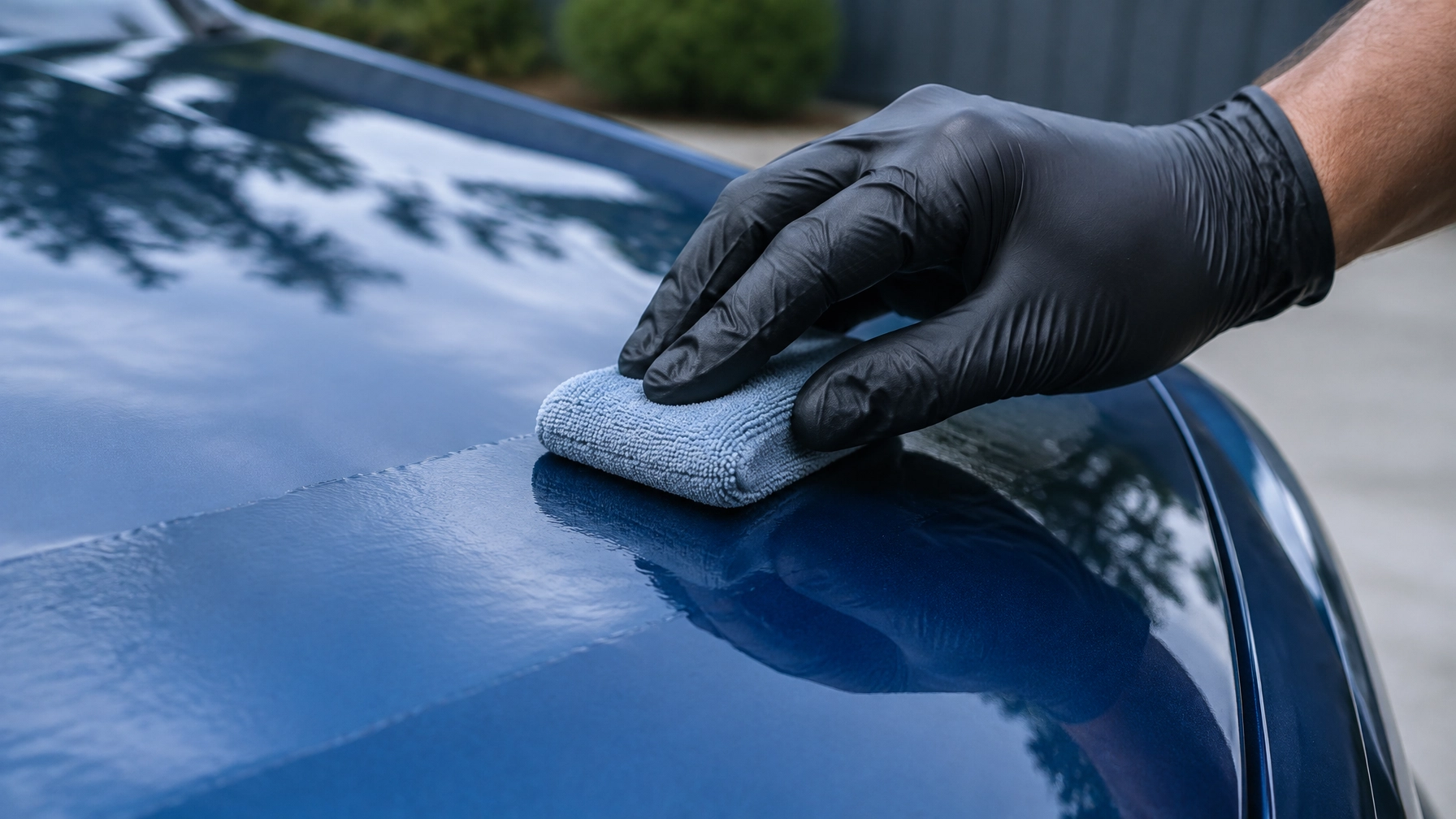
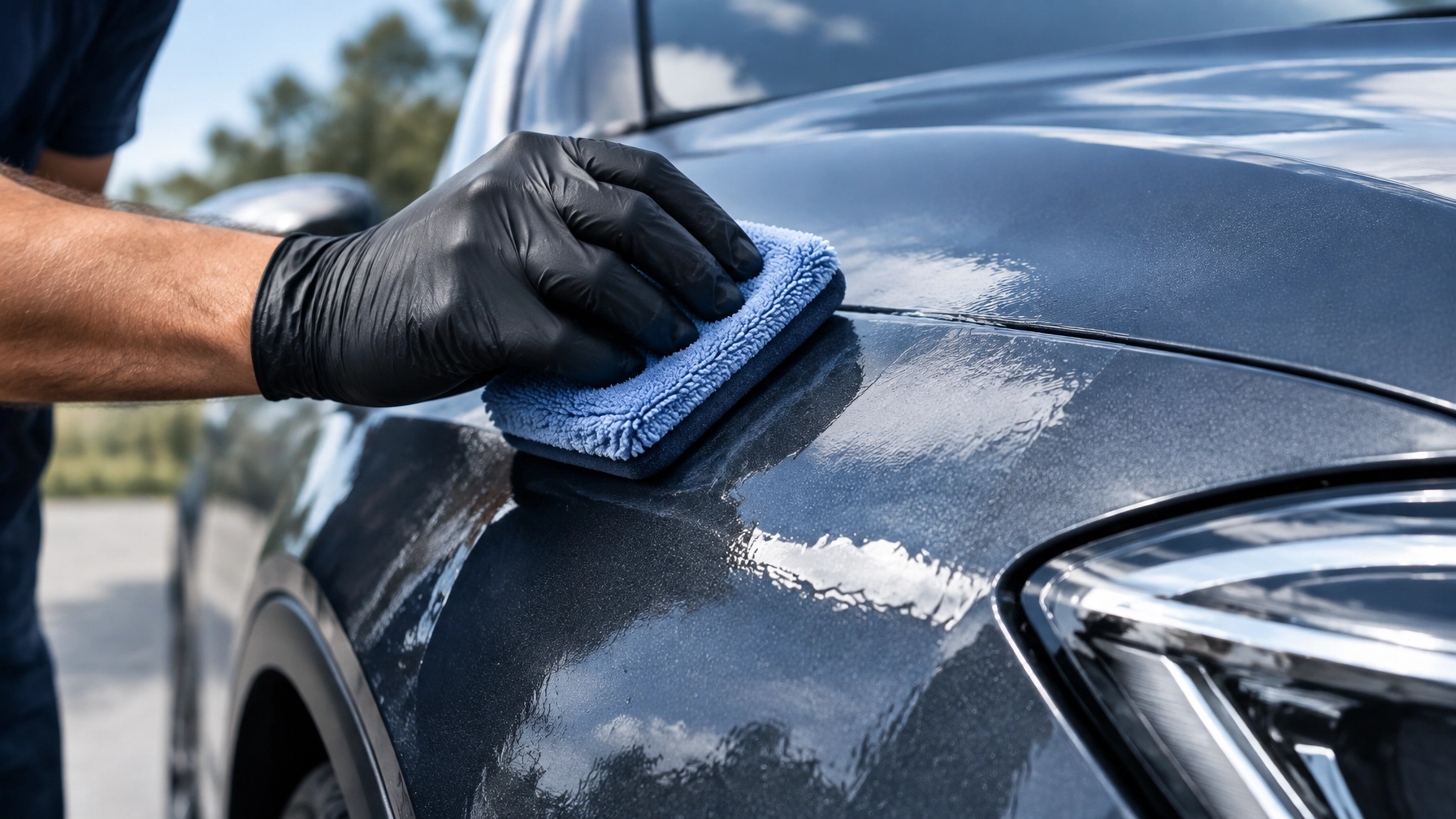
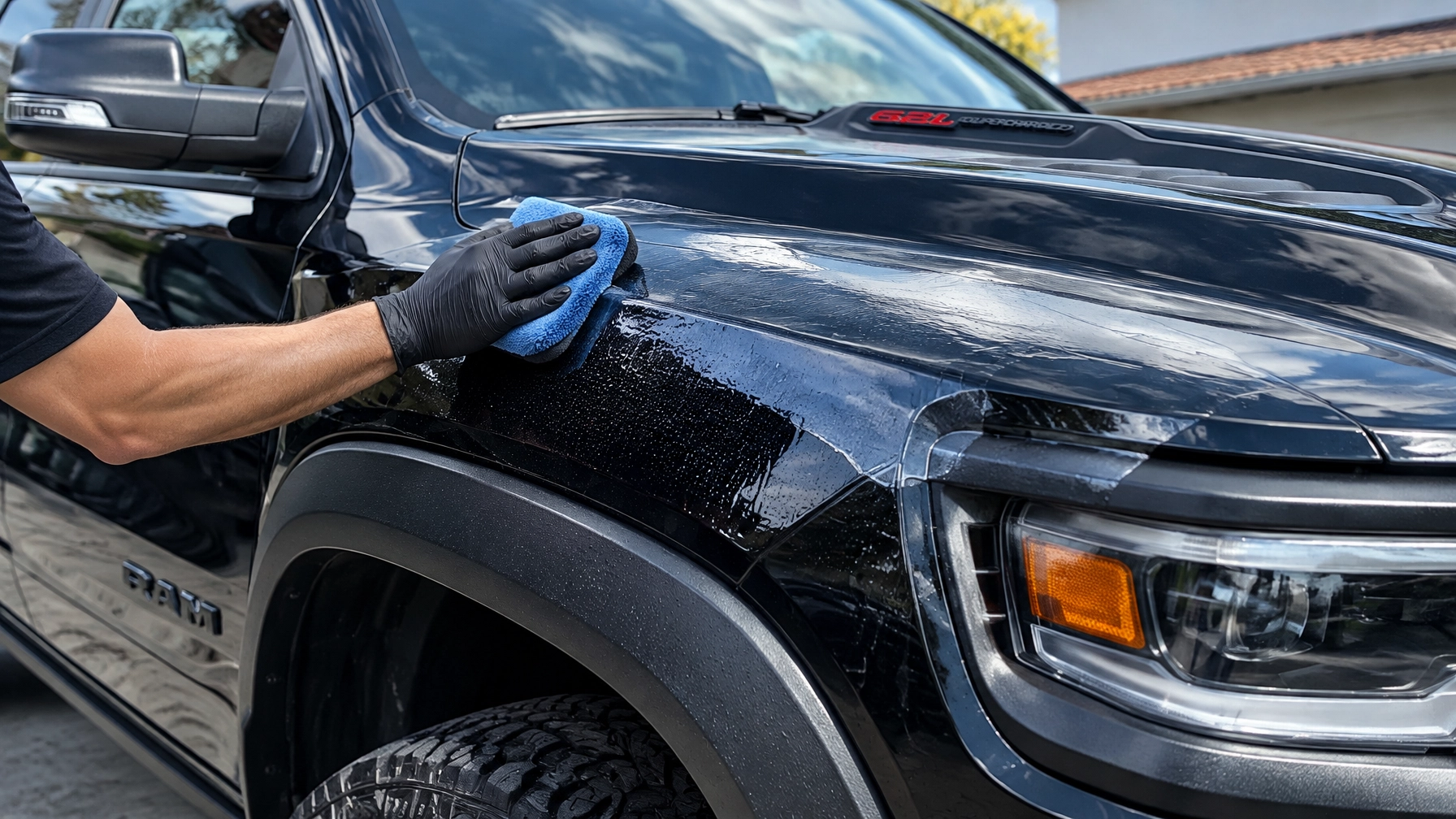
The application is performed panel by panel. A technician uses controlled hand movements and professional microfiber applicator pads to distribute the liquid evenly, level the surface, and monitor the finish under proper lighting. This is not a spray-on shortcut or a machine-only treatment.
Once cured, LPPF forms a sacrificial barrier between the road and the clear coat. It absorbs light-to-moderate abuse from rocks, sand, and road debris before those contaminants reach the original paint. It also provides a smooth, glossy surface with no visible seams or traditional film edges.

Ceramic coating remains valuable, but it is not designed to absorb a rock strike. LPPF belongs underneath the conversation whenever Houston highway driving and paint chips are major concerns.
What Does Ceramic Coating Protect Against?
Ceramic coating protects primarily through chemical bonding, hydrophobic behavior, and surface resistance. During application, the coating bonds to the prepared clear coat at a molecular level, creating a durable surface that repels water and contaminants.
Premium-grade ceramic coating helps defend against:
- UV exposure and oxidation
- Bird droppings and bug acids
- Road film and environmental contaminants
- Water spotting and mineral deposits
- Minor washing-related marring
- Difficult-to-remove dirt and grime
Its hydrophobic properties reduce surface tension. Water gathers into tighter beads and rolls away more easily, taking loose dirt with it. That makes routine washing faster and safer, especially after Houston thunderstorms.
Ceramic coating also creates the deep gloss many vehicle owners want. The result is a slick, mirror-like finish that becomes noticeable from the first rainstorm.
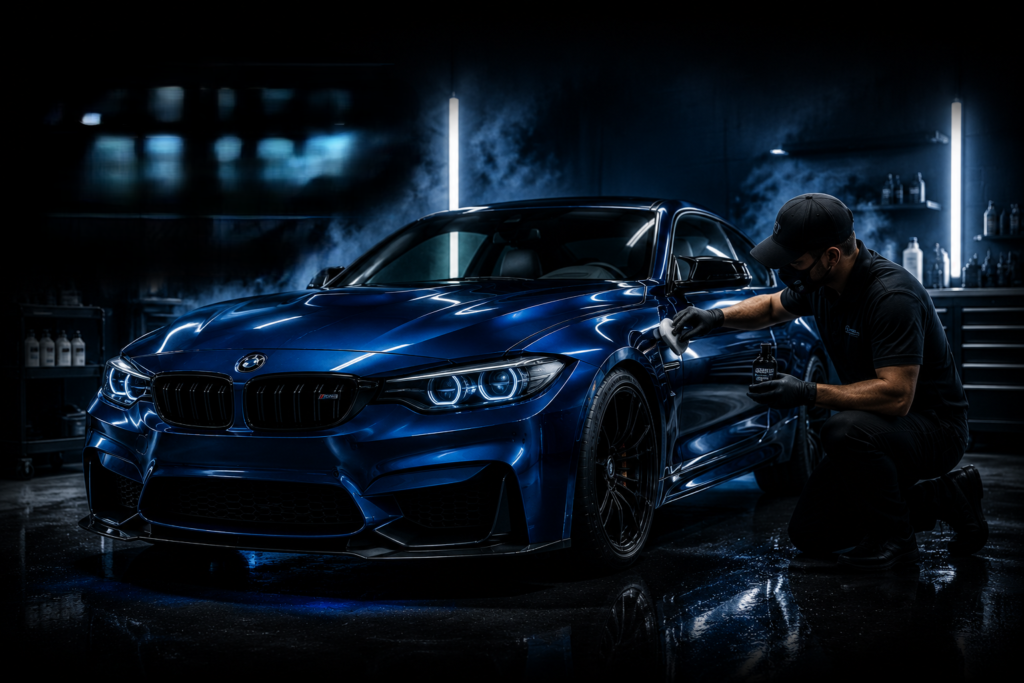
However, ceramic coating does not replace a physical barrier. It does not stop rock chips, significant scratches, or road rash. For that reason, we present ceramic coating as a complementary layer after LPPF, not as the first choice for impact protection.
Which Layer Handles Rock Chips and Road Debris Better?
LPPF handles physical impact protection better because it cures into a thicker protective film. Ceramic coating is an ultra-thin chemical layer designed for gloss, water behavior, UV defense, and easier maintenance.
| Protection concern | Liquid PPF | Ceramic coating |
|---|---|---|
| Rock chips | Stronger protection | Not designed for impact |
| Highway debris | Physical barrier | Limited protection |
| UV exposure | Helps shield the paint | Strong chemical and UV defense |
| Water repellency | Smooth protective surface | Excellent hydrophobic behavior |
| Gloss enhancement | High gloss | Deep, reflective gloss |
| Re-leveling | Yes, for localized blemishes | No |
| Full-vehicle seamless coverage | Yes | Yes |
For drivers commuting between Houston and League City, or traveling daily through Pearland, road debris deserves serious consideration. LPPF protects the finish from the first impact, while ceramic coating helps maintain the surface afterward.
How Does Re-Leveling Make LPPF Easier to Maintain?
Re-leveling is one of LPPF’s most practical advantages. If a rock creates a localized blemish in the LPPF layer, the affected area can be repaired without removing and replacing an entire panel.
The technician evaluates the blemish, prepares the area, and re-levels the liquid protection so the surface becomes smooth again. This repair process restores the appearance of the protective layer while preserving the paint underneath.
That is different from replacing a damaged traditional film panel. It is also different from ceramic coating, which cannot be locally re-leveled after a chip or deeper scratch.
LPPF also helps minor surface blemishes fade through heat exposure. Houston’s strong sunlight and warm summer conditions support the film’s ability to soften and recover from light surface marks.
The result is practical long-term ownership: years of protection rather than months of hoping the finish stays untouched.
Can LPPF and Ceramic Coating Work Together?
Yes. LPPF and ceramic coating work together as a complete protection system.
LPPF should be applied first because it provides the physical barrier against rocks and road debris. Ceramic coating can then be applied as a top layer to enhance gloss, water repellency, UV resistance, and chemical protection.
This combination helps create:
- Impact protection from LPPF
- Stronger hydrophobic performance
- Easier removal of bugs and road film
- Improved resistance to Houston sun and humidity
- A deeper, smoother appearance
- Simpler routine maintenance
Ceramic Enthusiasts states that LPPF includes a 10-year warranty, with the warranty upgrading to a lifetime warranty when ceramic coating is applied as the top coat. Visit our Liquid Paint Protection Film service page to review coverage options.
Smart add-ons can extend the system beyond painted panels. Wheel ceramic coating helps resist brake dust and high-temperature grime, while glass ceramic coating improves water behavior during Houston’s heavy rain cycles.
What Does Your Driving Pattern Say About the Right Protection?
LPPF is the primary recommendation for Houston vehicle owners who:
- Drive daily on I-45, Loop 610, I-10, or Beltway 8
- Commute through construction zones or shipping corridors
- Want protection against hood and bumper chips
- Own a new vehicle they want to preserve
- Drive between Houston, Pearland, Pasadena, or League City
- Want a seamless finish without traditional film seams
- Value re-leveling instead of replacing an entire panel
Ceramic coating is an excellent complementary choice for drivers who primarily want easier washing, intense gloss, and protection from UV exposure, humidity, water spotting, bird droppings, and chemical contaminants.
Many vehicles benefit from both layers. LPPF addresses impact areas, and ceramic coating improves maintenance across the entire exterior.
How Does Paint Correction Improve Either Protection Layer?
Paint correction creates the best foundation for LPPF and ceramic coating. Decontamination removes bonded road film, industrial fallout, brake dust, and embedded contaminants. Clay treatment helps lift particles that remain attached after washing.
Paint correction then uses controlled polishing to reduce swirl marks, light scratches, oxidation, and hazing. This restores clarity before the protection is applied.
The reason matters. LPPF and ceramic coating preserve the condition beneath them. Applying either layer over dull, contaminated, or heavily swirled paint can lock in an imperfect appearance.
A state-of-the-art polishing process produces the mirror-like finish Houston owners expect. It also improves adhesion and helps the protection perform consistently through repeated heat, humidity, and rain cycles.
Learn more about preparation through our paint correction service.
What Makes Owner-Operated Attention Different?
Owner-operated service creates a direct quality-control advantage. Ceramic Enthusiasts brings over 10 years of hands-on experience to each vehicle, with meticulous attention from evaluation through final inspection.
The one-car-at-a-time approach matters. Your vehicle is not rushed between multiple jobs or treated as a production-line appointment. Surface preparation, product application, leveling, curing, and inspection receive focused attention.
That process takes place in-shop throughout the Houston area. Vehicle owners in Friendswood, Alvin, South Houston, Pasadena, and League City bring their vehicles to our shop, where every job is performed in a controlled environment, one car at a time.
The objective is consistent: careful work, clear communication, and a finish built to survive real Houston driving.

Which Protection Layer Does Your Houston Car Actually Need?
LPPF is the correct starting point when your main concern is rock chips, road debris, and long-term physical protection. Its hand-applied liquid process creates a seamless protective film that can be re-leveled if a localized blemish occurs.
Ceramic coating is the ideal complement when you also want stronger water repellency, easier maintenance, chemical resistance, and a deeper gloss.
The best recommendation depends on your vehicle, commute, paint condition, and ownership goals. Ceramic Enthusiasts can evaluate those factors and explain whether LPPF, ceramic coating, or both make sense for your car.
Schedule a vehicle protection consultation or call 281-626-9384 to determine the right protection layer for your Houston vehicle.
Can Ceramic Coating Prevent Rock Chips?
No. Ceramic coating helps protect against UV exposure, oxidation, chemical contaminants, water spotting, and minor surface wear, but it is not designed to absorb rock impacts.
LPPF provides the physical barrier needed for light-to-moderate rock and road-debris protection. Ceramic coating can then be added over LPPF for improved gloss, hydrophobic performance, and easier cleaning.
How Long Does LPPF Protection Last in Houston?
Ceramic Enthusiasts offers LPPF with a 10-year warranty. When ceramic coating is applied as the top coat, the warranty upgrades to a lifetime warranty according to the service information provided by the company.
Longevity still depends on proper maintenance, washing technique, environmental exposure, and the condition of the paint before application. Regular pH-neutral washing helps preserve the finish through Houston’s heat, humidity, and seasonal storms.