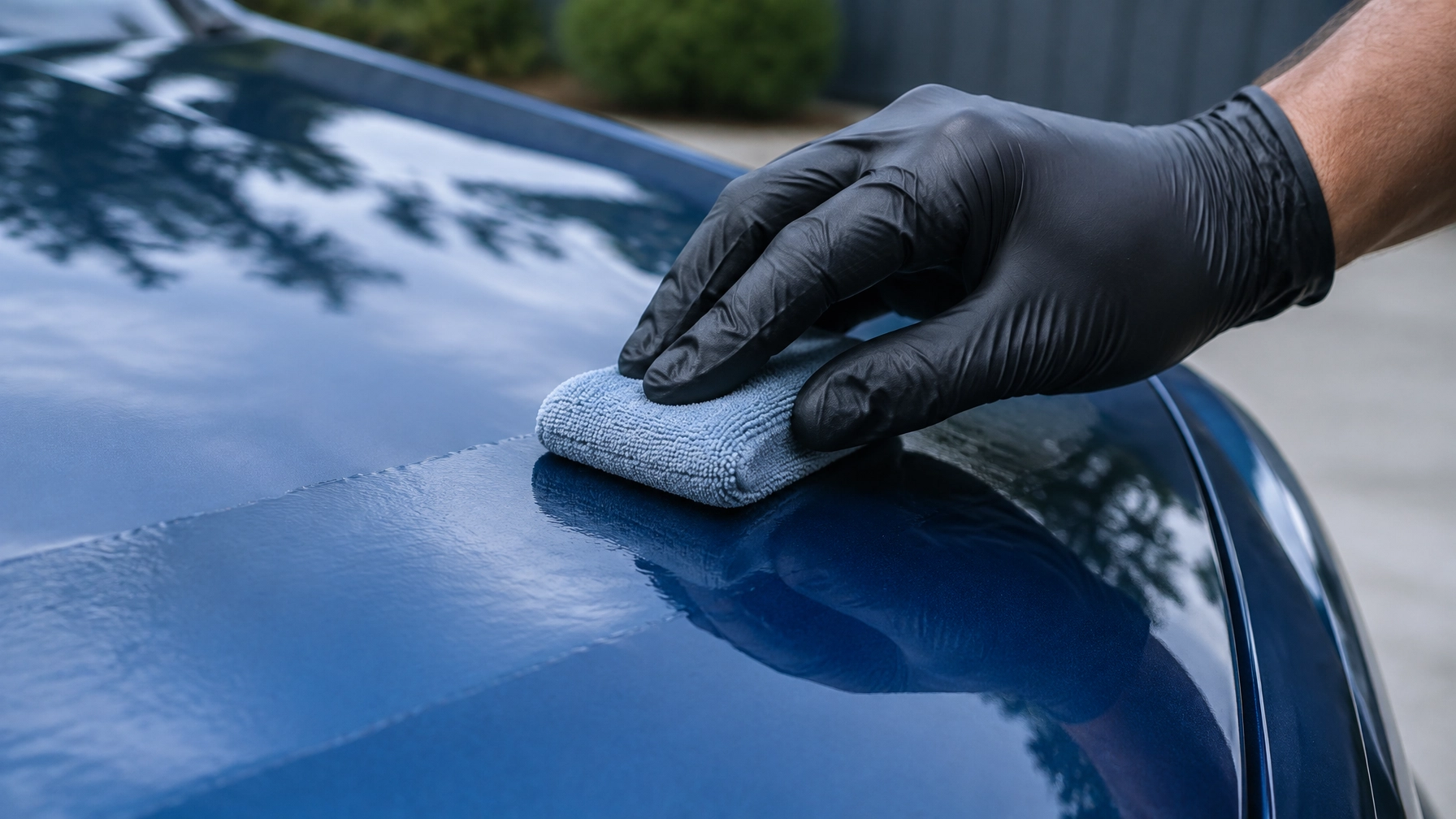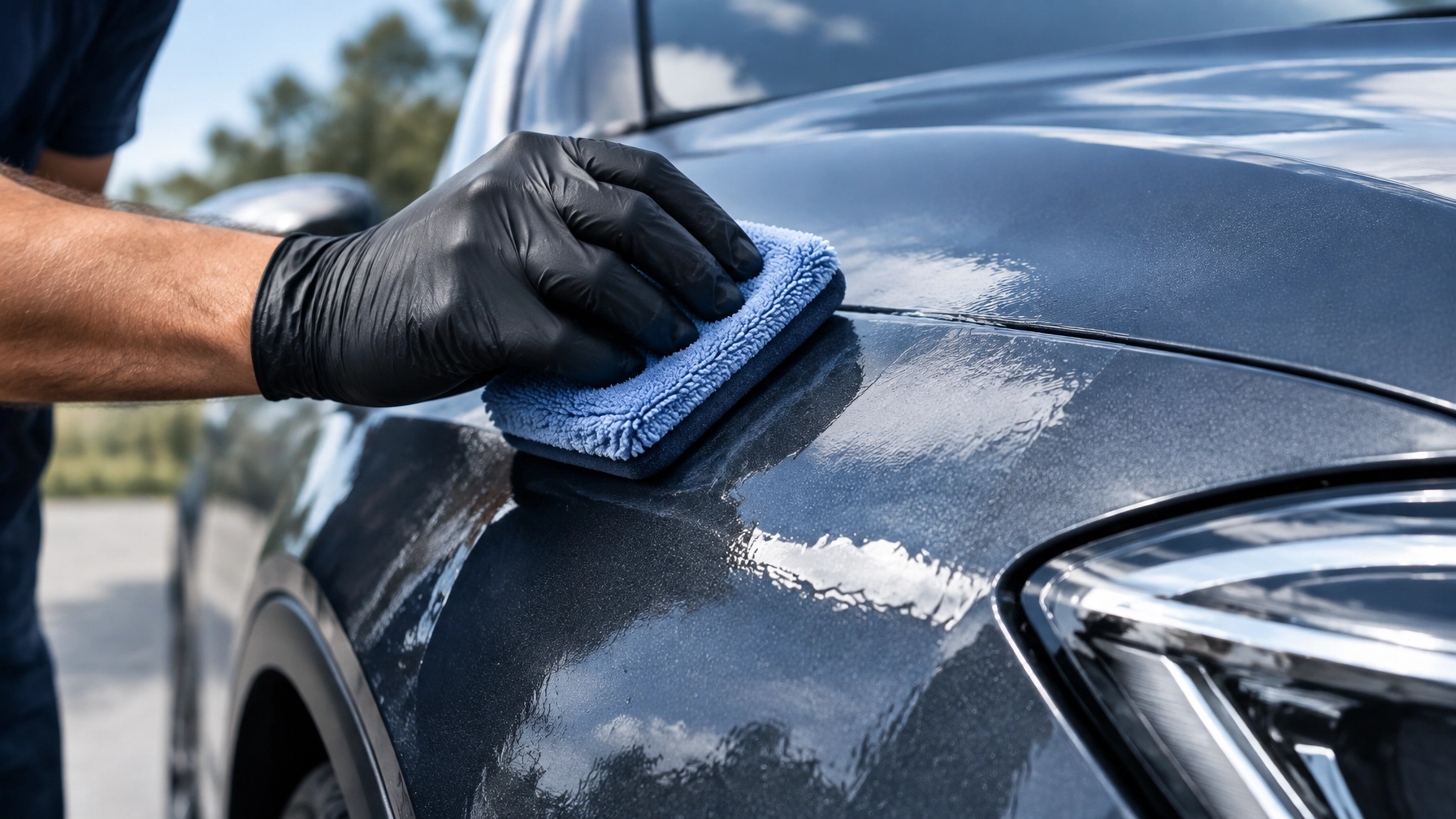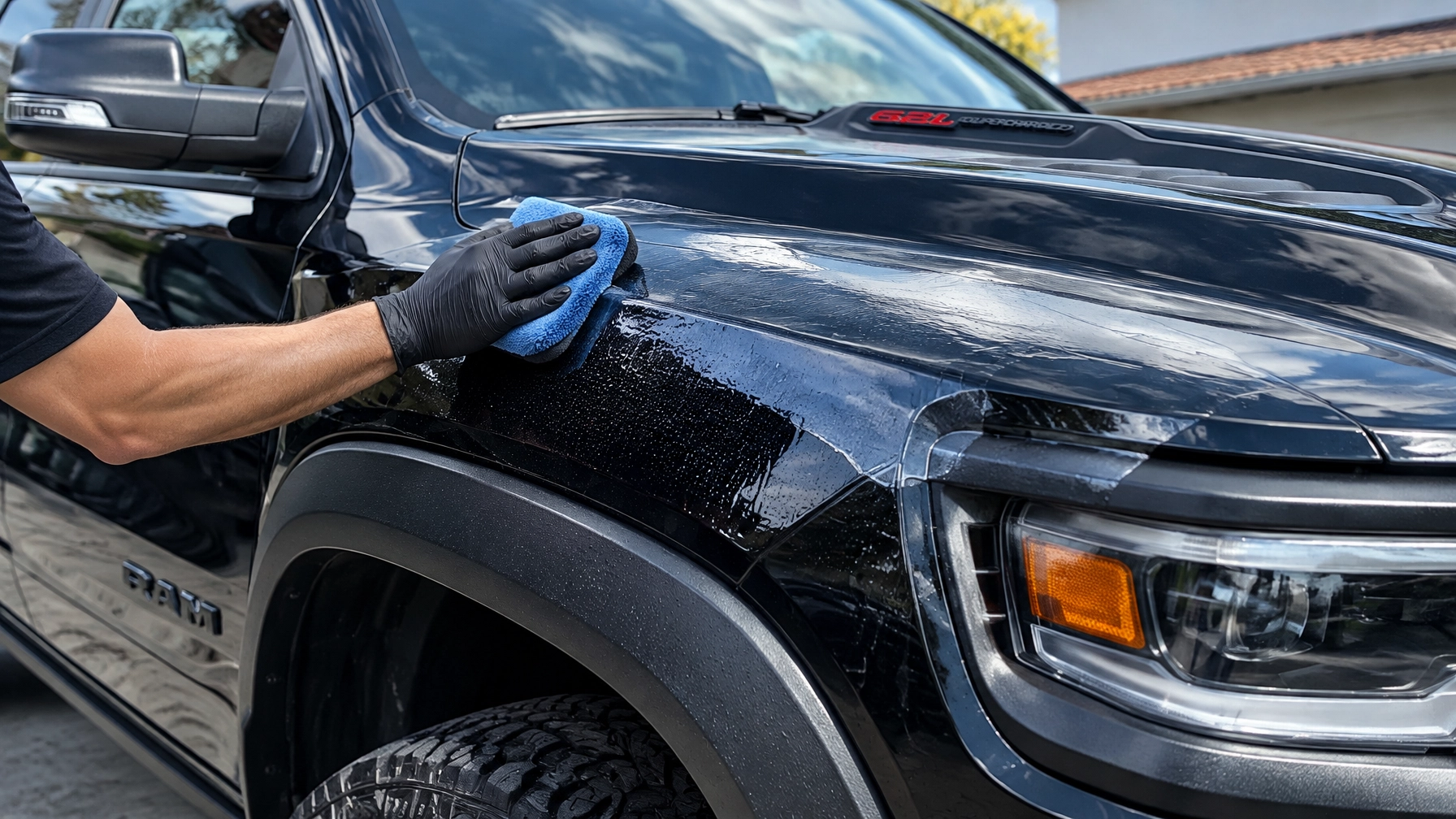
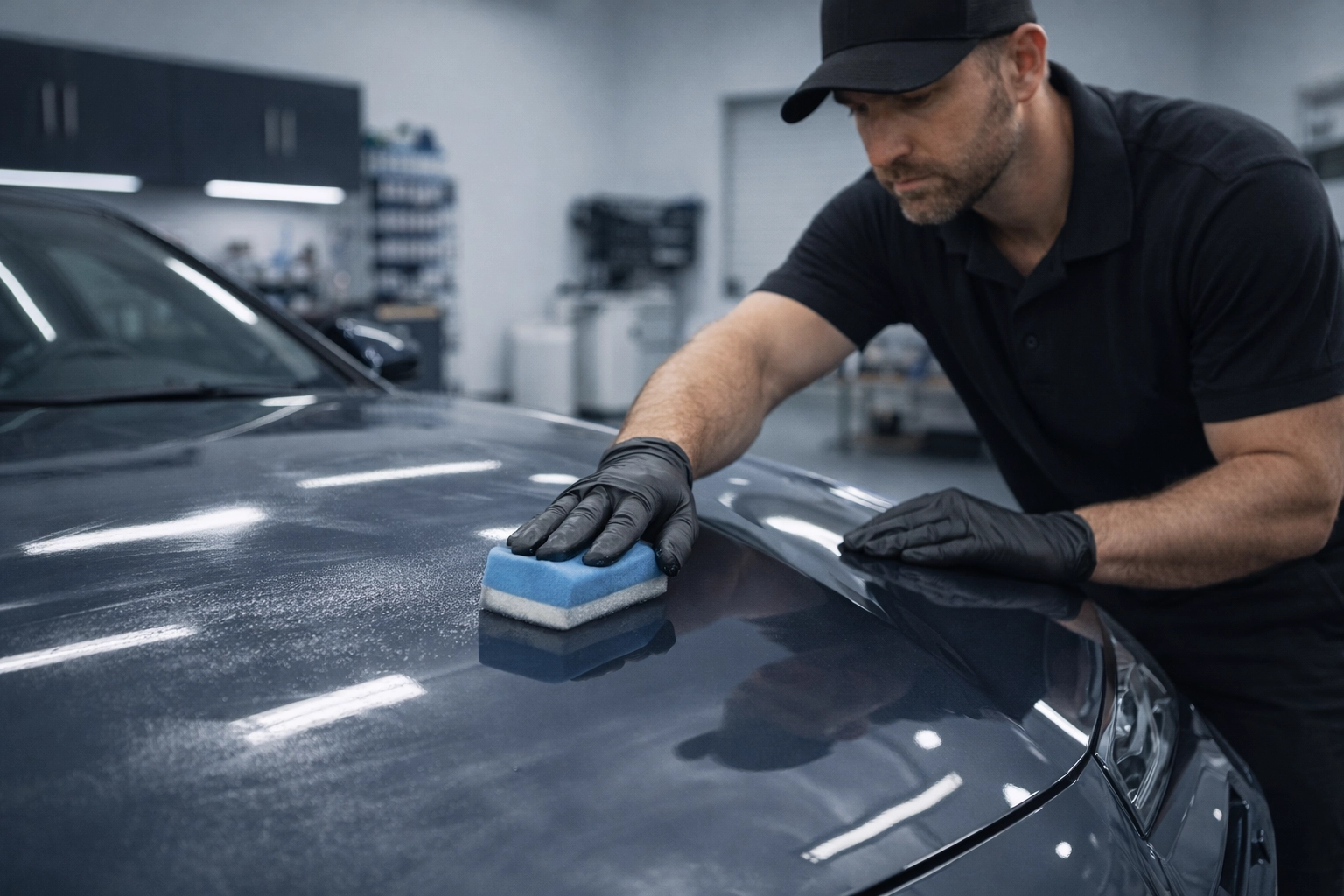
Liquid paint protection film delivers seamless rock chip defense with a finish that can be re-leveled that traditional PPF and ceramic coating can't match. In Houston's high-traffic corridors: where flying debris from I-45, the Beltway, and refineries creates constant paint damage: this spray-applied technology bonds at the molecular level to create an eight-micron protective barrier that actually re-levels after impact.
No visible seams. No peeling edges. Just continuous protection that restores itself when Houston throws rocks, road debris, and environmental contaminants at your paint.

What Exactly Is Liquid Paint Protection Film?
Liquid PPF is a ceramic polymer that creates the same impact resistance as traditional urethane film without any physical material to cut, stretch, or seam. We apply it meticulously by hand for controlled, even coverage, building approximately eight microns of protective thickness directly onto your vehicle's paint surface and bonding chemically rather than relying on adhesive layers.
The technology uses advanced ceramic compounds that cure under controlled conditions to form a flexible, transparent shield. Unlike traditional PPF that sits on top of your paint as a separate layer, liquid PPF integrates with the clear coat surface at a molecular level. This eliminates the edge lines, bubble formations, and yellowing issues that plague conventional film installations.
The protection rivals traditional PPF for scratch resistance and impact absorption. The difference shows up in repairability: liquid PPF can be polished, sanded, and reapplied in sections without replacing entire panels.
How Does Re-Leveling Technology Actually Work?
Re-leveling is the breakthrough that separates liquid PPF from every other paint protection option. When a rock chip or road debris impacts a surface protected with liquid PPF, the material's elastomeric properties allow it to absorb and disperse the energy rather than cracking or chipping like clear coat.
Here's what happens during impact: The liquid PPF layer flexes on contact, spreading the force across a wider surface area. The microscopic indentation left behind fills back in as the material returns to its original molecular structure. Within hours of impact, the surface restores to a smooth finish: not perfectly invisible, but dramatically less noticeable than bare paint damage.
The technology works because liquid PPF maintains flexibility after curing. Traditional clear coat hardens completely, which is why rock chips create permanent craters. Liquid PPF stays pliable enough to bounce back from minor impacts while remaining hard enough to resist scratches and abrasion.
In Houston's stop-and-go traffic on 288, the Gulf Freeway, and refineries-adjacent roads in Pasadena and South Houston, this re-leveling capability means dozens of small impacts get absorbed and minimized instead of accumulating into hood and fender damage that tanks resale value.

Why Does Houston Traffic Demand Rock Chip Protection?
Houston drivers face some of the worst rock chip conditions in Texas. The combination of heavy truck traffic, ongoing construction projects, and petrochemical industrial zones creates a constant barrage of flying debris.
I-45 between downtown and League City sees commercial vehicles hauling equipment and materials that shed gravel, metal fragments, and aggregate. The Ship Channel corridor near Pasadena puts vehicles within range of industrial particulate. Even suburban routes through Friendswood and Pearland aren't immune: construction booms mean loose material on roads during every commute.
Unprotected paint collects damage quickly. A single month of daily driving can add five to ten visible chips on the hood and front bumper. Within a year, the cumulative effect looks like neglect even on well-maintained vehicles. That visible wear directly impacts resale value: buyers see rock chip damage as evidence of hard use and deferred maintenance.
Liquid PPF changes that equation by absorbing impacts that would otherwise penetrate straight through to the base coat. The re-leveling capability means minor chips essentially disappear, and larger impacts leave marks that blend into the surface rather than creating obvious craters.
Can Liquid PPF Really Survive Houston's Heat and Humidity?
Houston's climate tests every protective coating with 95-degree summer days, UV exposure that doesn't quit from March through October, and humidity levels that accelerate oxidation and contamination bonding. Liquid PPF handles these conditions better than traditional PPF specifically because it integrates with the paint rather than sitting on top as a separate layer.
Traditional urethane film expands and contracts with temperature changes. That movement creates stress at the edges and seams, which is why film-protected vehicles often develop peeling or yellowing after a few Texas summers. The adhesive layer between film and paint also degrades under sustained heat exposure.
Liquid PPF doesn't have those vulnerabilities. The ceramic polymer structure resists UV degradation at the molecular level. There are no edges to peel, no adhesive to break down, and no separate material to yellow or crack. The hydrophobic properties actually improve performance in Houston's humidity: water sheets off faster, which means less time for contaminants to bond and fewer water spots during afternoon thunderstorms.
The protection stands up to sustained temperatures without softening or losing clarity. Whether your vehicle sits outside in Pearland under direct sun or parks in a Houston garage that hits 110 degrees by afternoon, liquid PPF maintains its protective properties and visual clarity across years, not months.

How Does Liquid PPF Compare to Traditional PPF and Ceramic Coating?
Each protection option serves different priorities, but liquid PPF occupies a unique middle ground that makes it ideal for Houston drivers who want rock chip defense without traditional PPF's installation compromises.
Traditional PPF provides the thickest impact protection: typically 6-8 mils compared to liquid PPF's microscopic thickness. But that thickness comes with visible seams, potential edge peeling, and damage that looks terrible until you replace entire sections. Installation requires skilled labor and costs significantly more.
Ceramic coating delivers hydrophobic properties, chemical resistance, and UV protection with an incredible gloss finish. But ceramic doesn't absorb impact. Rock chips still penetrate directly to paint. Ceramic excels at preventing swirl marks, water spots, and environmental contamination: it just can't stop physical damage.
Liquid PPF bridges the gap. You get impact absorption and re-leveling capabilities that ceramic coating can't provide, plus a seamless finish that traditional PPF can't match. The hydrophobic properties rival ceramic coating, and the polishable surface means minor damage gets corrected without full replacement.
For comprehensive protection, liquid PPF pairs seamlessly with ceramic coating on glass and wheels. The combination gives you rock chip defense on painted surfaces and chemical resistance plus easy cleaning everywhere else. It's the complete protection strategy for Houston driving conditions.
What Makes the Application Process Different?
Liquid PPF application demands meticulous surface preparation and controlled curing conditions: which is exactly why our owner-operated, one-car-at-a-time approach makes such a difference. This isn't a coating you can rush.
The process starts with full paint decontamination to remove embedded contaminants that would interfere with molecular bonding. Any existing damage gets addressed through paint correction because liquid PPF enhances what's underneath: it doesn't fill scratches or hide swirl marks.
Then comes the craftsmanship. Liquid PPF is meticulously applied by hand in a methodical, panel-by-panel process to control coverage on edges, body lines, and complex curves. That hands-on approach reduces thin spots, avoids runs, and delivers the seamless look Houston drivers want.
Each section still follows strict timing for flash and cure, with temperature and humidity controlled to lock in proper cross-linking. This is where over a decade of owner-operated experience in Houston's climate makes the difference: we know exactly how liquid PPF behaves on different paint types under local conditions.
Unlike high-volume shops that cycle through multiple vehicles daily, our one-car-at-a-time model ensures your vehicle gets the attention liquid PPF demands. No shortcuts, no rushing between appointments, just careful hand application that delivers the finish and protection this technology promises.

Should You Add Liquid PPF to Your Next Detail?
If you're driving daily in Houston traffic: particularly on high-speed corridors or near industrial zones: liquid PPF delivers protection that pays for itself in preserved paint condition and maintained resale value. The re-leveling technology directly addresses the rock chip problem that affects every Houston vehicle.
The investment makes the most sense when paired with proper surface preparation. If your vehicle already has visible rock chips or paint damage, address those issues first through paint correction. Liquid PPF performs best when applied over flawless paint, where it can prevent new damage rather than hide existing problems.
For vehicles that split time between Houston traffic and highway commutes, liquid PPF offers the impact protection you need without the visible seams and potential peeling issues of traditional film. The seamless finish maintains your vehicle's appearance while delivering rock chip defense that actually works.
Connect with Ceramic Enthusiasts at 281-626-9384 to determine if liquid PPF fits your protection strategy. We'll evaluate your vehicle's current condition, discuss your driving patterns, and recommend whether liquid PPF, ceramic coating, or a combination approach delivers the best protection for Houston's demanding conditions. Every consultation is pressure-free: we're focused on matching the right solution to your actual needs, not pushing products that don't fit your situation.