Houston fall debris can stain, etch, and strike vehicle paint, while hand-applied Liquid Paint Protection Film helps defend exposed panels before damage becomes permanent.
Fall brings cooler mornings, heavy leaf drop, acorns, tree sap, and sudden Gulf Coast rain. For vehicles parked near trees in Houston, Pearland, League City, Pasadena, Deer Park, and South Houston, these contaminants create more than a cleanup problem.
They create a clear-coat problem.
Houston’s heat and humidity accelerate the damage. A leaf that seems harmless in the morning can leave a brown outline by afternoon, especially when it sits on a 95-degree hood under intense UV exposure.
The right strategy combines fast removal, careful decontamination, and durable protection. For impact and debris protection, LPPF comes first. Ceramic coating then adds hydrophobic performance that makes organic contaminants easier to remove.
What Do Houston Fall Leaves and Tree Sap Do to Clear Coat?
Leaves and tree sap create chemical contamination that can bond to and etch the clear coat when left on hot paint.
Tree sap contains resinous compounds that become sticky as they warm. Once bonded to the surface, sap traps dust and grit while increasing the effort required for removal. Scrubbing harder can then create fine scratches and washing marks.
Decomposing leaves create a different risk. As wet leaves break down, they release tannins and tannic compounds that can leave amber or brown stains. These acidic residues sit against the clear coat, especially when humidity keeps the leaf damp overnight.
The heat makes the process faster. On a sun-exposed panel reaching approximately 95 degrees, chemical activity increases while moisture evaporates around the contaminant. Repeated exposure can leave dull spots, ghost outlines, or shallow etching that no normal wash will remove.
Houston’s heavy UV exposure adds another layer of stress. Without protection, repeated cycles of heat, humidity, rain, and contamination gradually reduce gloss and clarity.

How Do Acorns Damage Houston Vehicles?
Acorns create mechanical damage through impact, not tannic-acid etching.
A falling acorn can chip paint, dent a hood or roof, crack exterior glass, or leave a sharp impact mark on a panel. Damage becomes more likely when vehicles sit directly beneath mature oak or pecan trees during windy weather.
The risk continues after the acorn lands. Moving an acorn across dusty paint can drag grit over the clear coat and create a visible scratch.
Acorns are especially frustrating for daily commuters in Clear Lake, Webster, Friendswood, Alvin, and surrounding neighborhoods. A vehicle may spend the day under trees at home, then spend the afternoon near another tree-lined parking area.
A physical protective layer helps separate the paint from that exposure. It does not make a vehicle immune to every large impact, but it adds valuable defense where panels receive the most abuse.
Which Protection Should Houston Drivers Choose First?
Hand-applied Liquid Paint Protection Film should come first when your primary concerns are acorns, road debris, scratches, and impact damage.
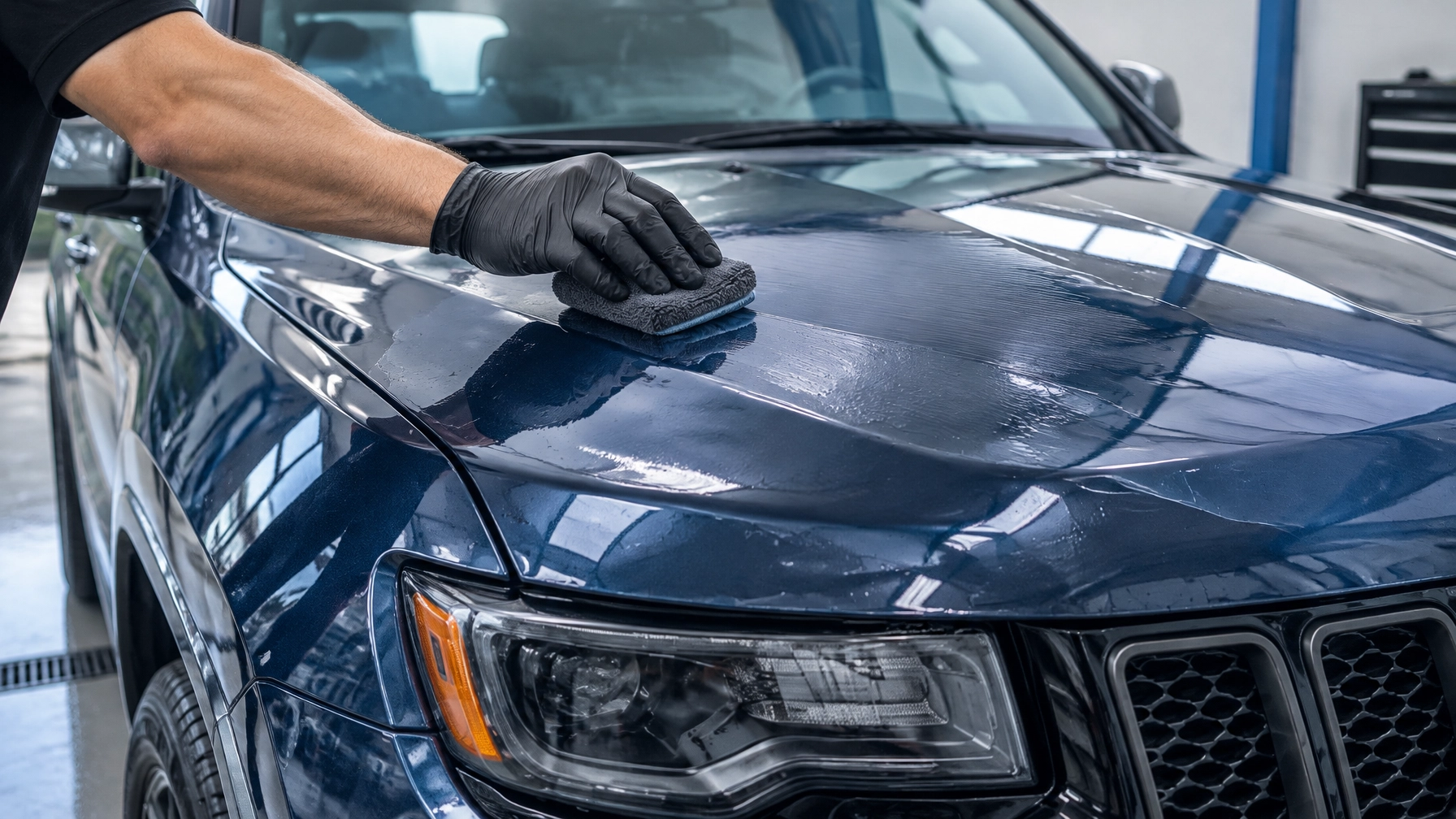
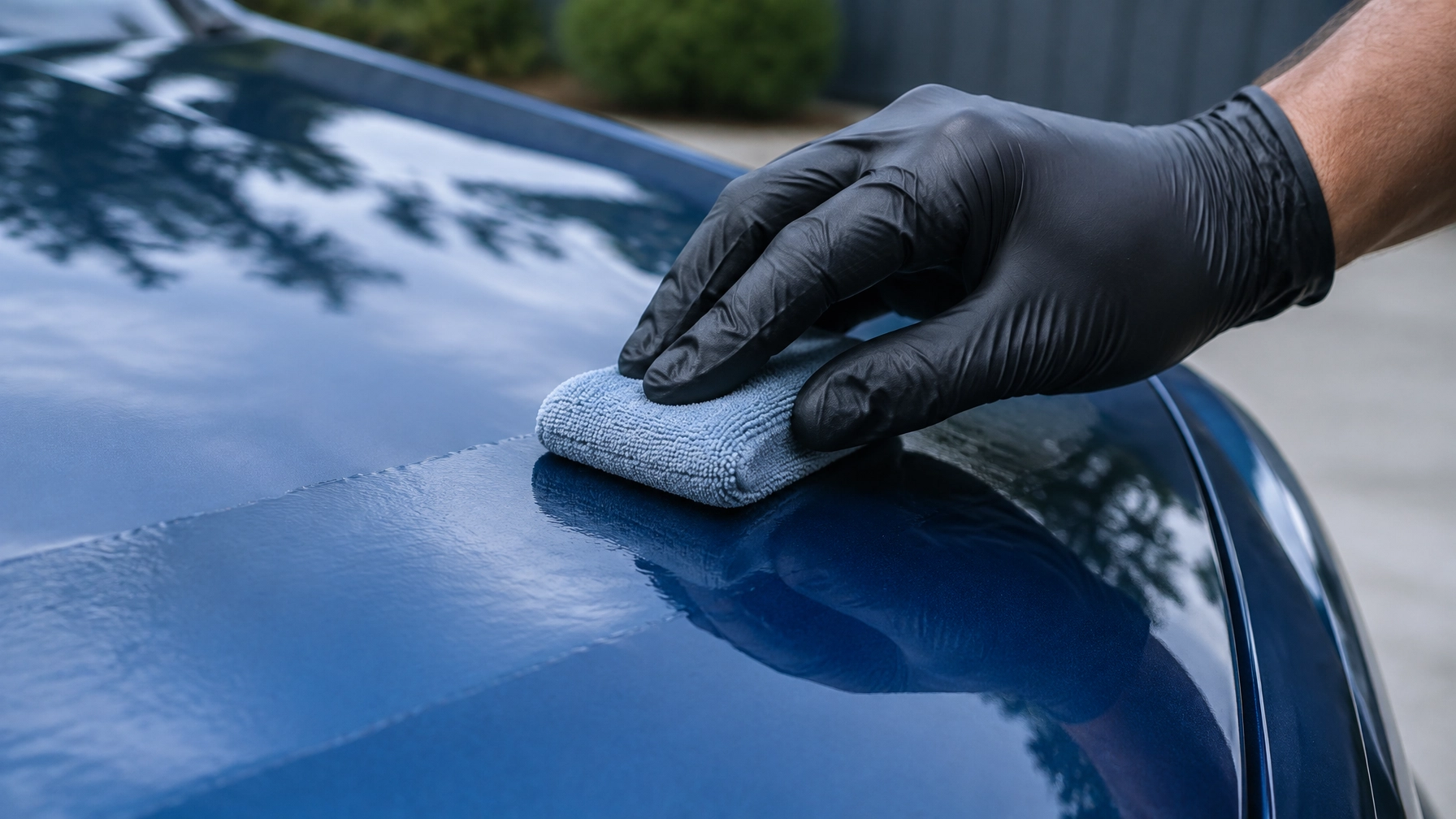
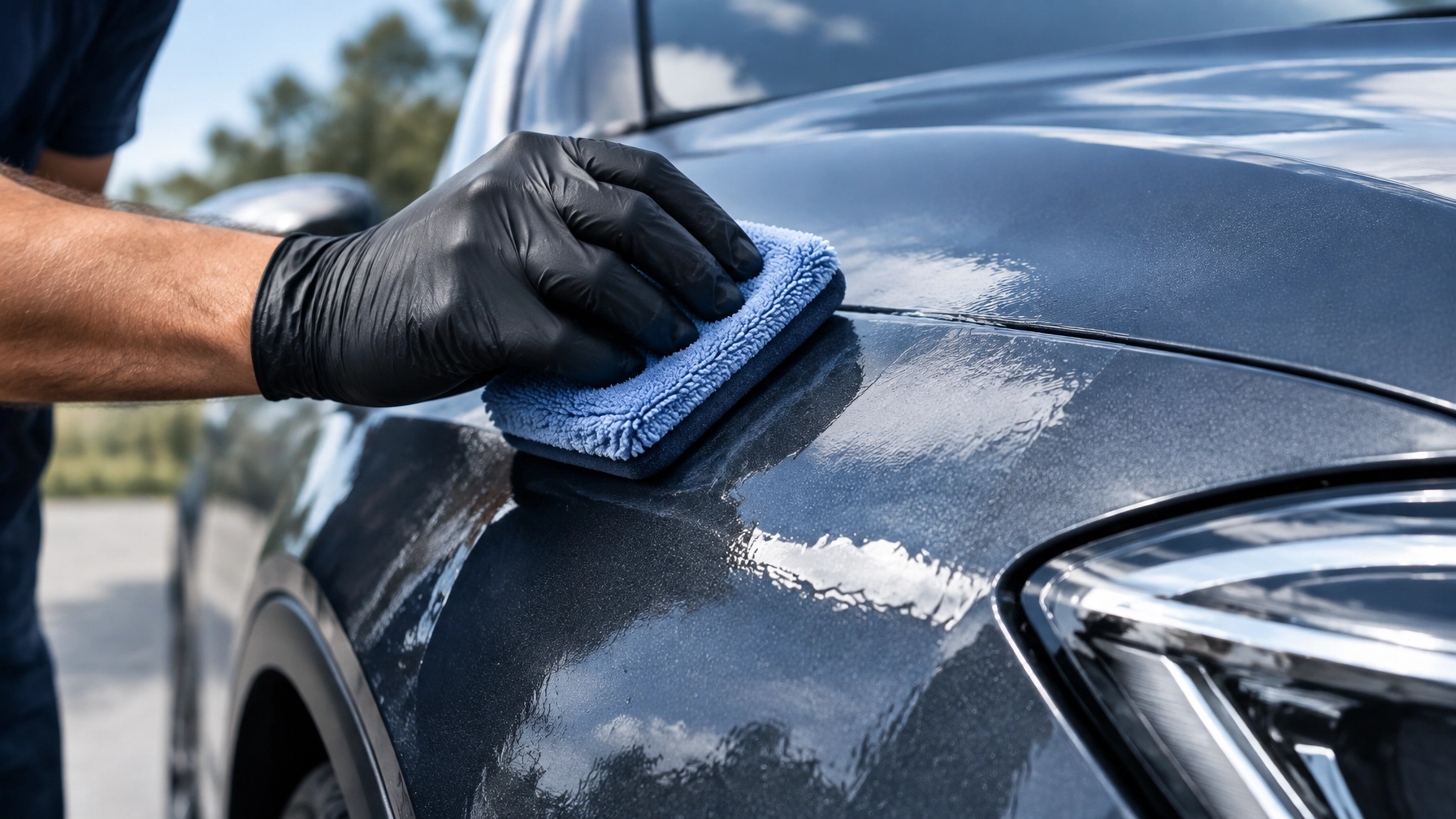
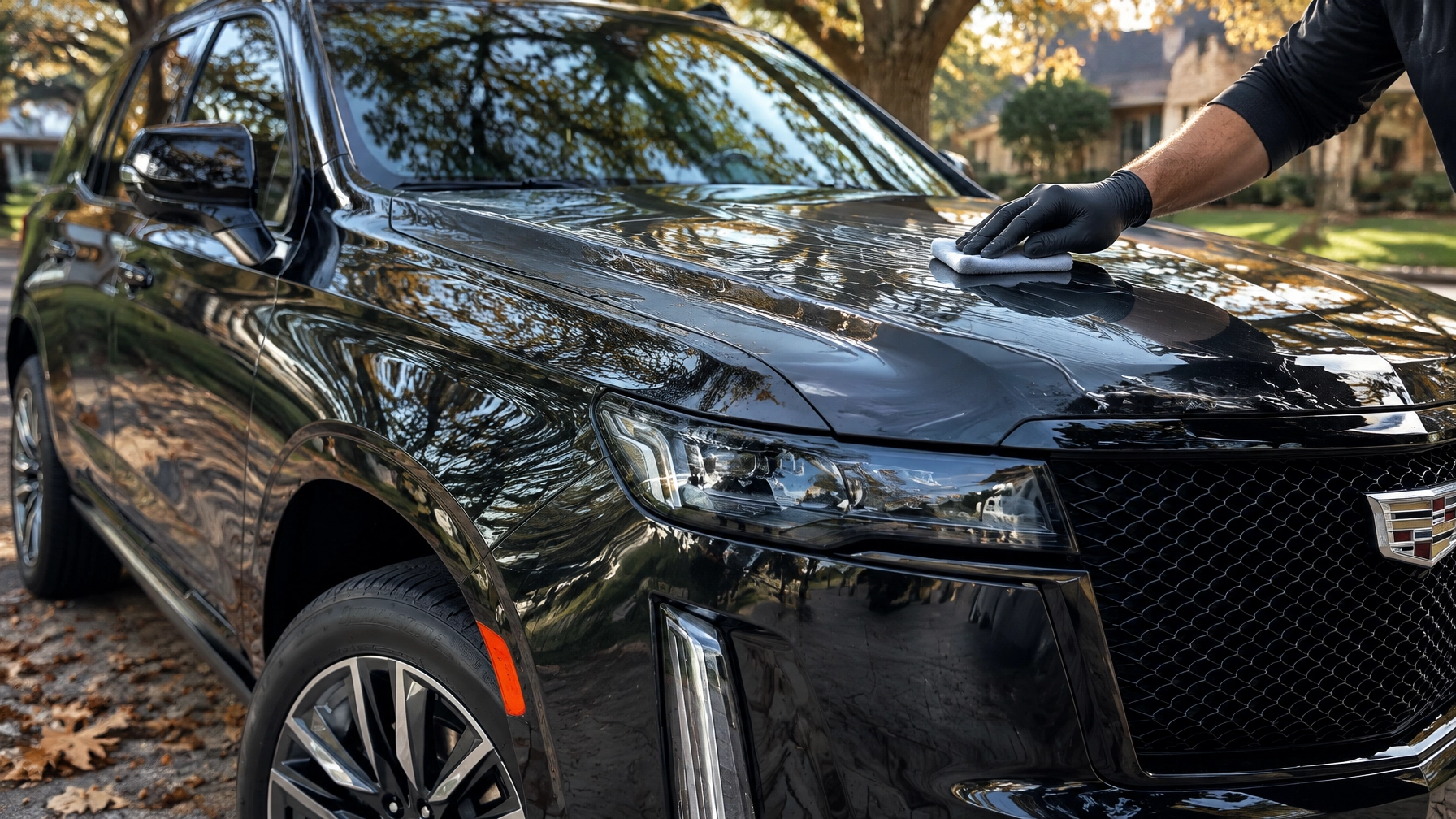
Liquid Paint Protection Film uses a flexible blend of polyurethane and acrylic polymers. During application, the material is carefully worked across the prepared panel with professional microfiber applicator pads. It cures into a solid-state protective film that shields the underlying paint from everyday damage and wear.
LPPF is especially useful on the hood, front bumper, fenders, side mirrors, and leading edges that face Houston freeway traffic. It provides stronger physical protection than ceramic coating alone while maintaining a smooth, glossy appearance.
Its repairability is another advantage. If a rock impact creates a blemish in the LPPF, the damaged area can be re-leveled instead of replacing an entire panel of traditional film.
Ceramic coating works well as the next layer. Its chemical bond with the paint or LPPF creates a slick, hydrophobic surface with lower surface adhesion. Water beads and organic residue releases more easily during routine washing.
The roles are different:
- LPPF helps absorb and resist physical impact.
- Ceramic coating helps repel water, sap residue, leaf film, and road grime.
- Together, they create a stronger maintenance and protection system.
This LPPF-first approach protects the finish against both falling debris and the cleanup process that follows.
How Should You Remove Leaves, Sap, and Tannic Stains?
Remove fall contamination from cool paint using water, lubrication, and soft microfiber, not force.
Start by removing loose leaves and acorns by hand. Do not drag dry debris across the panel. Dust trapped beneath leaves can act like fine sandpaper.
If a leaf is stuck, rinse the area thoroughly before touching it. A clean water rinse loosens grit and softens dried organic residue. Work in the shade whenever possible so water and cleaning solution do not dry on hot paint.
Use this sequence:
- Rinse the panel with clean water.
- Wash with pH-neutral automotive shampoo and a clean microfiber mitt.
- Work one panel at a time.
- Rinse again before the soap dries.
- Dry with a soft, high-quality microfiber towel.
- Inspect the surface under direct light.
For fresh tree sap, warm water and car shampoo may be enough. If the residue remains, use a dedicated automotive sap or tar remover according to its directions. Apply the product to a microfiber towel or the affected area, allow it to soften the sap, and wipe gently.
Never use a blade, abrasive scrubber, hard card, or household scouring pad. These methods can remove contamination while creating a larger clear-coat repair.
For brown leaf stains, begin with a normal wash. If the stain remains, the residue may have bonded to the surface or caused shallow etching. A professional decontamination process may include chemical treatment, a lubricated clay treatment, and controlled polishing.

Can Paint Correction Restore Fall Etching?
Yes, paint correction can reduce or remove shallow fall staining and clear-coat etching after the surface is cleaned and decontaminated.
Professional paint correction uses controlled polishing to remove an extremely thin layer of damaged clear coat. The process restores clarity without unnecessarily removing factory paint.
The correct process begins with surface evaluation. A detailer identifies whether the mark is removable residue, bonded contamination, or actual etching. That distinction matters because polishing a dirty panel can create additional defects.
Proper preparation may include:
- Thorough washing
- Chemical decontamination
- Clay treatment with sufficient lubrication
- Paint-depth and surface inspection
- Targeted polishing
- Final panel cleaning before protection
Light tannic staining may disappear during cleaning. Shallow etching may require a polishing pass. Deep damage that has penetrated the clear coat cannot be safely polished away and may need a body-shop repair.
Once the surface is restored, protection should follow immediately. Otherwise, the same Houston heat, UV exposure, and organic debris will begin the cycle again.
How Does Ceramic Coating Make Fall Cleanup Easier?
Ceramic coating makes leaf residue, sap film, and rain-spotted contamination easier to remove by creating a low-adhesion hydrophobic surface.
Automotive ceramic coating chemically bonds to a properly prepared surface. Its hydrophobic properties increase water beading and reduce the way dirt and organic residue cling to the finish.
That does not mean leaves or sap can remain on the car indefinitely. Ceramic coating is not a substitute for prompt maintenance. It gives you a faster and safer cleanup process when fall contaminants appear.
The coating also helps reduce water spotting after Houston thunderstorms. Water rolls away more efficiently, taking loose dirt with it. Regular washing becomes less aggressive because you do not need to scrub as hard to release residue.
For the strongest combination, LPPF protects the paint from acorns and road debris while ceramic coating adds slickness, gloss, and easier maintenance. This system performs through repeated Houston weather cycles rather than only for a few weeks.

What Should Houston Drivers Do Before the Next Storm?
Remove leaves before rain, inspect for sap after parking under trees, and wash contamination before it bakes onto the paint.
A practical fall routine includes:
- Keep a soft microfiber towel and safe automotive cleaner available.
- Remove acorns and leaves by hand whenever possible.
- Rinse before wiping any stuck debris.
- Wash weekly during heavy leaf and sap exposure.
- Avoid parking directly beneath overhanging branches.
- Use covered parking or a breathable car cover when practical.
- Inspect the hood, roof, trunk, mirrors, and windshield after storms.
- Never scrub dry sap or leaf residue.
- Schedule decontamination when the paint feels rough.
- Add protection before the heaviest seasonal debris arrives.
Protection can extend beyond painted panels. A glass ceramic coating helps water bead from the windshield and exterior glass during Houston downpours. It can improve runoff and reduce the buildup of grime, helping maintain clearer sightlines on roads around Galveston, Pasadena, Deer Park, and South Houston.
Fall maintenance is faster and safer when contamination has less opportunity to bond.
How Can You Schedule Fall Paint Protection Near Me?
Start with an evaluation to determine whether your vehicle needs LPPF, ceramic coating, paint correction, or a combination of services.
Ceramic Enthusiasts is an owner-operated business with over 10 years of hands-on experience serving Houston and the surrounding area. Each vehicle receives one-car-at-a-time attention rather than rushed, split-focus service.
That matters when fall contamination has already stained a hood or when you want careful preparation before protection. Decontamination, polishing, and application all require meticulous attention for reliable results.
Whether you drive daily through Houston freeway corridors, park beneath trees in Pearland, or commute between League City and Clear Lake, the right plan protects your vehicle before seasonal debris becomes permanent damage.
Learn more about our owner-operated approach and schedule a consultation to determine the best fit for your vehicle.
Call 281-626-9384 to discuss fall leaf, sap, acorn, and clear-coat protection.