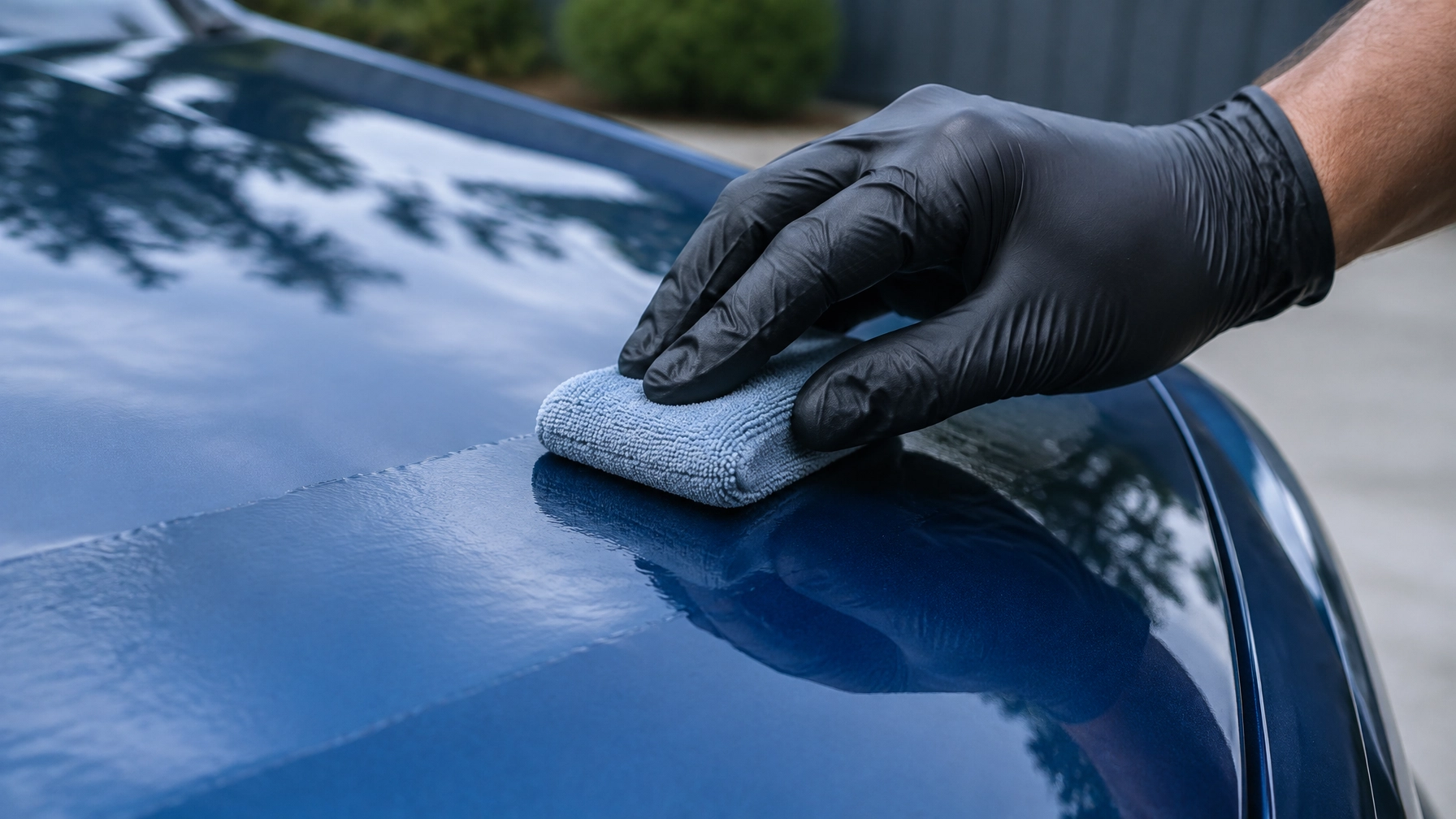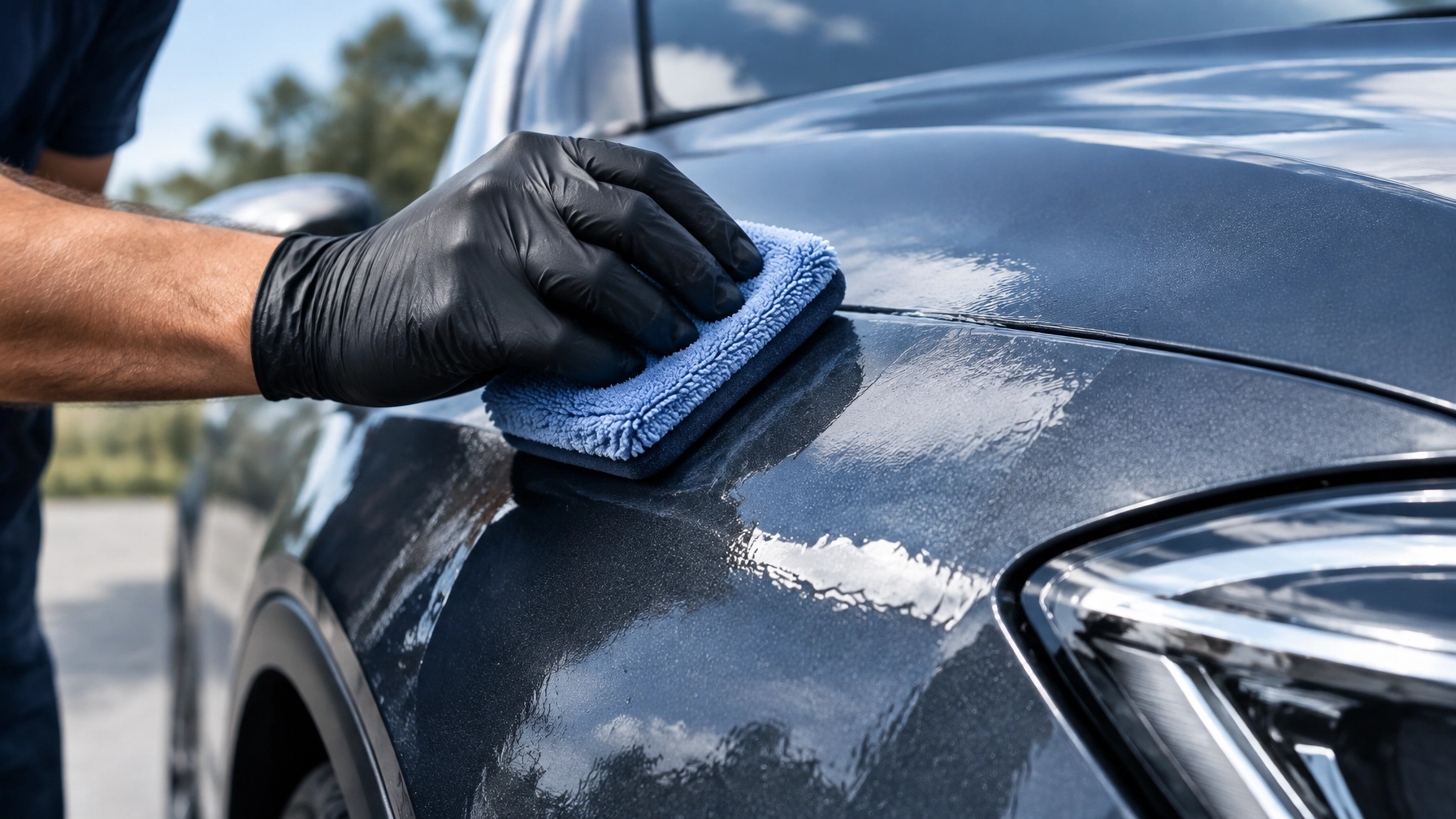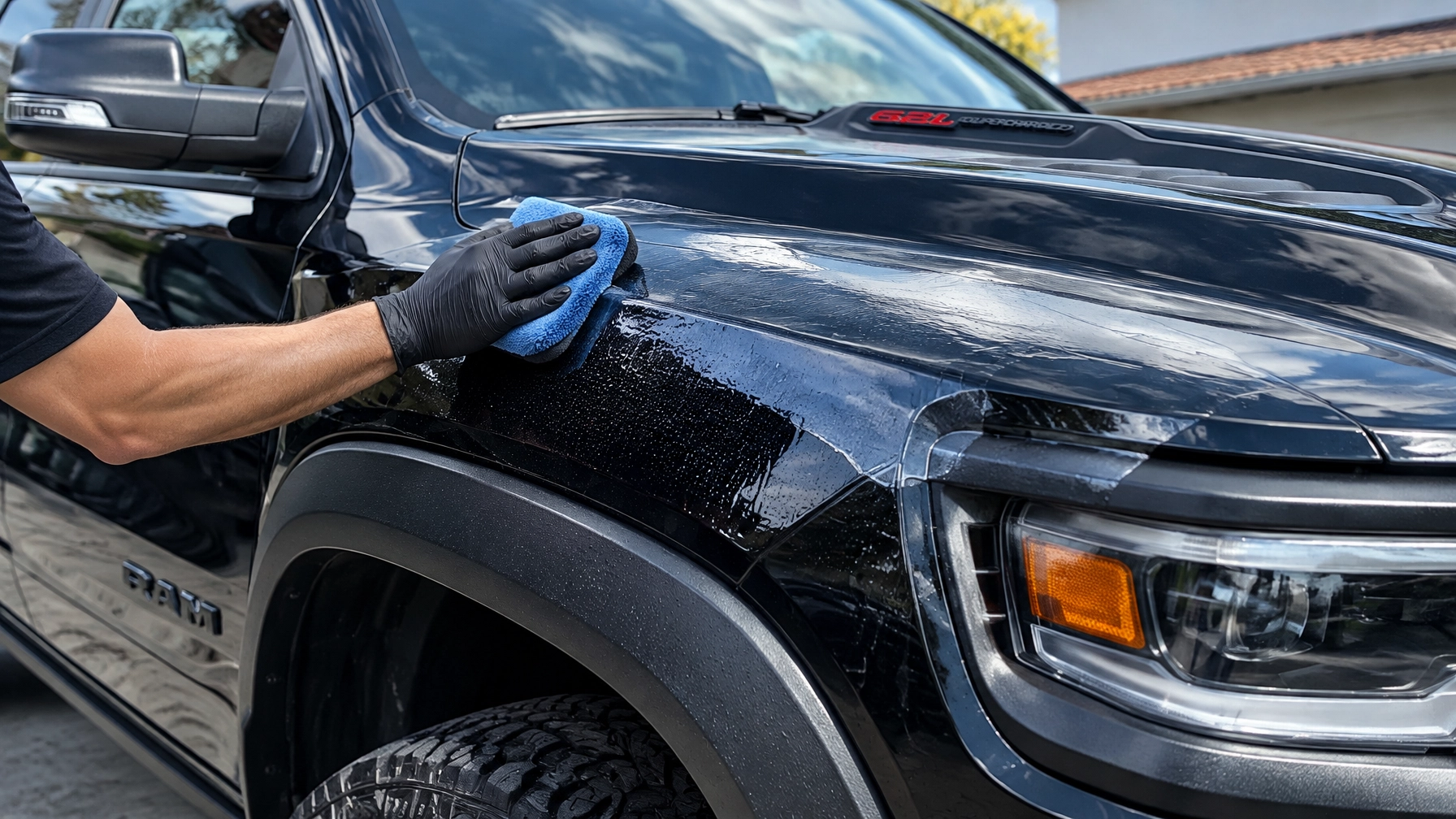
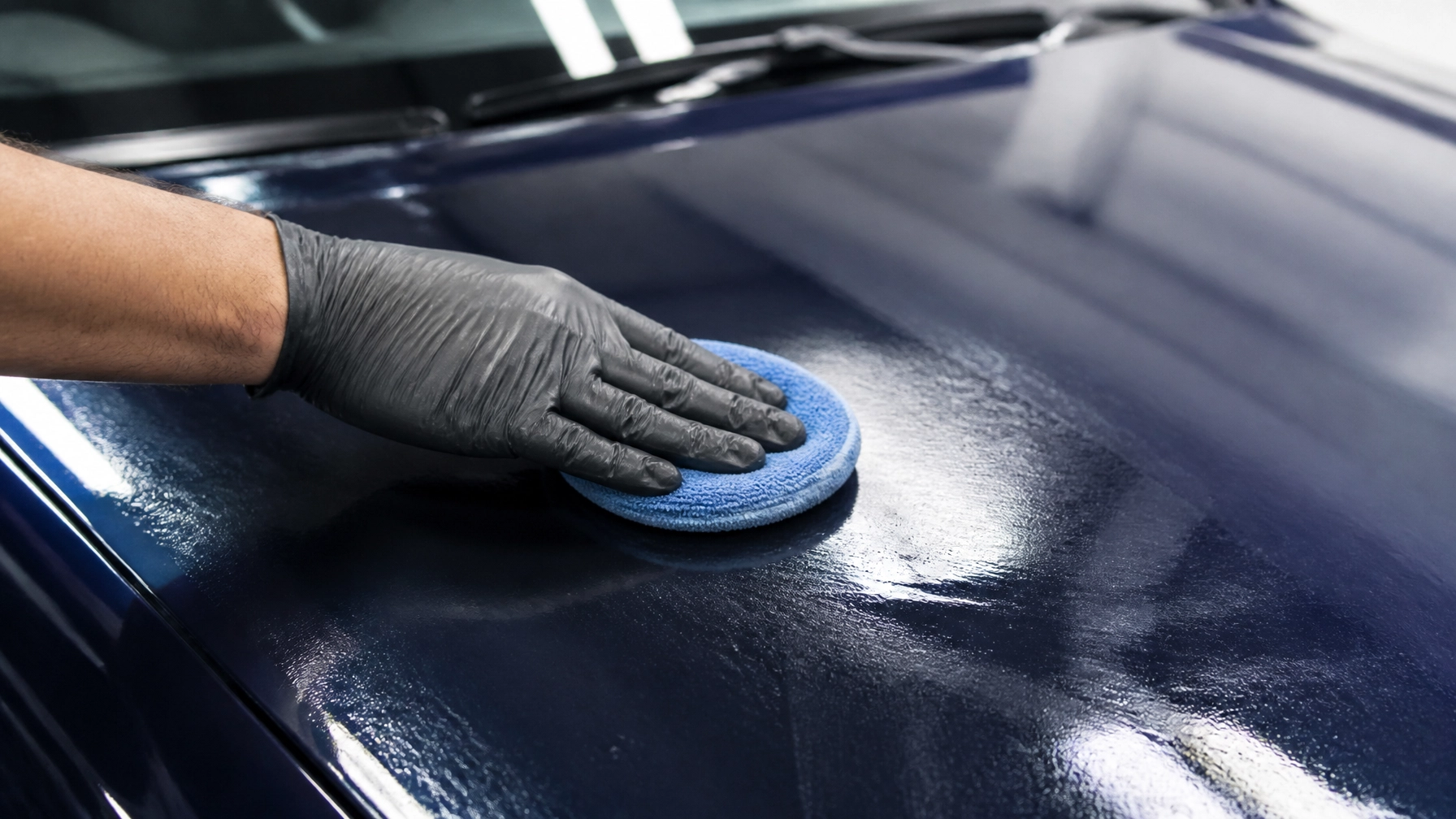
Liquid Paint Protection Film (LPPF) gives Houston drivers a physical barrier against road debris, UV exposure, and daily contamination without creating a demanding maintenance schedule. With a gentle wash routine, prompt contaminant removal, and occasional inspections, your hand-applied LPPF can preserve a smooth, glossy finish through Houston heat, humidity, thunderstorms, and freeway traffic.
The routine is simple. The protection does the hard work.
What Does LPPF Maintenance Look Like in Houston?
LPPF maintenance consists mainly of careful hand washing, complete drying, and quick cleanup after contamination. You do not need complicated products or daily detailing sessions to keep the surface performing properly.
Houston creates specific challenges for vehicle paint. Summer temperatures can push panel temperatures well beyond 95 degrees. High humidity slows evaporation, while intense UV exposure accelerates oxidation on unprotected clear coat. Industrial fallout near Pasadena and Deer Park can settle onto the finish, and shipping corridors around the Port of Houston add dust, grit, and airborne contaminants.
Without protection, these contaminants bond to the clear coat and become harder to remove. Bird droppings, love bugs, and tree sap can etch the surface when they bake under direct sun.
LPPF creates a durable, flexible polymer barrier over the paint. Its smooth surface makes contamination easier to remove before it causes lasting damage.
How Often Should You Wash LPPF in Houston?
Wash a daily-driven vehicle every one to two weeks, with weekly washing preferred during Houston’s hottest months. More frequent washing prevents pollen, road film, mineral deposits, and bug residue from accumulating on the surface.
Choose early morning, late afternoon, or a shaded location. The panels should feel cool before you begin. Washing a hot hood or roof causes soap and rinse water to flash-dry, leaving mineral deposits behind.
A basic LPPF-safe wash requires:
- pH-neutral automotive shampoo
- Clean microfiber wash mitt
- Separate rinse bucket
- Soft microfiber drying towels
- Coating-safe drying aid, if desired
- Gentle wheel and tire products used separately from paint tools
Use the two-bucket method to reduce the chance of dragging grit across the finish. Rinse the mitt frequently. Start with the roof and upper panels, then work downward toward the dirtier rocker panels and bumpers.
Avoid stiff brushes, abrasive sponges, household detergents, and automatic washes with rotating brushes. These methods can create marring in the film’s surface and reduce the clarity of the finish.
The goal is faster and safer cleaning with less friction. That is where LPPF’s smooth, protected surface delivers daily value.

What Should You Do After Rain, Highway Driving, or Bug Exposure?
Rinse or wash the vehicle within 24 to 48 hours after a major Houston rainstorm or heavy highway drive. Rainwater can carry industrial pollutants, road grime, and mineral residue onto the paint. Once the sun returns, those contaminants can dry onto the LPPF and leave spots.
Pay special attention after driving through construction zones on I-45, Highway 288, Beltway 8, or the Gulf Freeway. Loose gravel and construction dust can collect on the front bumper, hood, mirrors, and rocker panels.
Remove bird droppings, bug splatter, and tree sap as soon as possible. Use a lubricated, paint-safe cleaner and a soft microfiber towel. Never dry-wipe a stuck contaminant because the particles can scratch or abrade the surface.
Place the damp microfiber over the residue for several seconds. Let the cleaner soften the material. Then lift it away with minimal pressure.
This small habit prevents a minor cleanup from becoming a paint correction problem.
Can Houston Heat Help LPPF Repair Minor Marks?
Yes. Many minor surface marks can soften or disappear as the LPPF responds to warmth. Normal Houston summer heat can help the polymer reflow, particularly when the blemish is light and limited to the film’s surface.
Start with a gentle wash. Inspect the area after it is clean and dry. If the mark remains, warm water or normal sunlight can encourage the surface to level naturally. Use warm water, never boiling water, and avoid aggressive rubbing.
Not every blemish resolves on its own. A deeper rock impact can create a localized crater or disruption in the film. That is when professional re-leveling becomes the important advantage.
LPPF can often be re-leveled when a rock impact leaves a visible blemish. An experienced technician carefully prepares the affected area, adds compatible liquid material, and works it into the existing layer to restore a smooth transition.
The repair addresses the affected area instead of automatically stripping and replacing an entire panel. That saves time and preserves more of the original protection.
Learn more about how LPPF provides a repairable shield for Houston roads.
How Do You Know When LPPF Needs Professional Attention?
Inspect the high-impact zones once a month. Look closely at the front bumper, hood, fenders, side mirrors, rocker panels, and lower doors.
Contact a professional when you notice:
- A deep impact crater
- Cloudiness that does not clear after washing
- A rough or uneven area
- A blemish that remains after exposure to warmth
- Film damage near an impact location
- A change in gloss compared with surrounding panels
Do not polish, compound, or sand the LPPF yourself. Abrasive correction can remove or thin the protective layer. Paint correction belongs underneath the protection, before installation: not as a casual maintenance step afterward.
Ceramic Enthusiasts is owner-operated, with over 10 years of experience protecting vehicles one car at a time. That focused process provides the meticulous attention needed to identify whether a mark requires cleaning, heat response, or professional re-leveling.
What Is the Easiest Way to Maintain Ceramic Coating Over LPPF?
The easiest way to maintain ceramic coating over LPPF is to use the same gentle hand-wash routine while avoiding harsh chemicals and abrasive tools. LPPF remains the primary impact protection, while ceramic coating adds hydrophobic behavior, chemical resistance, and long-term gloss.
A premium automotive ceramic coating forms a semi-permanent bond with the prepared surface. Its low surface energy increases water contact angles, causing rain and rinse water to bead and move away more readily. In practical terms, mud, humidity, and road film release faster during washing.
For anyone searching for an easy maintenance ceramic coating, the key is not a complicated product lineup. It is consistent technique:
- Wash cool panels in shade.
- Use pH-neutral shampoo.
- Work with clean microfiber tools.
- Rinse thoroughly.
- Dry completely.
- Remove bird droppings and bugs promptly.
- Avoid waxes, abrasive polishes, and strong degreasers on coated paint.
Ceramic coating does not replace LPPF’s physical impact protection. It complements it. LPPF absorbs and shields against road debris, while ceramic coating helps the surface resist chemical contamination and remain easier to clean.
The result is a mirror-like finish that stays easier to maintain through daily commuting in Houston, Pearland, Friendswood, League City, Webster, and Clear Lake.

Which Maintenance Products Should You Avoid?
Avoid products that add unnecessary abrasion or aggressive chemistry to the protected surface. Household dish soap can strip surface protection and leave the finish dry. Solvent-heavy cleaners can affect sensitive areas when misused. Abrasive compounds can damage the LPPF itself.
Avoid these common maintenance mistakes:
- Washing in direct midday sun
- Letting hard water air-dry on the panels
- Using a brush-style automatic car wash
- Reusing dirty microfiber towels
- Scrubbing dried bug splatter
- Applying wax without checking product compatibility
- Using strong wheel chemicals on painted panels
- Directing high-pressure water at edges or seams
- Attempting DIY polishing over the film
A pressure washer can be useful when handled correctly. Keep the nozzle at a safe distance, use moderate pressure, and avoid directing the jet directly at edges, trim, or damaged areas.
Simple products protect the investment better than an overloaded cabinet of chemicals.
How Does LPPF Pair With Paint Correction and Ceramic Coating?
LPPF and ceramic coating perform best when the vehicle receives proper preparation first. Decontamination removes bonded particles. Clay treatment lifts embedded contamination. State-of-the-art polishing removes swirls and scratches before the protective layers are installed.
Paint correction creates a clearer, more level surface for LPPF and ceramic coating to bond with. Applying protection over neglected paint can preserve defects beneath the finish.
LPPF should lead the protection plan in high-impact areas such as the bumper, hood, front fenders, and mirrors. Ceramic coating can then be applied over the LPPF and across the remaining exterior for uniform gloss and easier cleaning.
This combination pairs seamlessly with automotive ceramic coating services and can be paired with paint correction performed before installation. Wheel ceramic coating and glass ceramic coating can also be added during the same service for practical, targeted protection.
You receive impact defense first. Then you add hydrophobic performance where it improves everyday care.
What Is the Simple Houston LPPF Care Schedule?
Use this schedule to keep maintenance predictable:
Every one to two weeks: Hand wash with pH-neutral shampoo, clean microfiber tools, and cool panels.
After major rain or highway bug exposure: Rinse or wash within 24 to 48 hours. Remove visible contaminants sooner.
Every month: Inspect the hood, bumper, fenders, mirrors, and rocker panels for impact marks or uneven areas.
Every three to four months: Schedule a gentle decontamination wash if the surface feels rough or water behavior changes.
As needed: Request professional re-leveling for persistent rock-chip blemishes, craters, or cloudy areas.
Annually: Have the LPPF and ceramic coating professionally inspected. An expert can evaluate gloss, contamination, impact zones, and coating performance before small issues become larger ones.
This routine takes less effort than correcting neglected paint. It also keeps the finish looking noticeably better from the first rainstorm.
How Can You Find the Right LPPF Maintenance Plan Near Me?
The right plan depends on your vehicle’s exposure, driving habits, and current surface condition. A daily commuter traveling between Houston and League City needs a different inspection schedule than a weekend vehicle stored indoors. A truck working near Pasadena or Deer Park may need more frequent decontamination than a lightly driven sedan in Friendswood.
Ceramic Enthusiasts provides owner-operated LPPF, ceramic coating, and paint correction throughout Houston and surrounding communities, including Pearland, Pasadena, South Houston, Deer Park, Galveston, Clear Lake, Webster, Friendswood, and Alvin, with every vehicle serviced in-shop, one car at a time.
Contact Ceramic Enthusiasts to discuss your vehicle’s protection needs, current LPPF condition, or ceramic coating maintenance routine. Call 281-626-9384 to schedule a consultation and determine whether your vehicle needs routine care, professional inspection, re-leveling, or the complete LPPF-and-ceramic combination.
Your paint deserves protection that works hard and maintenance that stays easy.