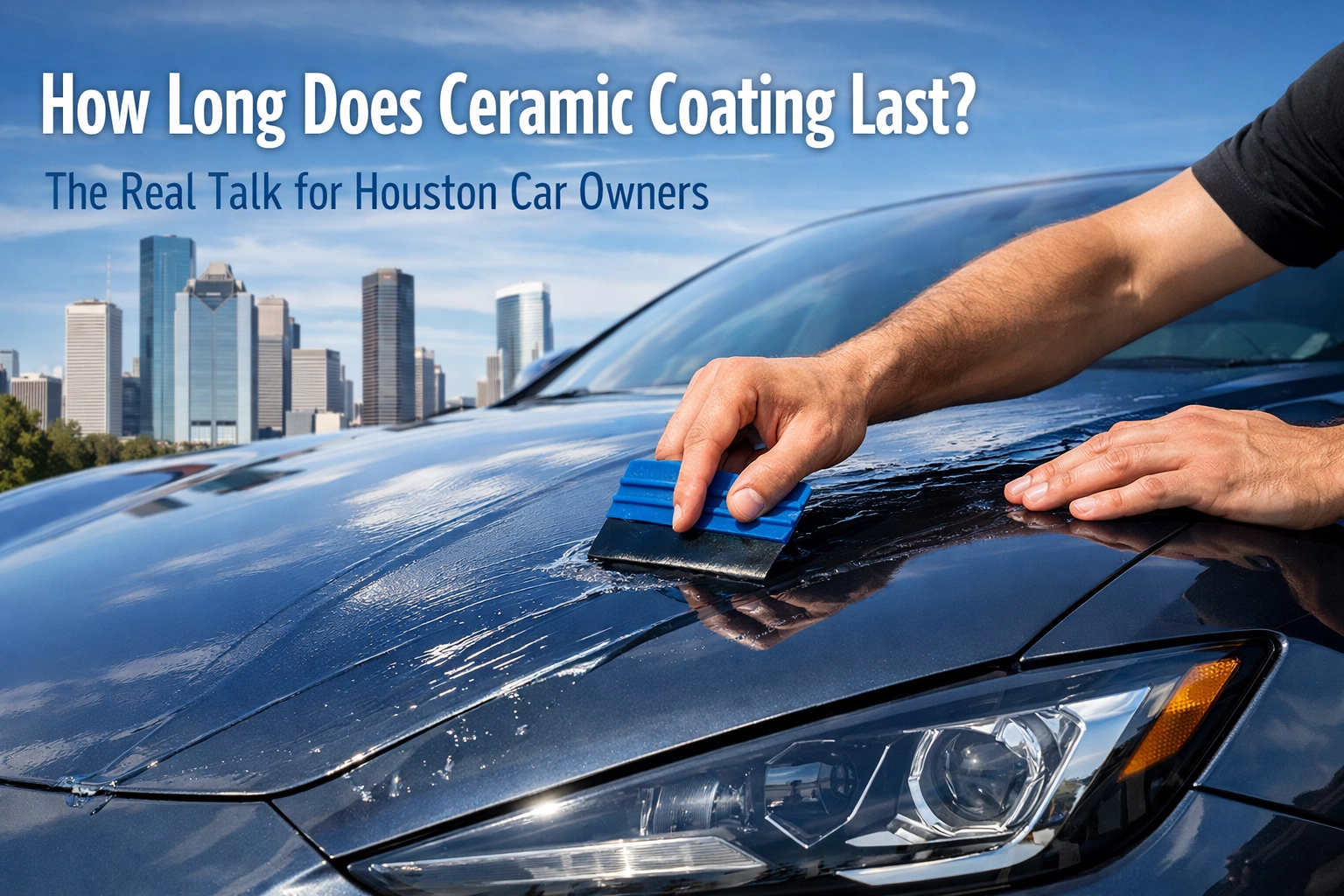
You're asking how long does ceramic coating last because you've heard the promises: years of protection, permanent shine, bulletproof defense against the elements. But if you're driving in Houston, Pearland, or anywhere along the Gulf Coast corridor, the answer isn't as simple as the marketing brochures suggest.
The truth is ceramic coating typically delivers 2 to 5 years of protective performance on most vehicles. But that range shifts dramatically based on three critical factors: the quality of the product, the precision of the application process, and how Houston's brutal climate attacks your paint every single day.
What's the Real Lifespan of Ceramic Coating in Houston?
Professional-grade ceramic coatings applied correctly last 3 to 5 years for most Houston drivers. Premium formulations with proper maintenance can push toward the 7 to 10-year mark. Entry-level or DIY products? You're looking at 1 to 2 years before the hydrophobic properties fade and you're back to square one.
The molecular bond ceramic coating creates with your paint is semi-permanent. It doesn't wash off like wax. It doesn't evaporate in the sun. But it does degrade slowly under constant assault from UV radiation, acidic rain, road debris, and thermal cycling: all things Houston delivers in abundance.
When we talk about lifespan, we're really discussing two timelines. The coating physically remains on your paint longer than its protective performance lasts. You might still see some water beading at year four, but the full hydrophobic effect, the chemical resistance, and the gloss enhancement will have diminished significantly without proper maintenance.
Why Does Houston Weather Cut Into Coating Longevity?
Houston sits in one of the most punishing climates for automotive finishes in North America. Summer temperatures regularly hit 95 degrees with humidity levels that keep your vehicle's surface constantly cycling between wet and dry states. This thermal stress accelerates coating breakdown at the molecular level.
UV exposure in Texas is relentless. The sun's rays break down the silica dioxide chains that give ceramic coating its protective properties. Every hour your vehicle sits exposed is another hour of photodegradation chipping away at the coating's integrity. Parking garages and covered storage extend lifespan significantly: street parking cuts it short.

Industrial fallout from the Houston Ship Channel and surrounding refineries deposits acidic contaminants on painted surfaces. These chemicals don't just sit on top of the coating: they actively react with it. Without regular decontamination, you're allowing these pollutants to slowly eat through your protection layer. The same environment that makes ceramic coating essential in Houston is the same one that makes maintaining it critical.
Highway debris is the silent killer. Every rock chip, every tar splatter, every piece of metal shrapnel flying off an 18-wheeler on I-45 creates a point of failure in your coating. While ceramic coating dramatically improves scratch resistance compared to bare paint or wax, it's not armor plating. The coating in damaged areas stops performing, and without spot treatment, that degradation spreads outward.
Does the Quality of Application Actually Matter?
Absolutely. The difference between a coating lasting 2 years versus 5+ years often comes down to the preparation work done before the first drop of ceramic touches your paint.
Paint correction is non-negotiable for maximum coating longevity. If you apply ceramic coating over swirls, scratches, or contaminated paint, you're locking in those defects permanently. More importantly, you're creating an uneven surface where the coating can't bond uniformly. Weak spots fail first, and once the coating starts failing, it accelerates quickly.
At Ceramic Enthusiasts, we're owner-operated and focus on one car at a time precisely because proper paint correction can't be rushed. We clay-treat the entire surface, chemically decontaminate embedded pollutants, and polish until we're working with a perfectly smooth canvas. This meticulous prep work ensures the ceramic coating bonds at the molecular level across 100% of your paint: not just the easy spots.
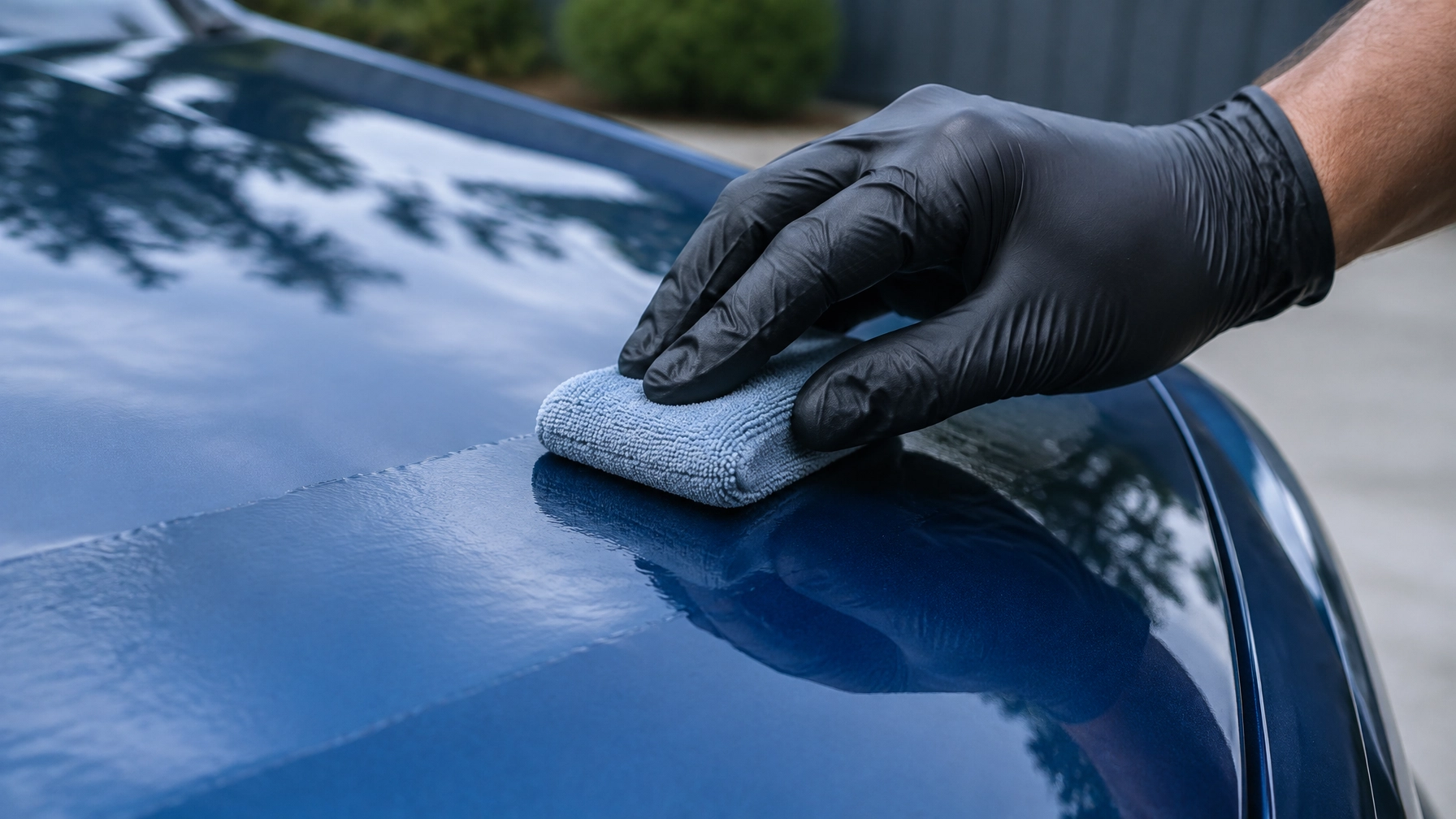
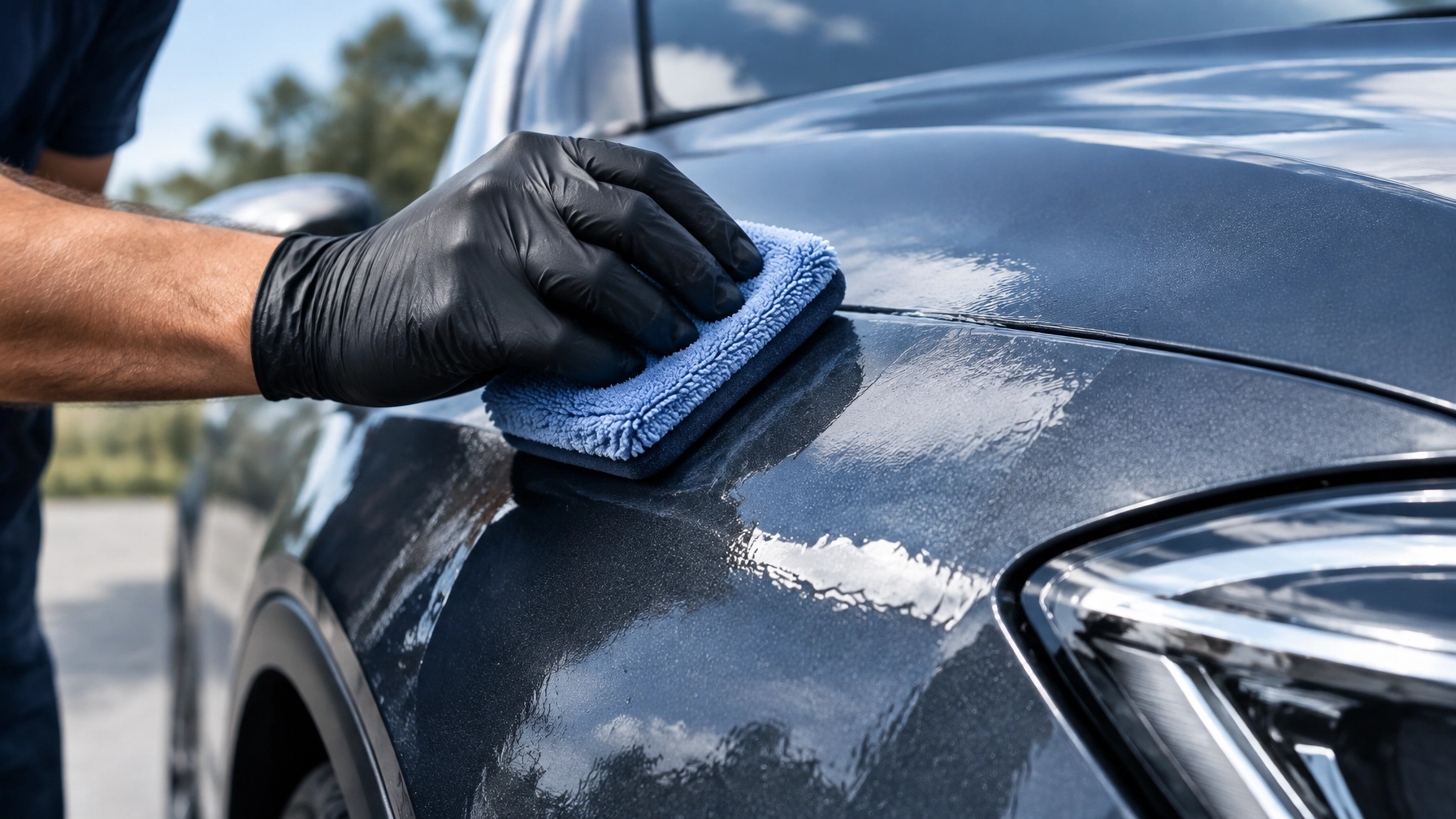
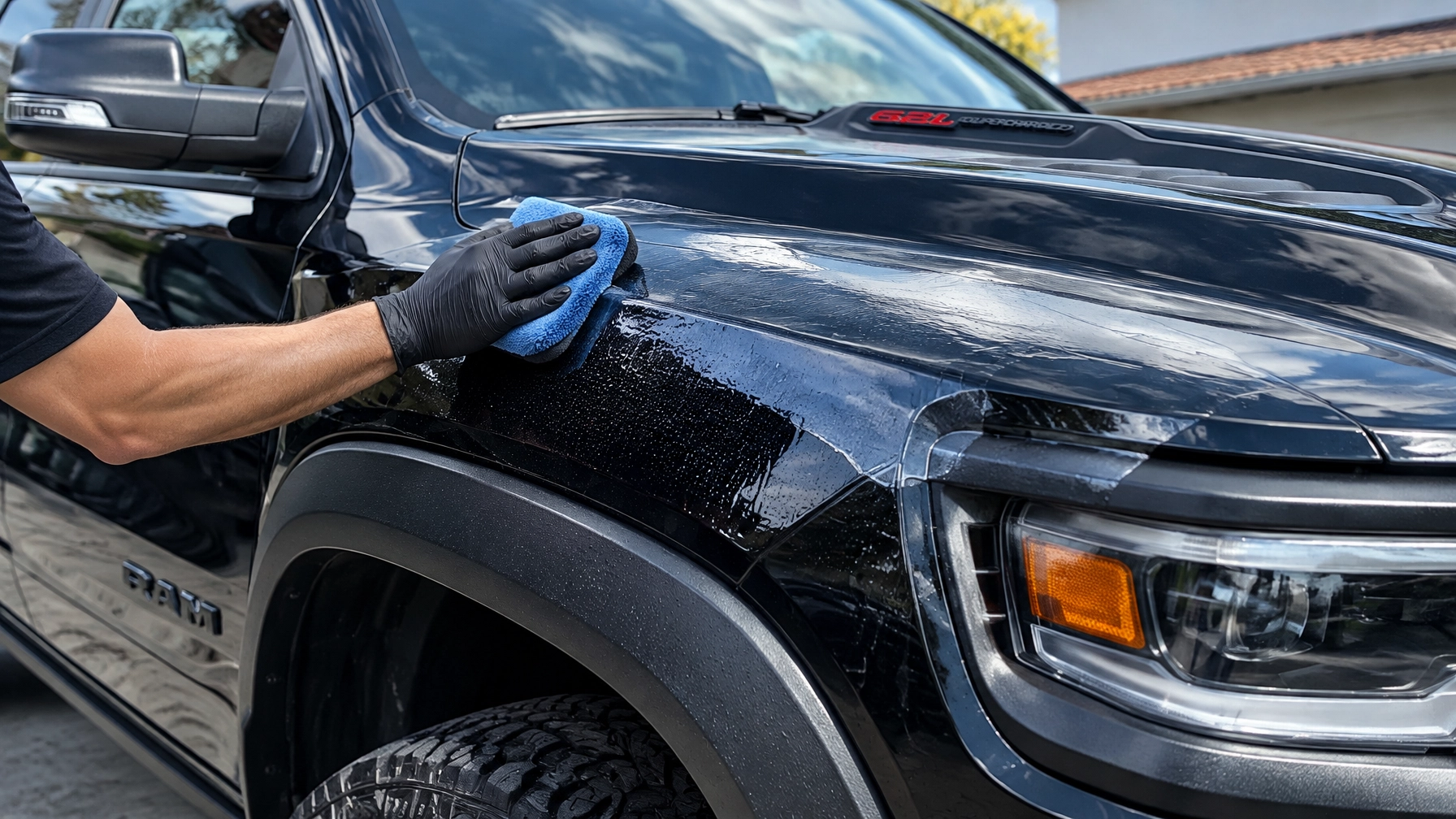
Hand-application matters more than most people realize. Ceramic coating needs to be worked into the paint surface, not just spread across it. We apply in controlled environments, managing temperature and humidity to allow proper flash time. We layer coatings with precise curing intervals. Every panel receives focused attention rather than being one vehicle in a production line.
The coating product itself varies wildly in quality. We use premium-grade formulations with higher silica content and advanced polymer technology. These professional-only products aren't available at retail because they require expertise to apply correctly: but they deliver significantly longer protection than consumer-grade alternatives.
How Does Mileage Impact How Long Ceramic Coating Lasts?
Mileage is the primary factor determining ceramic coating lifespan. A vehicle driven 5,000 miles annually in Houston will maintain its coating far longer than one logging 25,000 miles on the same roads.
Every mile driven exposes your coating to airborne contaminants, bug splatter, road grime, and micro-abrasion from dust particles in the airstream. Highway driving at 70 mph creates constant wind shear against the coating surface. Stop-and-go traffic through Pearland or League City means brake dust settling on your panels multiple times per day.

Commercial drivers and daily commuters covering 30,000+ miles annually should expect the lower end of the lifespan range: around 2 to 3 years before reapplication becomes necessary. Weekend drivers keeping mileage under 10,000 can reasonably expect 5+ years from the same coating product.
This doesn't mean high-mileage drivers shouldn't invest in ceramic coating. It means understanding the cost-per-mile calculation. Protecting your paint through those 30,000 miles prevents oxidation, etching, and clear coat degradation that would cost far more to repair than reapplying coating at the three-year mark.
Can Maintenance Extend Your Coating's Lifespan?
Maintenance is the difference between ceramic coating lasting its minimum lifespan and reaching its maximum potential. Neglect your coating and you'll get 2 years. Maintain it properly and you can push 5 to 7 years from premium formulations.
pH-balanced car wash soap is essential. Harsh detergents strip the coating's hydrophobic layer faster than anything else. We recommend hand washing with dedicated ceramic coating shampoo: automatic car washes with abrasive brushes create micro-scratching that degrades the surface over time.
Maintenance sprays designed for ceramic coatings replenish the top sacrificial layer that takes the daily beating. Applied quarterly, these SiO2-infused sprays extend the beading effect and chemical resistance significantly. They're not reapplying the coating: they're reinforcing the existing protection.
Immediate contamination removal prevents permanent bonding. Bird droppings and tree sap are acidic enough to etch through ceramic coating if left for days. Houston's industrial fallout creates similar problems. The sooner you remove contaminants, the longer your coating survives. We recommend weekly inspections and spot cleaning as needed.
Professional decontamination every 6 to 12 months removes embedded contamination that regular washing can't touch. This service includes clay treatment and chemical decontamination to restore the coating's smooth surface and hydrophobic performance. Think of it as preventative maintenance that adds years to your protection.
Which Ceramic Coatings Last Longest?
Not all ceramic coatings are created equal. The market is flooded with products ranging from $20 spray bottles to $2,000 professional installations: and the performance gap is exactly what you'd expect.
Entry-level coatings (DIY spray products, wipe-on sealants) last 1 to 2 years maximum. These contain lower silica concentrations and simpler polymer chains. They're better than wax but don't deliver the longevity or protection Houston drivers need. Annual mileage over 15,000 cuts that lifespan in half.
Mid-tier professional coatings are what most detail shops install. These last 3 to 5 years with proper maintenance. They offer genuine molecular bonding, good chemical resistance, and noticeable hydrophobic effects. For daily drivers in Houston, Pasadena, or Friendswood, this tier provides the best cost-to-benefit ratio.

Premium formulations with advanced nano-technology push toward 7 to 10 years. These coatings use higher-grade silica dioxide, enhanced polymer structures, and its re-leveling capability that allow minor scratches to disappear with heat exposure. They require expert application but deliver long-term protection that actually justifies the investment.
We exclusively use professional-grade products because anything less doesn't stand up to Gulf Coast conditions. When you're fighting 95-degree heat, UV bombardment, and petrochemical fallout, you need coating technology that's designed for extreme environments: not mass-market formulations optimized for mild climates.
What Makes Owner-Operated Application Different?
The ceramic coating application process determines whether you get 2 years or 7 years from the same product. Mass-production detail shops running multiple vehicles simultaneously can't deliver the meticulous prep work and precise application that maximizes longevity.
We're owner-operated and focus on one car at a time. That means your vehicle receives undivided attention through every stage of the process. Paint correction happens under controlled lighting where we can identify and eliminate every swirl, scratch, and defect. We're not rushing to move on to the next vehicle in line.
Hand-application allows us to control coating thickness and ensure even coverage across every panel. We work the product into complex surfaces: door handles, body lines, emblems: where spray application leaves gaps. The result is uniform protection that performs consistently across your entire vehicle.

Climate control matters more than most people realize. We apply ceramic coating in environments where we manage temperature and humidity for optimal curing. Too hot and the coating flashes too quickly. Too humid and it won't cure properly. Both scenarios compromise longevity. Our controlled application environment ensures the coating bonds correctly every single time.
Over a decade of experience means we know exactly how different coating products perform on different paint types in Houston's specific climate. We've seen what works and what fails. That expertise translates directly into longer-lasting protection for your vehicle.
Ready to Protect Your Investment?
Understanding how long ceramic coating lasts in Houston gives you realistic expectations for your investment. With professional application, premium products, and proper maintenance, you're looking at 3 to 5 years of exceptional protection: potentially 7+ years with meticulous care.
The alternative is watching Houston's climate slowly destroy your paint through oxidation, etching, and UV degradation. Clear coat failure. Permanent water spotting. Paint that looks 10 years old after 3.
Ceramic Enthusiasts delivers owner-operated precision for vehicles throughout Houston, Pearland, League City, and surrounding areas. We focus on one car at a time because your vehicle deserves meticulous attention: not production-line treatment.
Schedule your consultation or call 281-626-9384 to discuss which coating solution matches your driving patterns and protection goals. We'll evaluate your paint, explain your options, and deliver hand-applied protection designed to last years, not months.