Friendswood and Alvin drivers face rock chips, construction gravel, and road debris every day on FM 528, FM 518, Highway 35, and the Grand Parkway. Liquid Paint Protection Film (LPPF) creates a hand-applied protective layer that helps preserve your vehicle’s paint through Houston traffic, Gulf humidity, and refinery-area fallout.
What Makes Friendswood and Alvin Roads So Hard on Paint?
Construction zones and high-speed commuter routes create the biggest threat to your vehicle’s front-end finish. Loose gravel drops from trucks, road repairs disturb aggregate, and vehicles ahead can launch small stones directly toward your bumper, hood, mirrors, and fenders.
FM 528 commuters traveling between Friendswood, Clear Lake, and League City see this exposure during daily stop-and-go traffic. FM 518 and Highway 35 connect Alvin and surrounding communities through busy commercial and industrial corridors. The Grand Parkway adds higher speeds, heavier traffic, and more opportunities for debris impacts.
Without physical paint protection, one small rock can break through the clear coat and expose the color layer beneath. Repeated impacts create a pattern of chips, pitting, and road rash that becomes especially visible on black, blue, red, and other dark finishes.
Houston’s environment adds another layer of stress. Heat near 95 degrees, persistent humidity, sudden thunderstorms, bug splatter, and industrial fallout around Pasadena, Deer Park, and South Houston can leave contaminants bonded to the paint.
That is why Liquid PPF Protection from rocks and road debris matters for more than appearance. It helps protect the finish before the damage becomes expensive to correct.
How Does Hand-Applied Liquid PPF Protect Against Rock Chips?
Liquid PPF uses a flexible blend of polyurethane and acrylic polymers that cures into a solid-state protective film over the vehicle’s paint. The material creates a thicker physical barrier than a ceramic coating alone, helping absorb and distribute the force of light to moderate rock impacts.

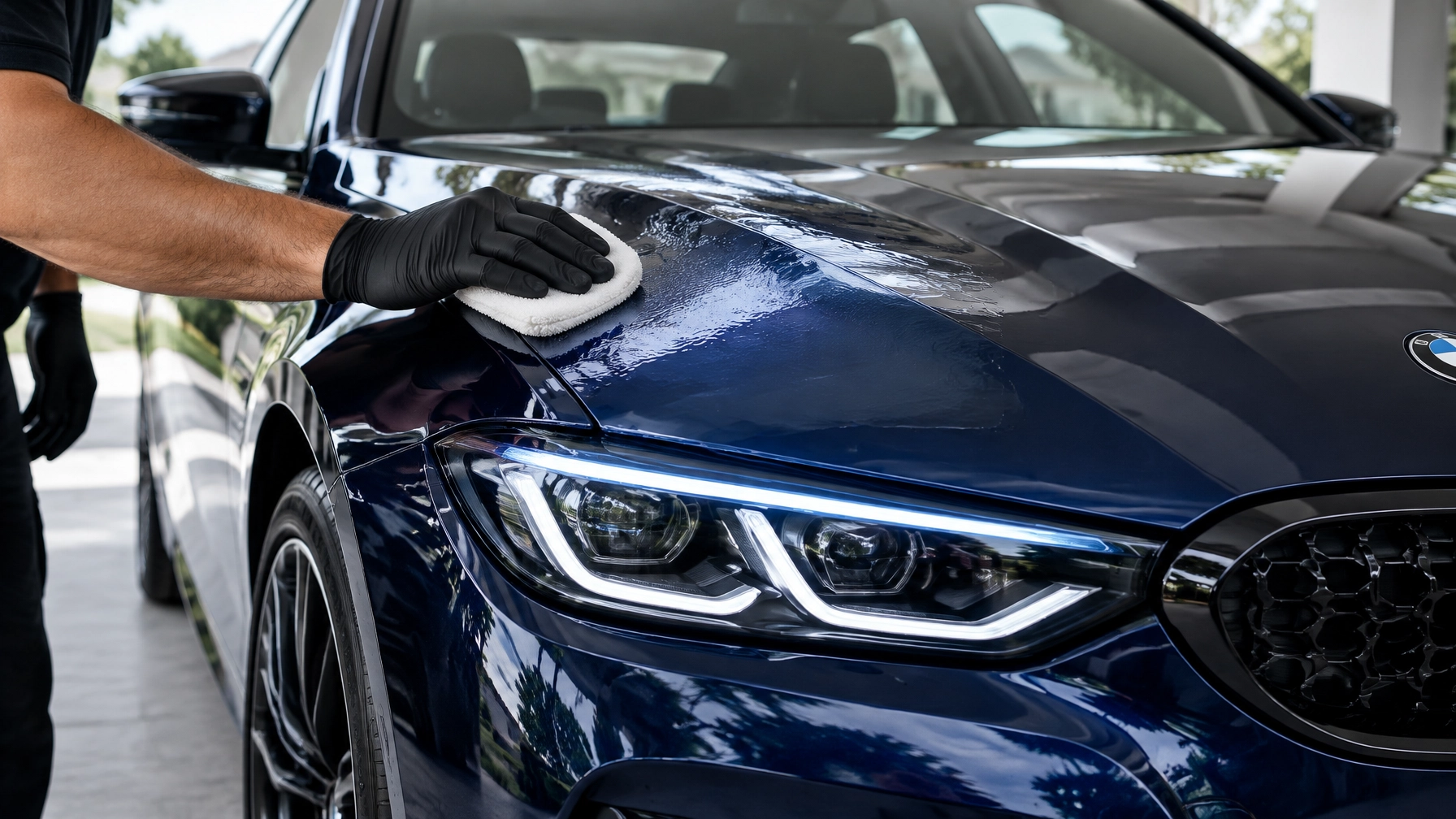
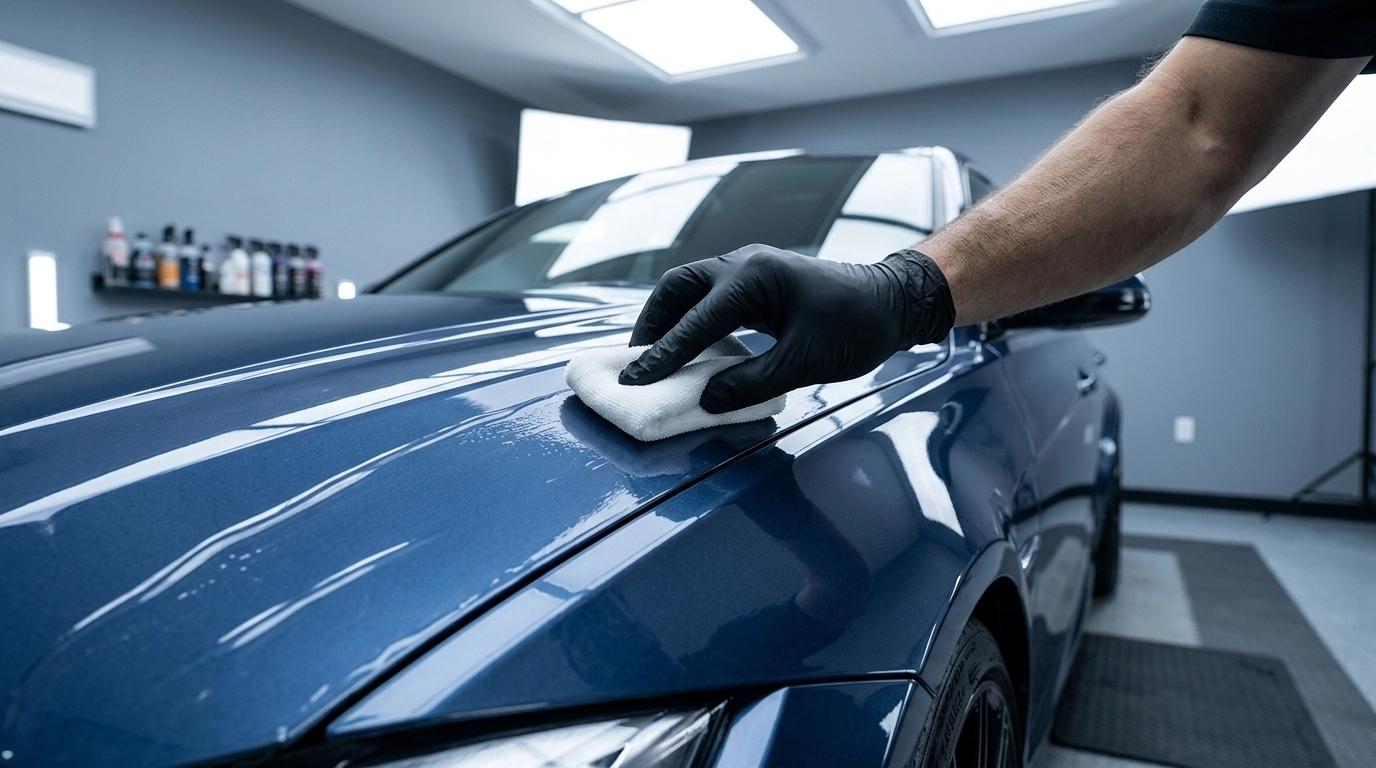
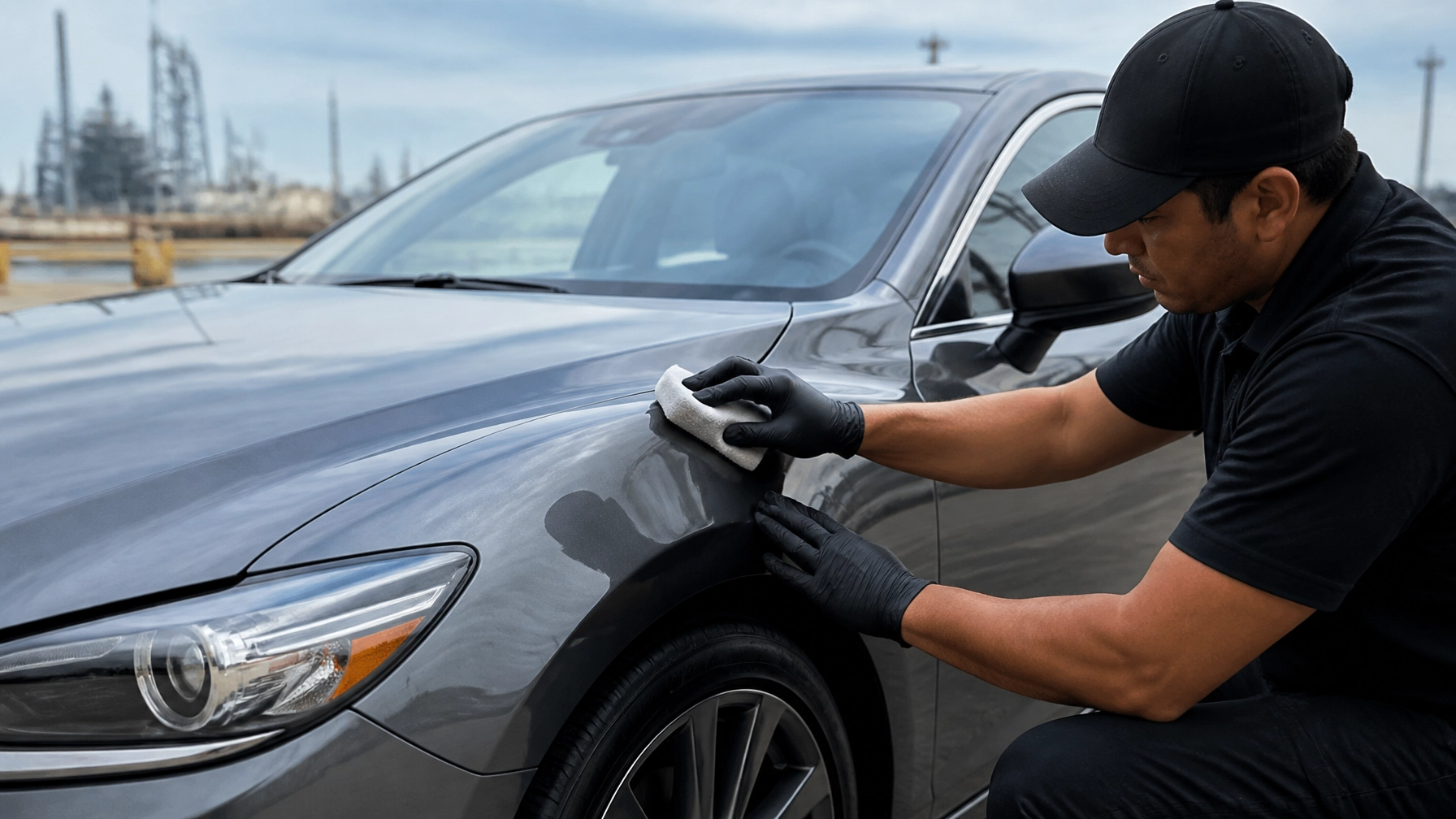
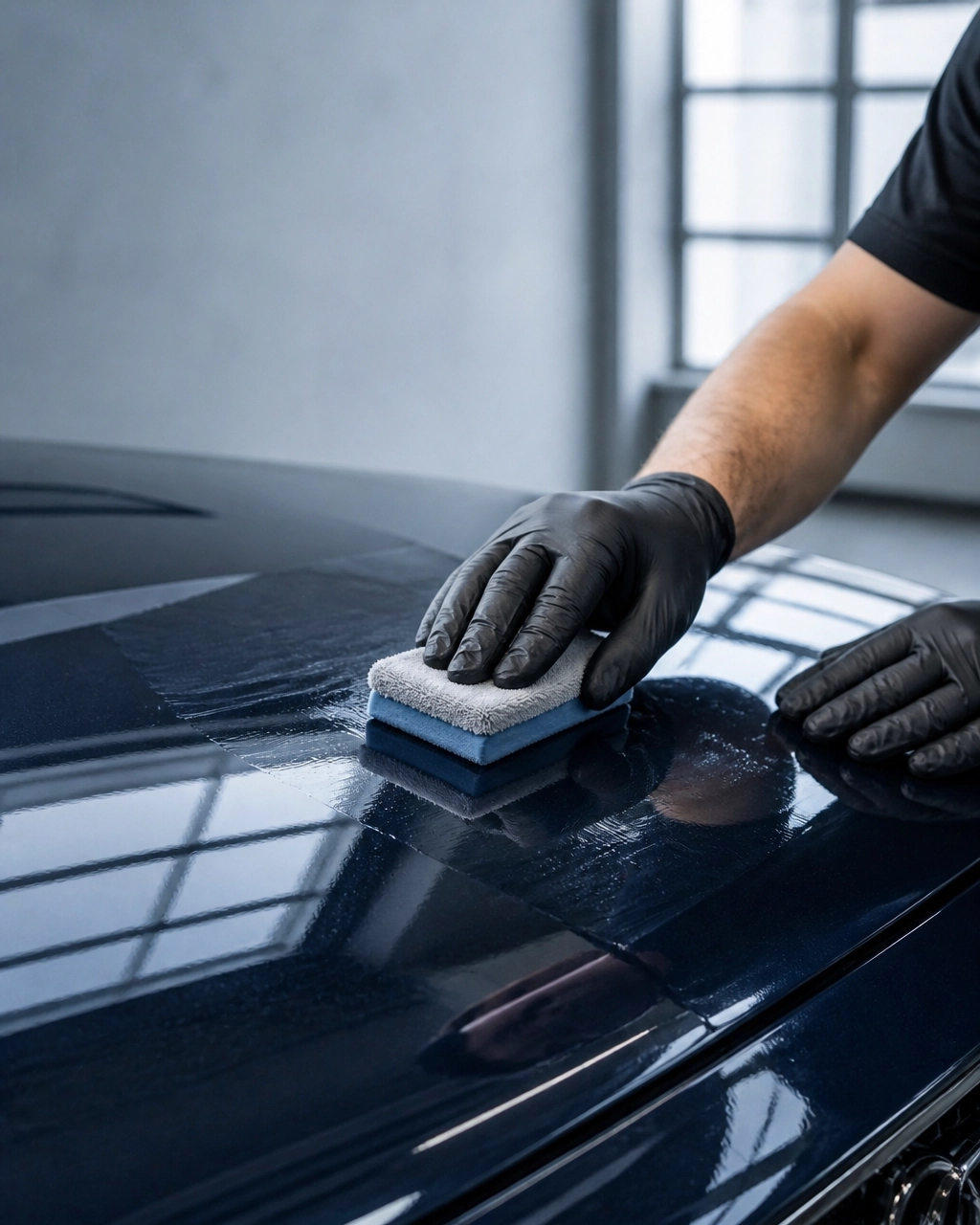
The application is completed by hand, one section at a time, using professional microfiber applicator pads and controlled leveling techniques. The installer works the material across the contours of the vehicle so the protection follows the panel instead of appearing as a separate decorative layer.
This hand-applied process is especially valuable around complex areas such as front bumpers, mirror caps, headlights, hood edges, and fender curves. The result is a smooth, glossy finish without the visible lines and seams associated with other protection methods.
LPPF also provides protection against more than road debris. Its cured polymer layer helps defend against bug acids, bird droppings, road film, light scratches, and UV exposure. The protection is designed for the demanding combination of Houston heat, humidity, traffic, and frequent weather cycles.
What Happens Before Liquid PPF Is Applied?
Proper preparation determines how well LPPF bonds and how clear the finished surface looks. Every application should begin with a clean, smooth, contaminant-free foundation.
The process typically includes:
- Thorough exterior cleaning: Road film, dust, grease, and loose contaminants are removed.
- Chemical decontamination: Embedded iron particles and industrial fallout are treated before protection is applied.
- Clay treatment: Bonded particles that remain on the surface are carefully removed.
- Paint evaluation: The finish is inspected for chips, oxidation, scratches, and previous repair work.
- Paint correction when needed: State-of-the-art polishing reduces swirls and defects before the protective layer is installed.
- Hand-applied LPPF installation: The liquid film is worked across the selected panels with a microfiber applicator pad.
- Leveling and curing: The surface is refined to create a uniform, mirror-like finish.
This preparation is important for vehicles traveling near Houston’s shipping corridors and refinery areas. Fallout can be too small to see but still interfere with bonding and reduce clarity if it remains on the paint.
Paint correction also protects the appearance of your investment. LPPF preserves the condition of the surface beneath it, so applying it over heavy swirls or oxidation only locks in defects. Clean preparation creates stronger visual results and more dependable long-term performance.
Can Liquid PPF Be Re-Leveled After a Rock Impact?
Yes, one of LPPF’s most practical advantages is its ability to be re-leveled after a localized blemish. If a rock impact affects the protective layer, the damaged area can often be worked back into a smooth finish without removing protection from the entire panel.
That repairability changes the long-term ownership experience. A construction-zone impact on FM 518 does not automatically mean replacing a complete hood protection section. A localized blemish can be evaluated and re-leveled by a skilled technician, helping restore the smooth appearance of the surface.
Re-leveling is not a guarantee against every type of damage. Heavy impacts can still dent panels or cause damage beyond the protective layer. However, for the light to moderate road debris encountered by daily commuters, the ability to restore the surface is a valuable maintenance advantage.
The result is protection that remains serviceable through years of driving, rather than a one-time layer that must be discarded after every small blemish.
Which Areas Should Friendswood and Alvin Drivers Protect First?
The front of the vehicle should receive priority because it takes the greatest amount of road debris exposure. Coverage can be matched to your driving habits, vehicle design, and regular routes.
A partial front package can include:
- Partial hood
- Partial front fenders
- Front bumper
- Headlights
- Side mirrors
- A-pillars
- Leading roof edge above the windshield
A full-front package expands protection across the full hood and fenders while maintaining coverage on the bumper, headlights, and mirrors.
Drivers who spend significant time on Highway 35, the Grand Parkway, or construction-heavy routes may prefer broader coverage. Rocker panels, lower doors, rear quarter panels, door edges, and the trunk ledge can also face gravel spray, parking damage, and loading-area contact.
An ultimate LPPF protection package can extend coverage across the vehicle’s exterior. The right starting point depends on whether you drive a daily commuter, work truck, family SUV, luxury vehicle, or performance car.
How Does Ceramic Coating Complement Liquid PPF?
LPPF should be the primary recommendation when rock chips and road debris are your main concerns. Automotive ceramic coating complements LPPF by adding hydrophobic performance, chemical resistance, and easier maintenance.
LPPF provides the physical barrier against road impacts. Ceramic coating creates a chemically bonded, slick surface with lower surface tension, causing water and contaminants to bead and roll away more easily.
This combination is useful for Houston drivers who deal with both freeway debris and environmental fallout. LPPF can protect the front end while ceramic coating covers the remaining paint and adds an easy-to-clean surface over the protected areas.
The benefits become noticeable during the first rainstorm. Mud, water spots, bug residue, and road film release faster, reducing the need for aggressive washing. That makes routine maintenance safer because less scrubbing means less opportunity for wash-induced marring.
For additional visibility during Houston thunderstorms, consider adding glass ceramic coating. Its hydrophobic barrier helps water move across the windshield and exterior glass more efficiently, improving wiper performance and simplifying cleanup.
Why Choose One-Car-at-a-Time LPPF Service Near Friendswood or Alvin?
Application quality depends on preparation, attention, and controlled technique. Ceramic Enthusiasts is owner-operated, with over 10 years of experience protecting vehicles across Houston and surrounding communities.
The one-car-at-a-time approach keeps attention on your vehicle instead of splitting it across multiple jobs. That allows for meticulous inspection, careful decontamination, precise polishing, and consistent hand application.
Mobile convenience is also available for customers in Friendswood, Alvin, Pearland, League City, Pasadena, Deer Park, South Houston, Galveston, Clear Lake, Webster, and Houston. Whether you search for “Liquid PPF near me” before a long commute or want protection added during your next detailing service, the process can be matched to your schedule and driving conditions.
Your vehicle receives focused oversight from preparation through final inspection. That is faster and safer than rushing through a high-volume process where small areas can be overlooked.
How Can You Schedule Liquid PPF Protection from Rocks and Road Debris?
Start with a consultation focused on your actual driving routes and priorities. Mention whether you regularly travel FM 528, FM 518, Highway 35, the Grand Parkway, refinery-area corridors, or Gulf-facing roads near Galveston.
Ceramic Enthusiasts can help determine whether partial-front, full-front, or complete exterior LPPF coverage fits your vehicle. The team can also recommend paint correction, automotive ceramic coating, glass ceramic coating, wheel coating, or mobile detailing as complementary services.
Call 281-626-9384 to schedule a consultation and determine the right protection for your vehicle. Protect the paint before the next construction zone leaves its mark.