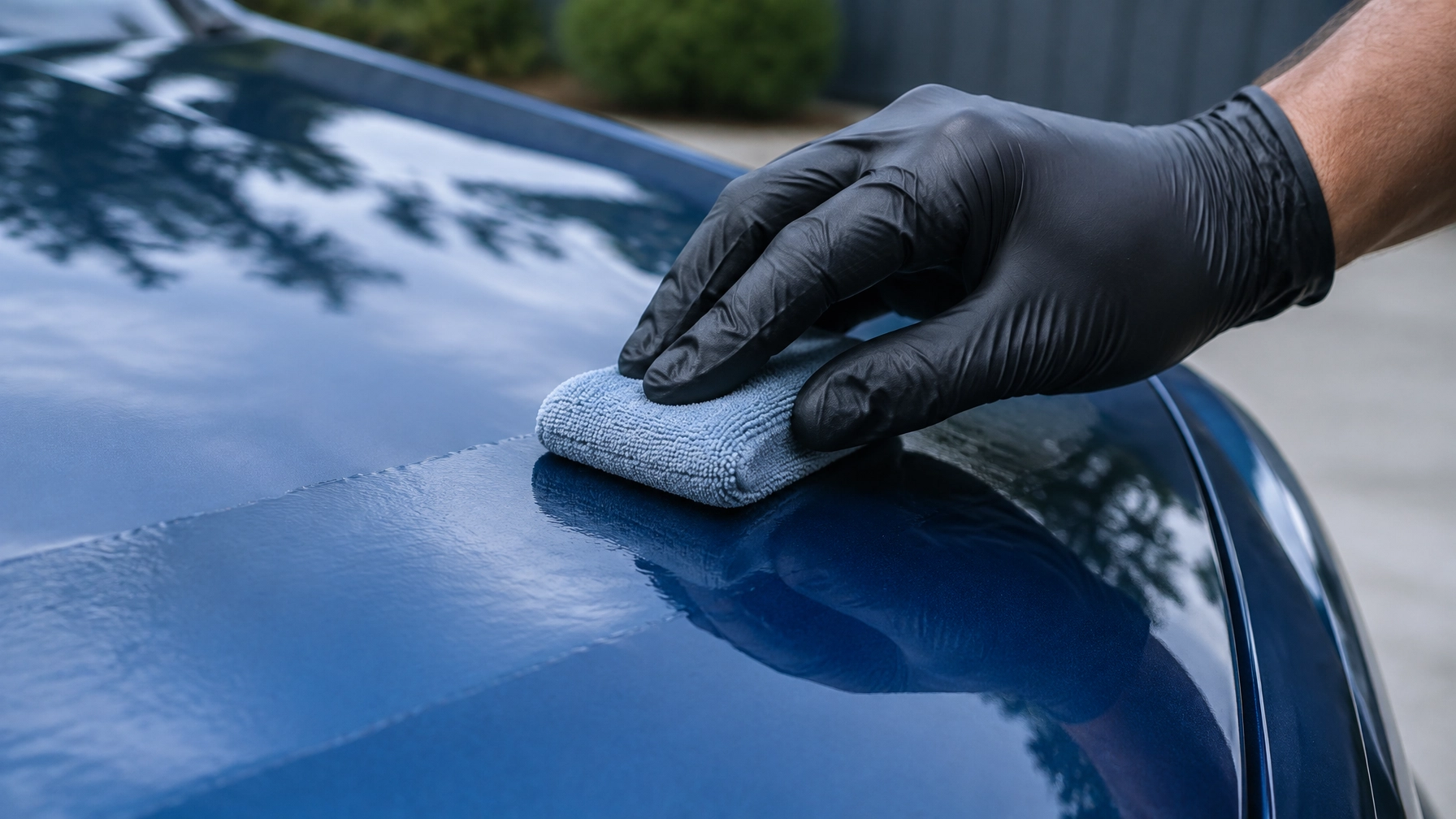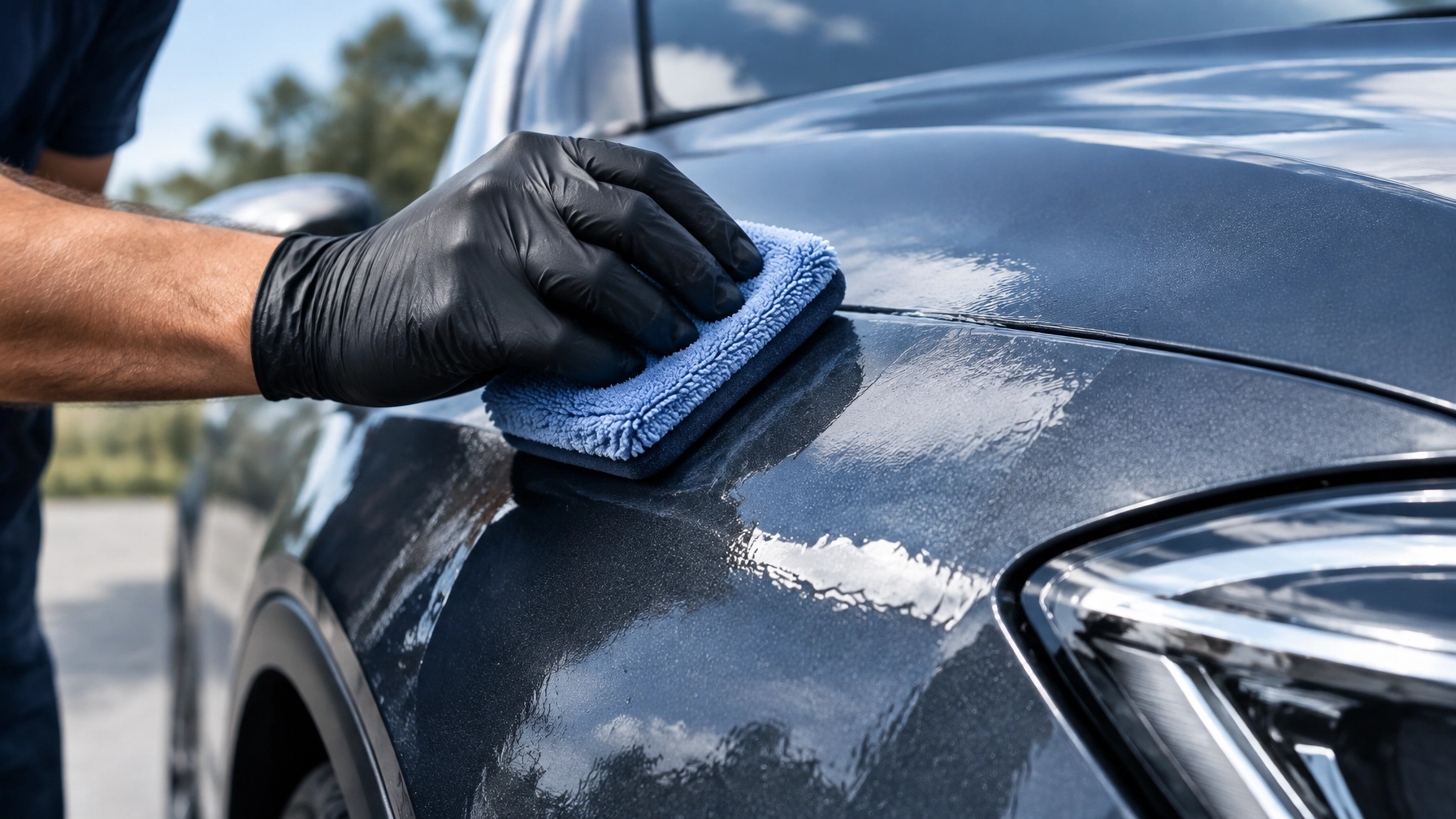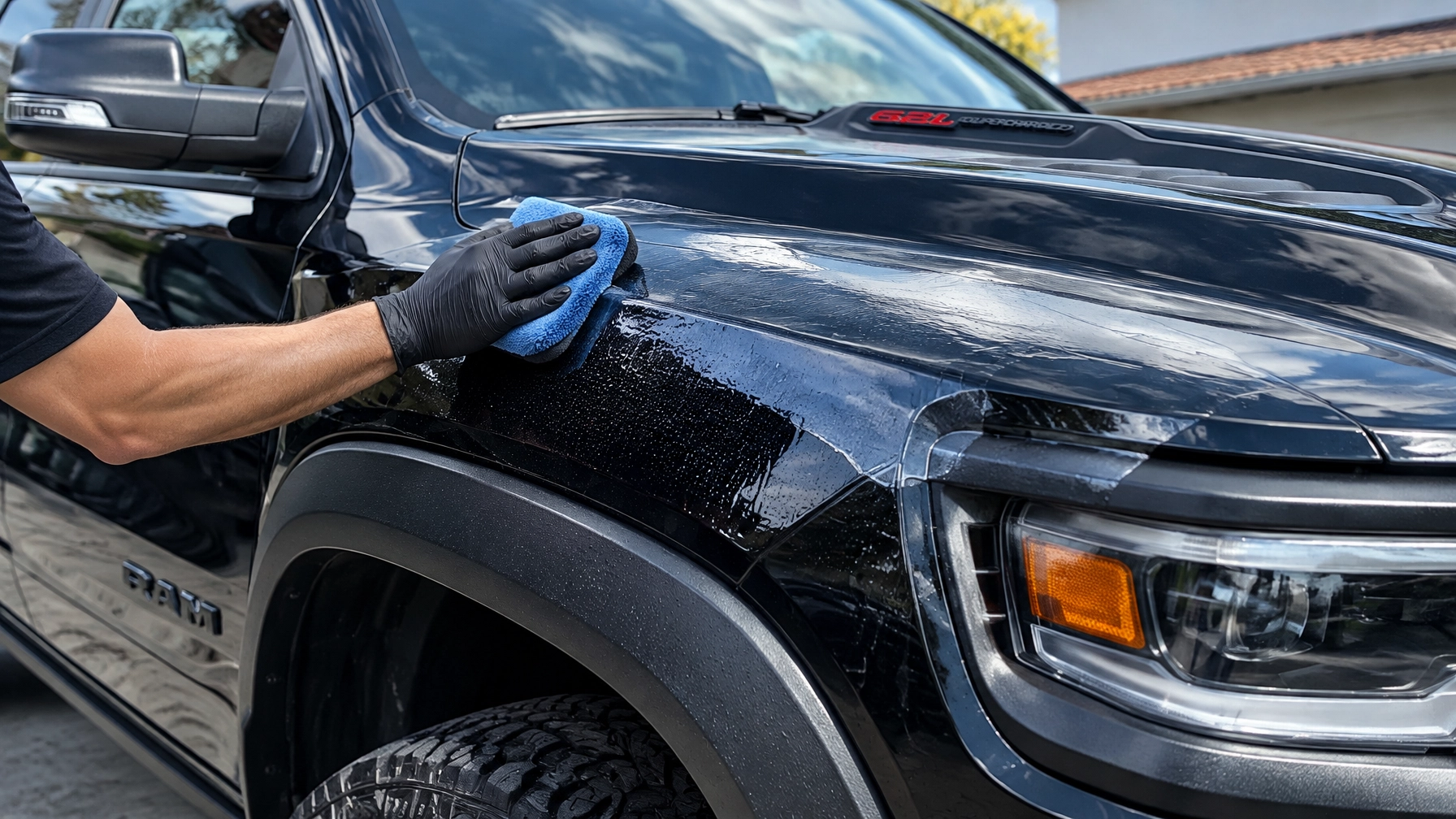
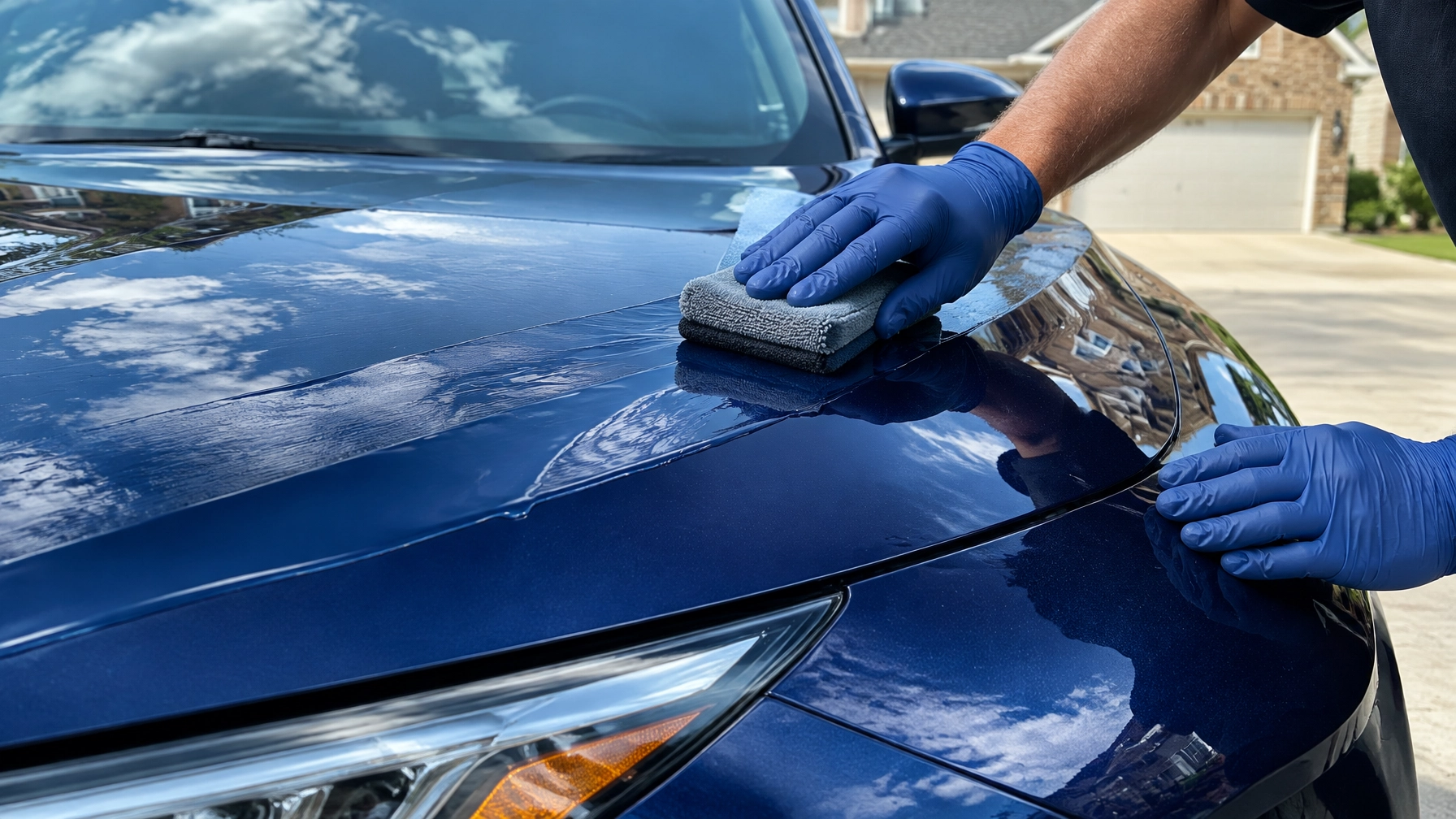
Houston drivers get easier vehicle maintenance when hand-applied Liquid Paint Protection Film protects vulnerable paint first, followed by ceramic coating for hydrophobic performance and long-lasting gloss.
Heat, humidity, UV exposure, freeway grit, and industrial fallout attack unprotected paint every day. A protection system reduces how strongly those contaminants bond, helps water release faster, and keeps routine washing simple.
The result is practical. Your car stays cleaner between washes and returns to a mirror-like finish with less effort.
Why Should Houston Drivers Put Liquid PPF First?
Liquid Paint Protection Film should come first when rock chips and road debris are major concerns because it creates a tough, flexible protective film over the paint.
Houston commuters face constant exposure on I-45, Beltway 8, and I-10. Construction debris, loose aggregate, and highway grit strike the hood, bumper, mirrors, and leading edges. Ceramic coating helps with UV rays, chemical contamination, and easier cleaning, but LPPF addresses the physical impact concern directly.
LPPF uses a polyurethane and acrylic polymer blend that cures into a solid-state protective layer. The hand-applied process allows focused coverage across high-impact areas without compromising the vehicle’s appearance.
If a rock impact creates a blemish in the LPPF, the affected area can be re-leveled. That restores a smooth finish without removing an entire panel of protection.
Explore our Liquid Paint Protection Film service to see how front-end and full-vehicle coverage can match your driving habits.
LPPF protects the surface before daily road abuse becomes permanent paint damage.
How Does Ceramic Coating Make Maintenance Easier?
Ceramic coating makes maintenance easier by chemically bonding to prepared paint and creating a slick, hydrophobic surface that reduces contaminant adhesion.
Water beads and moves away more readily. Dust, road film, bug residue, and light grime release faster during a proper wash. The coating does not eliminate cleaning, but it makes cleaning more efficient and less aggressive.
Premium-grade ceramic coating also adds resistance against UV exposure, oxidation, bird droppings, bug acids, and common chemical contaminants. Houston’s 95-degree summer afternoons and intense sun accelerate paint degradation when the surface remains unprotected.
The coating’s low surface energy reduces the grip between contaminants and paint. That is the technical reason maintenance becomes easier. Less bonded contamination means less friction during washing.
A coating also preserves gloss between services. You see the benefit after the first rainstorm, when water sheets or beads instead of clinging to every panel.
Learn more about automotive ceramic coating in Houston and how preparation determines long-term performance.
Ceramic coating turns routine washing into a faster, safer process.

Which Houston Conditions Make This Protection Valuable?
Houston’s climate makes layered paint protection valuable because heat, humidity, storms, and airborne contaminants create repeated stress on the finish.
Humidity slows evaporation after rain and washing. Mineral-rich water can dry into spots. Industrial fallout near refineries, shipping corridors, and heavy traffic routes can settle onto horizontal paint surfaces. Without regular removal, those particles become harder to wash away and can contribute to staining or etching.
Gulf Coast salt air adds another concern for vehicles driven near Galveston, Clear Lake, and surrounding coastal areas. Salt residue does not need to remain visible to affect the surface. Regular rinsing and proper washing reduce buildup before it becomes persistent.
Seasonal thunderstorms create another maintenance cycle. Rain moves dirt across the paint, while strong sun dries the remaining moisture quickly. In fall, tree sap and acorns create concentrated contamination around shop bays, parking areas, and neighborhood streets in Friendswood, Pearland, and League City.
The protection strategy is straightforward:
- LPPF absorbs much of the concern around light-to-moderate rock and road debris impact.
- Ceramic coating helps resist UV exposure, chemical contamination, and bonded grime.
- Proper washing removes residue before Houston weather bakes it onto the finish.
- Re-leveling restores a smooth LPPF surface after a rock-related blemish.
The right system reduces the consequences of daily Houston driving without demanding constant detailing.
Can LPPF and Ceramic Coating Work Together?
Yes. LPPF and ceramic coating work together as complementary layers, with LPPF providing impact-focused protection and ceramic coating simplifying exterior maintenance.
The ceramic layer can be applied over compatible LPPF after the protective film has properly cured. This combination creates a smooth, glossy surface that resists contamination while the underlying LPPF helps protect against road debris.
The process begins with a surface evaluation. Existing paint defects must be addressed before protection is installed because coatings preserve the condition beneath them.
For vehicles with swirls, oxidation, or light scratches, paint correction pairs seamlessly with LPPF and ceramic coating. Precision polishing restores clarity while preserving as much clear coat as possible. The result is a cleaner bonding surface and a sharper final reflection.
This layered approach fits several Houston driving patterns:
- Daily freeway commuters who see heavy road debris.
- Trucks and SUVs traveling through construction corridors.
- Luxury vehicles exposed to direct sun during workdays.
- Coastal drivers dealing with salt air and frequent storms.
- Collector vehicles that need appearance preservation with less handling.
LPPF provides the first line of defense. Ceramic coating makes the protected surface easier to maintain.
What Does the Maintenance Routine Look Like?
The maintenance routine stays simple when you use gentle products, controlled washing, and timely decontamination.
After installation: Follow the specific curing instructions provided during your service. Ceramic Enthusiasts recommends waiting at least seven days before washing a newly coated vehicle unless different instructions are provided for the selected system. Keep the surface away from avoidable contamination during this initial period.
At each wash: Rinse the vehicle first to loosen loose dust and road grit. Use a clean wash mitt, ample lubrication, and a pH-neutral automotive shampoo. Work from the top downward, cleaning one section at a time. Rinse the mitt frequently so released grit does not return to the paint.
During drying: Use clean, plush microfiber drying towels or a controlled air-drying method. Do not allow standing water to bake onto the surface under direct Houston sun. Drying in shade or during cooler hours reduces water spotting.
Every one to two weeks: Daily drivers on I-45, Beltway 8, and I-10 generally benefit from washing every one to two weeks. A vehicle driven less often can follow a longer interval, but visible bird droppings, bug residue, tree sap, and salt should be removed promptly.
Every three to six months: Schedule a maintenance evaluation or professional decontamination when the surface begins to feel rough after washing. Chemical and mechanical decontamination removes bonded particles that regular shampoo cannot release. This helps restore slickness before contamination accumulates.
After fall tree exposure: Remove sap and acorn residue as soon as practical. Do not let organic contamination remain through repeated heat cycles. Houston sun can make residue more difficult to remove and increase the risk of staining.
Avoid: Automatic brush washes, harsh household detergents, abrasive tools, and aggressive chemicals. They can introduce marring or reduce the coating’s performance.
Easy maintenance still requires maintenance. The difference is that each wash works faster and with less force.
How Does Ceramic Enthusiasts Prepare and Apply Protection?
Ceramic Enthusiasts prepares each vehicle through evaluation, decontamination, polishing when needed, and controlled hand application.
Surface preparation determines bond quality. Embedded industrial fallout, old road film, mineral residue, and oxidation interfere with uniform protection. Decontamination removes those contaminants. Paint correction addresses defects that would otherwise remain visible beneath the protective layer.
The service is owner-operated, backed by over 10 years of hands-on experience, and completed one car at a time. That focus allows meticulous attention across the hood, fenders, doors, trim, and other surfaces instead of rushing vehicles through a shared workflow.
Services are performed in-shop, one vehicle at a time, for focused application and controlled conditions. Customers come in from Houston, Pearland, Pasadena, Deer Park, South Houston, Galveston, Clear Lake, Webster, Friendswood, and Alvin for owner-operated service with meticulous attention from start to finish.
The process is careful because the outcome depends on more than the product. It depends on preparation, application conditions, inspection, and maintenance guidance.

Which Add-Ons Complete an Easy-Maintenance Plan?
Glass and wheel coatings complete the plan by protecting surfaces that collect water, brake dust, and road residue.
A glass ceramic coating creates a hydrophobic surface on windshields and windows. During Houston thunderstorms, water beads and moves away more efficiently, helping maintain visibility and reducing the effort needed to clean glass.
A wheel ceramic coating helps release brake dust and road grime from wheel surfaces. This matters for freeway commuters who make frequent stops in heavy traffic. High-temperature wheel formulas are designed for the heat generated around braking components.
These add-ons are convenient to include during a larger LPPF or ceramic coating appointment. They reduce the number of surfaces that require aggressive cleaning later.
Protection works best when every frequently exposed surface receives the right product.
How Do You Book an Easy-Maintenance Protection Plan in Houston?
You book an easy-maintenance protection plan by bringing your vehicle to the shop for an owner-operated, one-car-at-a-time service process built around proper preparation, application, and curing.
In-shop service allows controlled conditions that support proper bonding and curing for Liquid Paint Protection Film and ceramic coating. It also gives each vehicle focused oversight from start to finish, whether you drive a daily commuter, truck, luxury vehicle, or collector car.
If you are searching for easy maintenance ceramic coating, ceramic coating Houston, or auto detailing Houston, start with a vehicle evaluation. We can determine whether your priorities require LPPF-first protection, ceramic coating, paint correction, or a complete combination.
Learn more about our owner-operated approach.
Schedule a consultation to determine the right protection plan for your vehicle. Call 281-626-9384.
Ready to protect your investment? Call Ceramic Enthusiasts at 281-626-9384 to schedule your in-shop consultation, and learn more about our hand-applied Liquid Paint Protection Film and automotive ceramic coating.