Hand-applied Liquid Paint Protection Film in Clear Lake, Webster, and South Houston gives daily drivers a physical defense against road debris, rock chips, and Houston’s demanding climate.
The Gulf Freeway does not treat paint gently.
Every commute along I-45 exposes your hood, bumper, mirrors, headlights, and A-pillars to road grit and airborne debris. NASA Parkway, NASA Road 1, Bay Area Boulevard, and busy surface streets around Clear Lake and Webster create the same challenge at lower speeds.
Then come the environmental contaminants.
Coastal humidity, salt air, industrial fallout from the ship channel corridor, bird deposits, bug acids, and intense Texas UV exposure all attack the clear coat. Without protection, small impacts become chips while bonded contaminants gradually etch the finish.
For Clear Lake and Webster drivers, Liquid Paint Protection Film (LPPF) is the first protection decision to make.
What makes Clear Lake and Webster roads so hard on vehicle paint?
Clear Lake and Webster vehicles face a combination of impact damage and chemical exposure that compounds over time.
A commuter traveling daily on I-45 encounters truck spray, loose aggregate, construction debris, and highway grit. At 95 degrees, the hood and front bumper can become hot enough to accelerate the bonding and etching process when contaminants remain on the surface.
NASA/JSC-area traffic adds frequent stop-and-go driving. That means more time behind commercial vehicles, more brake dust in the air, and more opportunities for debris to strike the front end.
Surface streets around Clear Lake, Webster, Friendswood, and League City create additional exposure through road repairs, landscaping debris, and heavy traffic transitions.
The Gulf Coast environment adds another layer. Persistent humidity keeps moisture on the vehicle longer, while salt air from Galveston Bay can contribute to corrosion and surface degradation. Industrial fallout from the Houston Ship Channel and nearby Pasadena, Deer Park, South Houston, and Houston corridors can settle onto the finish before the next wash.
Without a physical barrier, your paint absorbs every mile.
How does hand-applied Liquid PPF protect against rock chips?
Hand-applied LPPF forms a resilient polymer film over the painted surface, creating a sacrificial layer between your clear coat and everyday road abuse.
The material uses a flexible blend of polyurethane and acrylic polymers. After application, it cures into a solid-state protective film with greater tensile strength than a conventional coating alone. That structure helps absorb light to moderate impacts from rocks and road debris before they reach the factory finish.
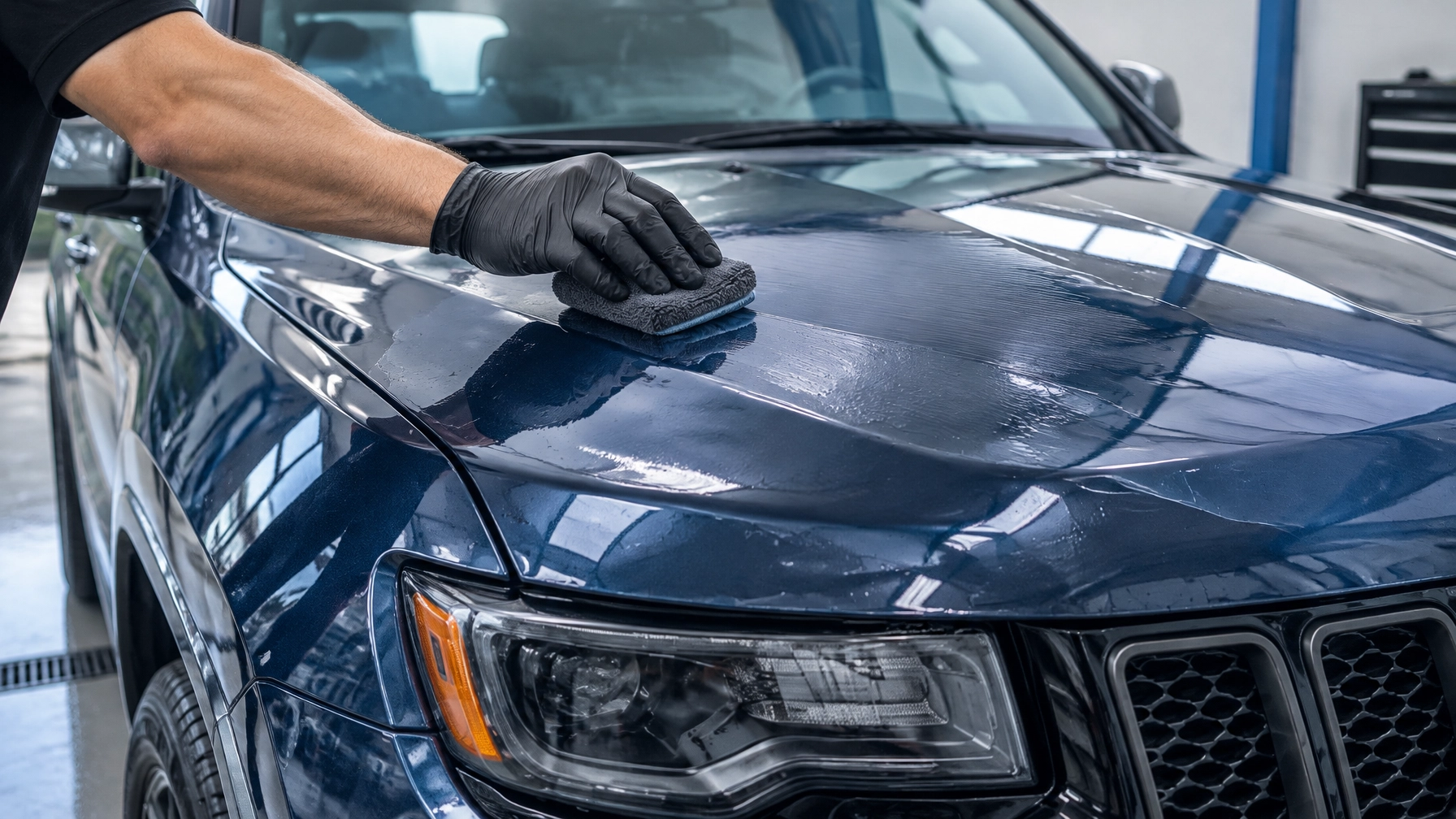
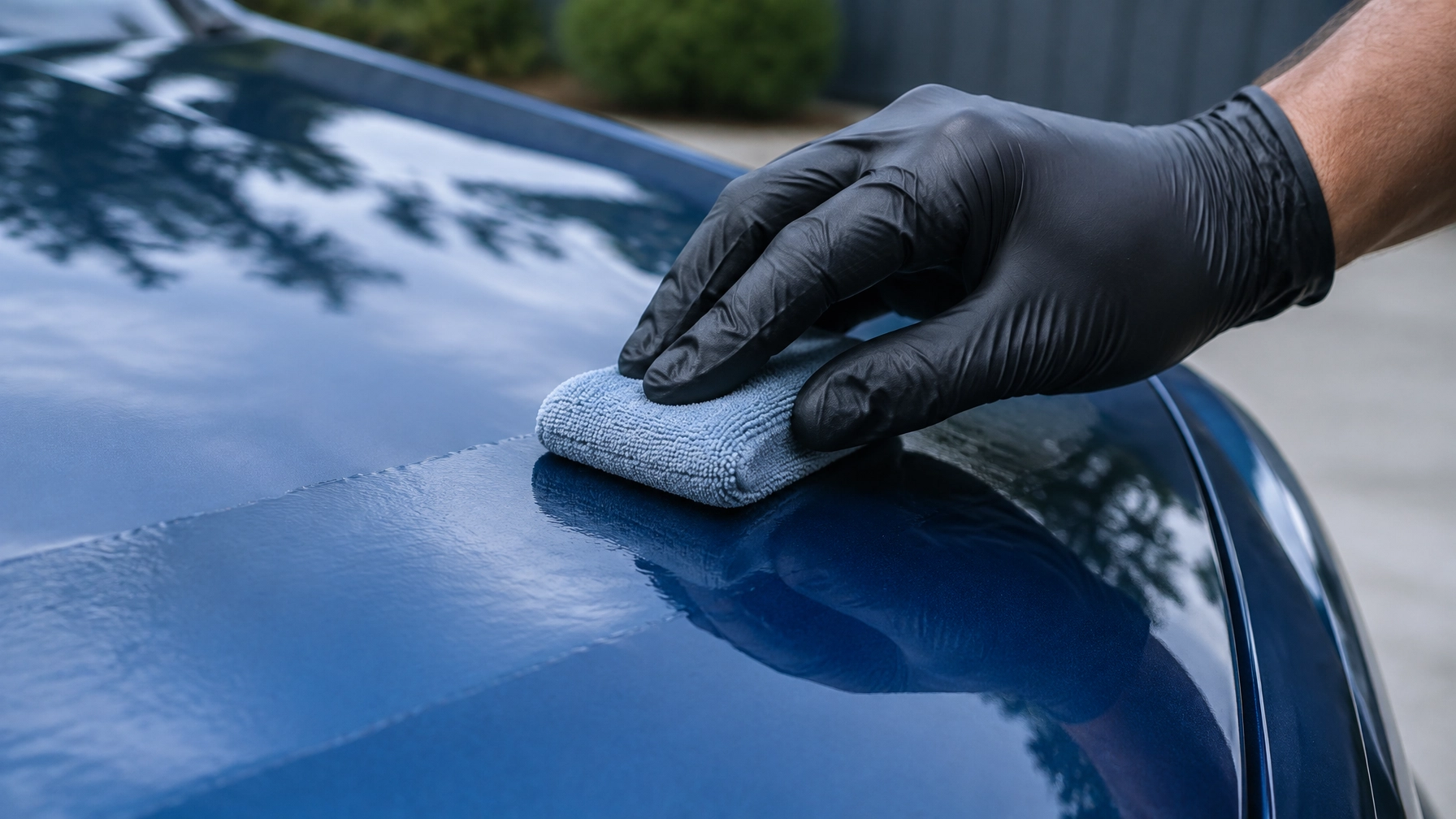
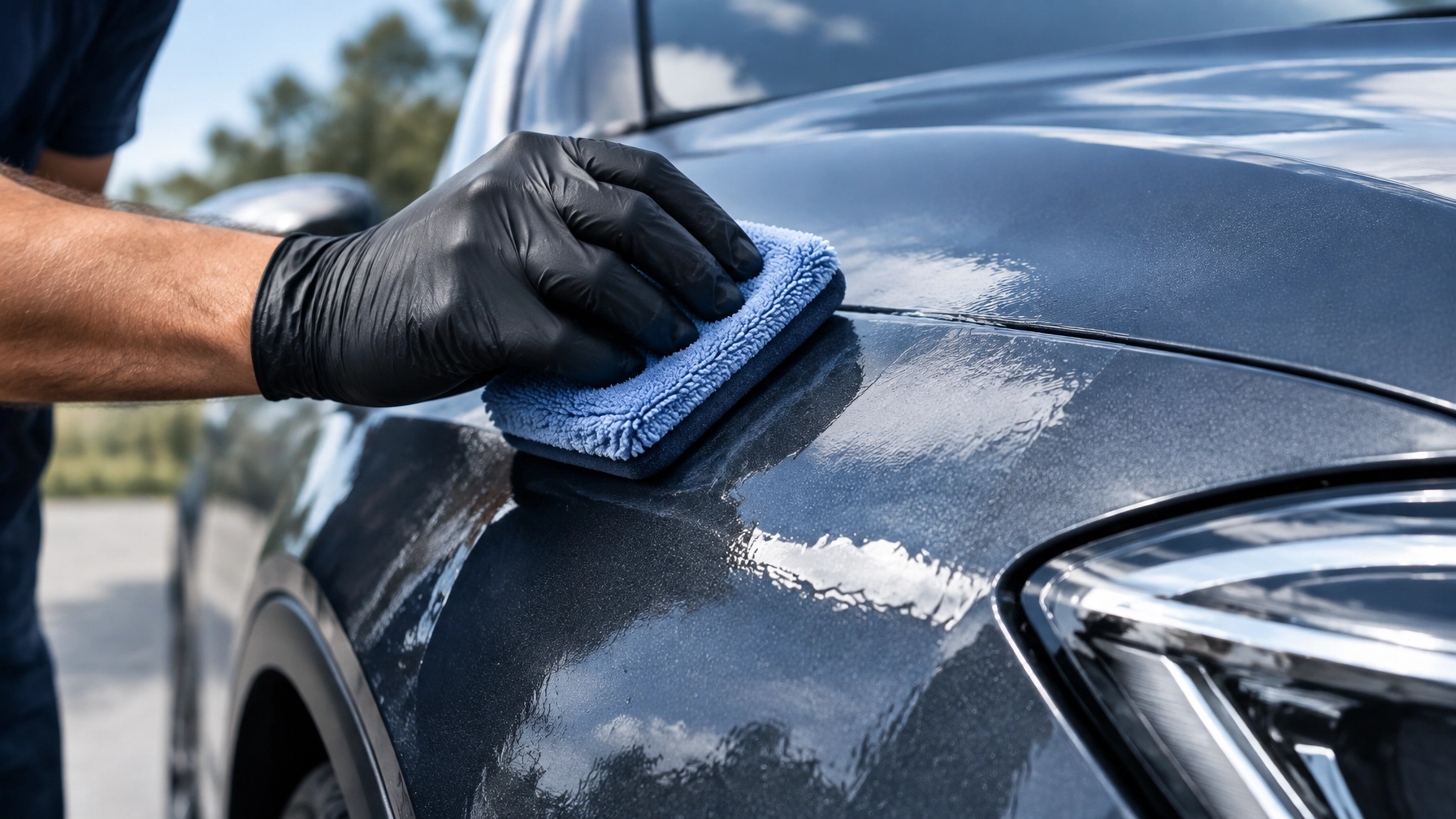
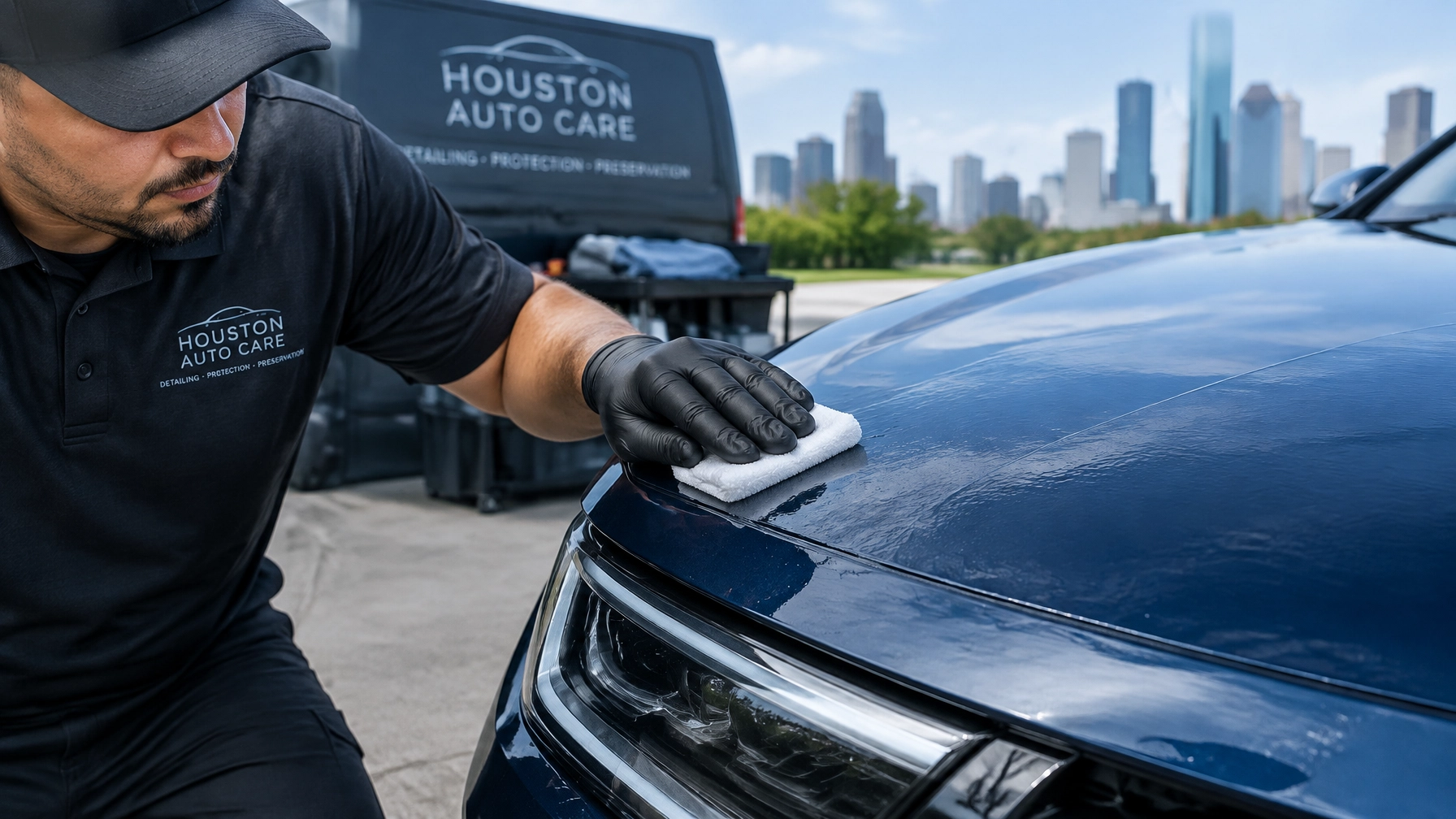
The application is performed by hand, panel by panel. A microfiber applicator pad distributes the LPPF evenly across the prepared surface, allowing the installer to monitor coverage, edges, contours, and finish quality closely.

This process is especially valuable on the areas that face I-45 debris first:
- Front bumper
- Hood and leading hood edge
- Front fenders
- Side mirrors
- Headlights
- A-pillars
- Leading edge of the roof
The result is a smooth, glossy barrier without visible seams or pre-cut film lines. Protection starts where the damage starts.
Can LPPF be re-leveled after a rock impact?
Yes. One of LPPF’s most practical advantages is its ability to be re-leveled when a rock impact creates a blemish.
A direct impact can mark the protective layer without necessarily damaging the paint underneath. Instead of replacing an entire panel or removing a section of protection, the affected area can be evaluated and re-leveled.
That matters for Houston drivers because rock impacts are not rare events. They are part of daily freeway mileage.
Re-leveling restores a smoother appearance and helps preserve the continuity of the protective surface. It also gives owners a faster and safer way to address localized damage before it spreads or becomes more noticeable.
A rock strike should not automatically become a repainting decision.
Which LPPF package fits your Clear Lake driving routine?
The right coverage depends on how and where you drive.
Drivers who commute between Clear Lake, Webster, and Houston on I-45 often benefit from a Partial Front Package. This focuses on the bumper, partial hood, partial fenders, headlights, mirrors, A-pillars, and the leading roof edge.
Drivers who spend more time on the Gulf Freeway, TX-3, or industrial corridors may prefer Full Front coverage. This protects the complete hood and fenders in addition to the bumper, headlights, and mirrors.
The Ultimate Vehicle Protection Package extends coverage across the vehicle. It is designed for owners who want broader defense against road debris, loading-area scratches, door-edge damage, rocker-panel wear, and daily environmental exposure.
Whether you drive a daily commuter, an SUV, a work truck, or a collector vehicle, the goal remains the same: protect the painted surfaces that are expensive and difficult to restore.

Booking in-shop makes that protection easier to schedule. Ceramic Enthusiasts brings professional care to your home or workplace in Clear Lake, Webster, South Houston, Pasadena, Pearland, League City, Friendswood, Alvin, Deer Park, Galveston, and surrounding Houston areas.
How do ceramic coating and paint correction complement LPPF?
LPPF leads the protection plan because it addresses physical impact. Ceramic coating adds chemical resistance, hydrophobic performance, and easier maintenance across the protected surface and the rest of the vehicle.
Premium ceramic coating bonds to properly prepared paint and creates a low-surface-energy finish. Water, dirt, road film, and mineral deposits release more easily because the surface tension changes how contaminants interact with the paint.
That performance is useful after Gulf Coast rainstorms. Water beads and moves away instead of sitting across the panel, making the difference noticeable from the first rainstorm.
Ceramic coating also helps defend against UV exposure, oxidation, bird deposits, bug splatter, and Houston’s heat and humidity. It does not replace LPPF for rock-chip protection. The two services work together.
Paint correction should come before either protection service when the finish has swirl marks, oxidation, or light scratches. Through decontamination, clay treatments, inspection, and precision polishing, paint correction creates a clearer surface for the LPPF and ceramic coating to bond properly.
Skipping preparation can seal existing defects beneath the protection.
Completing preparation first produces the mirror-like finish owners want to preserve for years, not months.
What happens during a one-car-at-a-time LPPF appointment?
The process begins with a vehicle evaluation and coverage discussion. This identifies impact zones, paint condition, prior repairs, and the package that fits your driving habits.
Next comes thorough washing and decontamination. Chemical decontamination removes embedded fallout, while clay treatments address bonded particles that normal washing cannot remove.
If needed, paint correction follows. Polishing removes or reduces suitable defects while preserving as much factory clear coat as possible.
The surface is then cleaned and inspected before hand application begins. The owner-operated technician works methodically with a microfiber applicator pad, focusing on even coverage and careful attention around body contours.

This is not a rushed, multi-vehicle production line. Ceramic Enthusiasts focuses on one car at a time, with meticulous attention throughout the application and curing process.
That owner-operated approach reflects over 10 years of hands-on experience. Learn more about the team’s process and service philosophy on the About Us page.
Do Houston drivers need LPPF if they already have ceramic coating?
Yes, if rock chips and freeway debris are major concerns.
Ceramic coating provides excellent protection against UV exposure, oxidation, chemicals, water spots, and bonded contaminants. Its hydrophobic properties make routine washing faster and help the vehicle maintain a cleaner appearance between washes.
LPPF addresses a different problem. Its cured polymer film provides a physical impact barrier that ceramic coating alone is not designed to provide.
For a vehicle driven daily through Clear Lake, Webster, League City, Pearland, or South Houston, LPPF should come first when road debris is the primary concern. Ceramic coating can then be added as a complementary top layer for gloss, chemical resistance, and simplified maintenance.
Wheel ceramic coating and glass ceramic coating can also be added during the same protection plan. Wheel coating helps release brake dust and road grime, while glass coating improves water behavior during Houston thunderstorms.
How can Clear Lake drivers preserve the protection?
Maintenance determines how well the finish performs through dozens of Houston weather cycles.
Use a pH-neutral car shampoo and soft microfiber towels. Wash salt, road film, bird deposits, and industrial dust before they remain on the surface through another hot afternoon.
Avoid abrasive automatic car washes. Their brushes and harsh chemicals can create marring and gradually reduce the appearance of protected surfaces.
Schedule periodic maintenance detailing and decontamination when the paint begins to feel rough. Promptly remove bird droppings, bug residue, and tree sap because no protection eliminates the need for timely care.
With the right maintenance routine, LPPF and ceramic coating keep daily cleaning faster while preserving a smooth, glossy finish.
Can Ceramic Enthusiasts help determine the right protection?
Yes. A consultation identifies whether your vehicle needs front-end LPPF, broader coverage, paint correction, ceramic coating, or a combination of services.
Your driving pattern matters. So do your parking conditions, freeway mileage, vehicle age, paint condition, and priorities for appearance and resale value.
Ceramic Enthusiasts provides owner-operated, one-car-at-a-time service with in-shop service throughout Clear Lake, Webster, South Houston, Houston, Pearland, League City, Pasadena, Deer Park, Galveston, Friendswood, and Alvin.
Call 281-626-9384 to schedule a consultation and determine the right protection for your vehicle. Hand-applied LPPF gives your paint its first line of defense before the next Gulf Freeway commute.
Ready to protect your investment? Call Ceramic Enthusiasts at 281-626-9384 to schedule your in-shop consultation, and learn more about our hand-applied Liquid Paint Protection Film and automotive ceramic coating.