Choosing the right paint protection for your vehicle in Houston is not just an aesthetic decision; it is a necessity for preserving your investment against some of the most aggressive environmental conditions in the country. Between the relentless Texas sun, the "sticky" humidity of the Gulf Coast, and the industrial fallout from local shipping corridors, your clear coat is under constant assault. At Ceramic Enthusiasts, we focus on delivering high-performance solutions tailored specifically for our local climate. Whether you are commuting through Pasadena, TX or parking in the sun in Sugar Land, understanding the difference between traditional ceramic coatings and modern graphene coatings is the first step toward long-term vehicle preservation.
Which Coating Handles the Intense Houston Heat Most Effectively?
Graphene coatings currently hold the edge over traditional ceramic coatings when it comes to heat management. In Houston, where asphalt temperatures can exceed 140 degrees during July and August, thermal conductivity becomes a critical factor for paint protection. Ceramic coatings, primarily composed of Silicon Dioxide (SiO2), act as a thermal insulator. While they provide excellent UV protection, they can occasionally trap heat on the surface of the paint. In extreme cases, this heat retention can lead to micro-cracking in the coating or a reduction in hydrophobic performance over several years of exposure.
Graphene, a single layer of carbon atoms arranged in a hexagonal lattice, possesses incredible thermal conductivity. Instead of trapping heat, a graphene coating helps dissipate it across the surface. This reduces the localized surface temperature of your vehicle, which is a massive benefit for darker-colored cars in Pearland or Baytown. By keeping the surface cooler, graphene helps prevent the "baking" effect that occurs when contaminants like bird droppings or tree sap land on a hot hood.

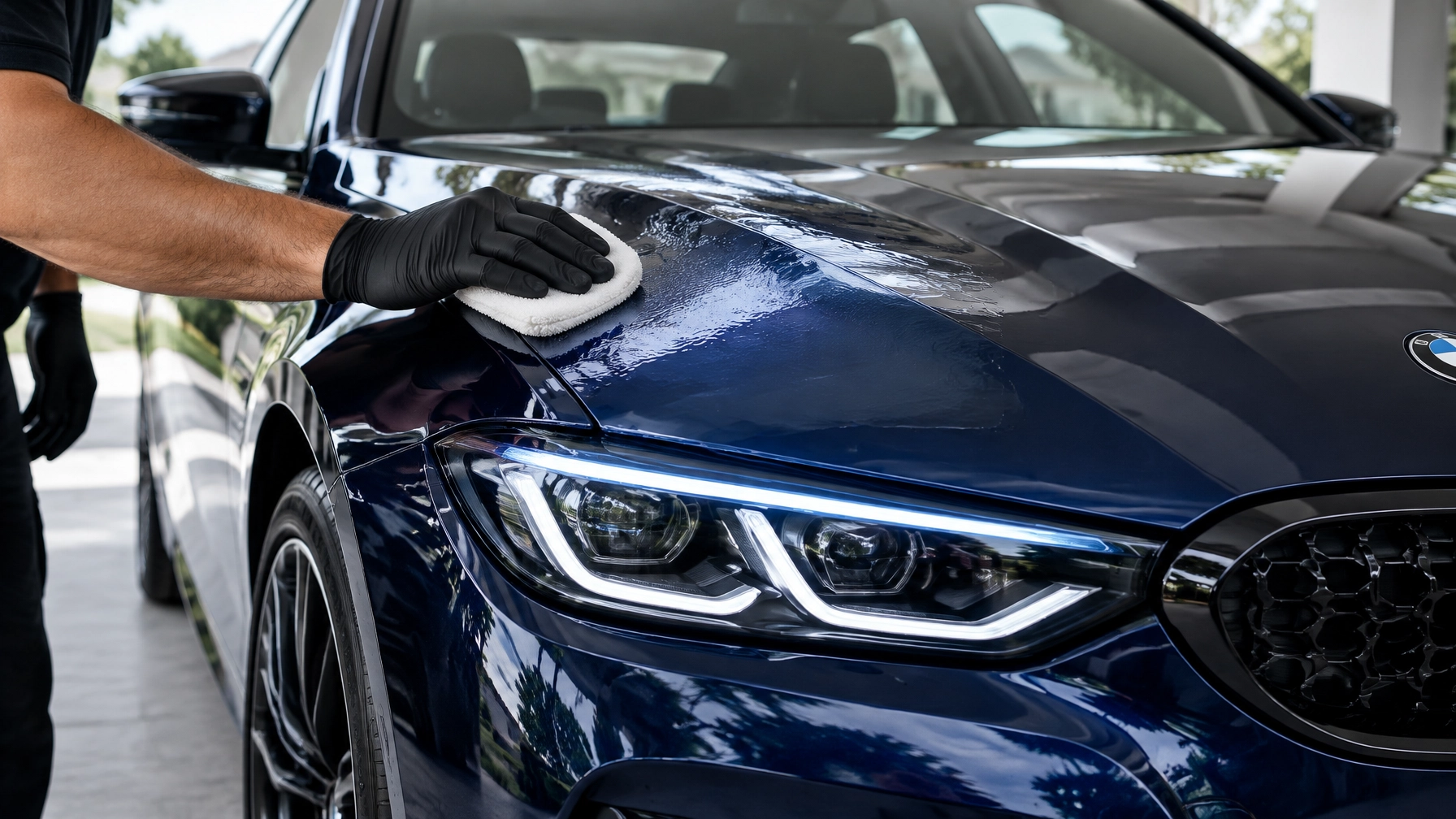
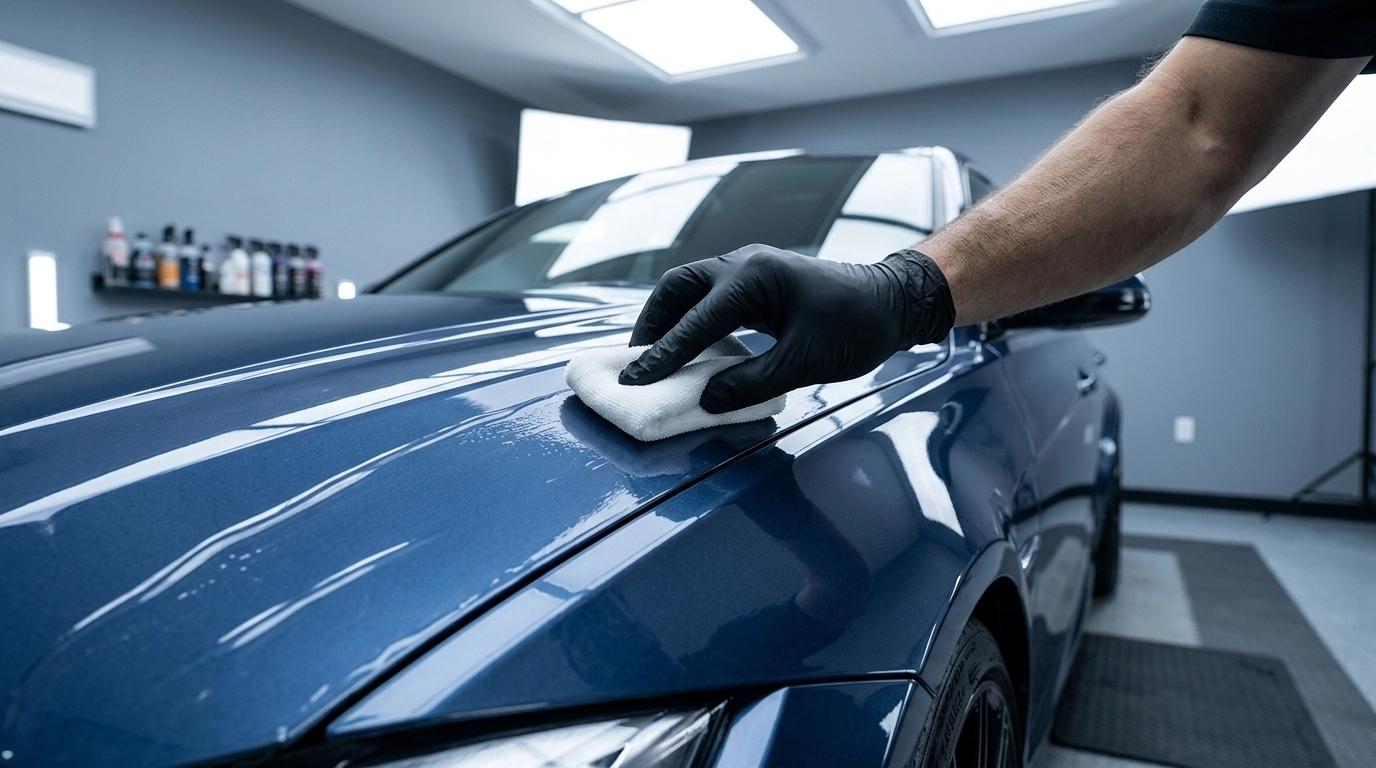
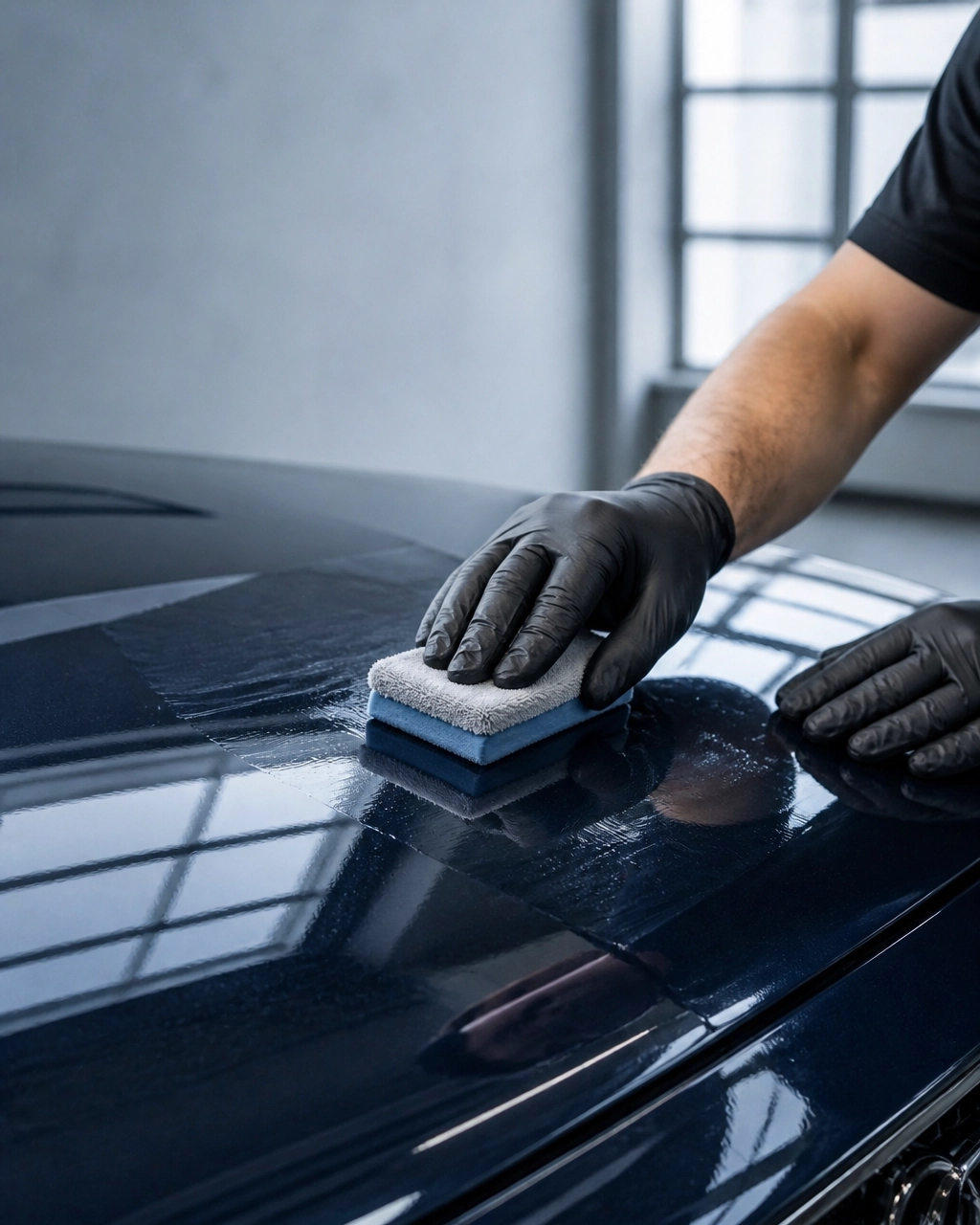
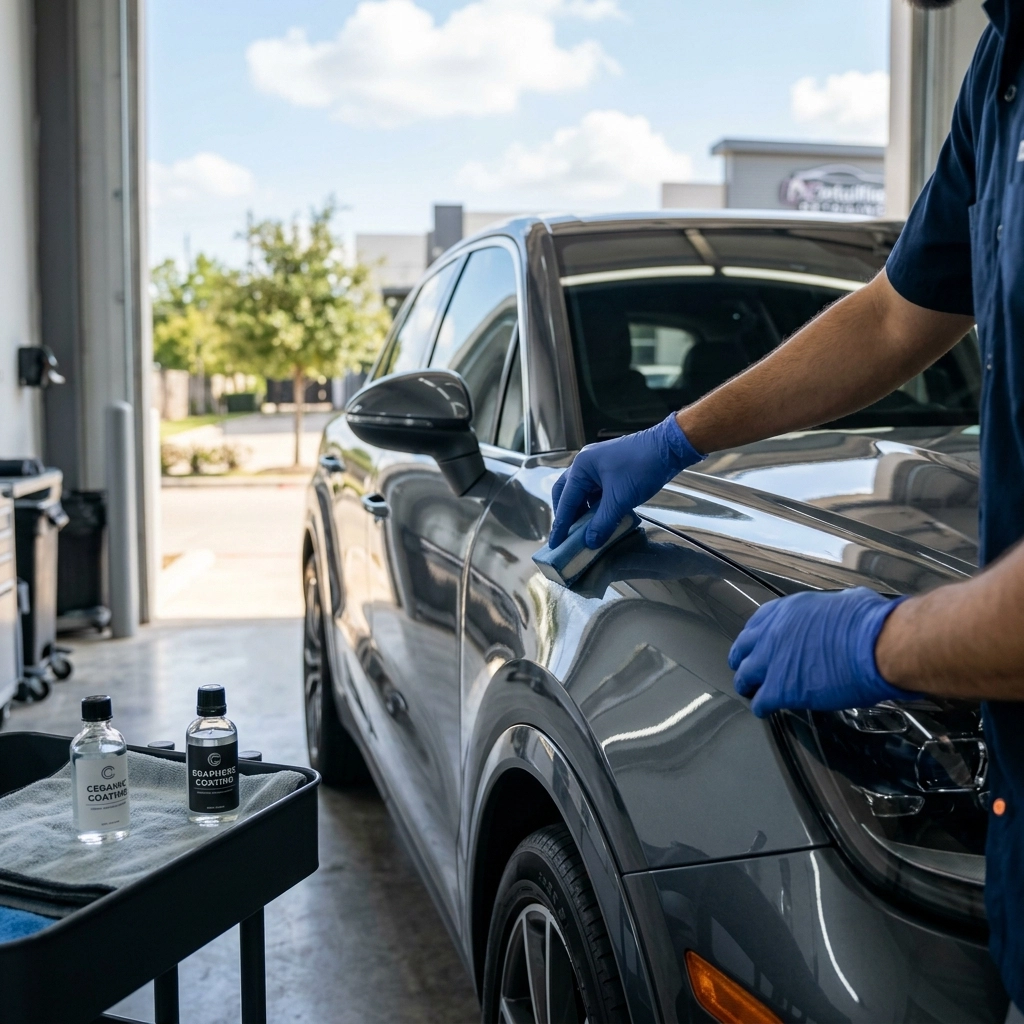
(A professional detailer carefully applying a coating using a microfiber applicator, ensuring every inch of the panel is covered with a hand-applied, meticulous touch.)
Do Graphene Coatings Really Prevent Water Spotting Better Than Ceramic?
Yes, graphene coatings are significantly more effective at preventing water spots than traditional ceramic coatings. This is particularly relevant for vehicle owners in League City and Texas City, where heavy afternoon thunderstorms are often followed immediately by intense sunlight. When rain sits on a hot ceramic-coated surface, the high surface tension creates beads that act like magnifying glasses. As the water evaporates rapidly in the heat, it leaves behind mineral deposits that can etch into the coating: a phenomenon known as water spotting.
Because graphene dissipates heat more effectively, the surface temperature remains lower, which slows down the evaporation process. Furthermore, graphene is naturally anti-static. While ceramic coatings can occasionally attract dust due to static charge, graphene repels it. This combination of lower surface temperature and anti-static properties means that mineral-heavy Houston rain is less likely to leave permanent marks on your paint. If you want a vehicle that stays cleaner between washes and resists the dreaded "etching" from our unpredictable weather, graphene is the superior choice.
How Does Houston’s Humidity Impact the Bonding Process?
Humidity is the silent enemy of a successful coating application, and in the Greater Houston area, it is almost always a factor. Whether we are working in Friendswood or Alvin, the moisture in the air affects how a coating "flashes": the transition from a liquid state to a solid, bonded layer. High humidity can cause ceramic coatings to flash too quickly or unevenly, leading to "high spots" or streaks if not managed by an expert.
At Ceramic Enthusiasts, our owner-operated approach ensures that we never rush this process. We treat every project with a "one car at a time" philosophy. This allows us to monitor the ambient conditions constantly and adjust our application technique to suit the specific humidity levels of the day. We use premium-grade products formulated to bond effectively even in our coastal environment. By allowing the coating the necessary time to cure in a controlled setting, we ensure a semi-permanent bond that won't fail when the next tropical moisture surge hits.

Can a One-Car-At-A-Time Approach Improve Your Coating's Longevity?
Absolutely. The difference between a "volume shop" and a boutique service like Ceramic Enthusiasts lies in the preparation and the precision of the application. A coating is only as good as the surface it bonds to. Before any ceramic or graphene product is applied, your vehicle undergoes an extensive decontamination process, including a clay treatment and multi-stage paint correction.
In many high-volume shops, cars are rushed through to meet daily quotas. This often leads to missed spots in the polishing stage or improper degreasing before the coating is applied. If any residue remains on the paint, the coating will bond to the residue rather than the clear coat, leading to premature failure. By focusing on one vehicle at a time, we ensure that every square inch of your car, from the roof to the wheels, is perfectly prepped. This meticulous attention to detail is why our coatings consistently outlast the competition, providing 5 to 7 years of protection for graphene and up to 5 years for our premium ceramic options.
What Are the Aesthetic Differences Between Ceramic and Graphene?
While both options provide a stunning "mirror-like" finish, they offer slightly different visual profiles. Ceramic coatings are famous for their "glass-like" gloss. They provide a very hard, crisp reflection that makes the paint look like it has been encased in a layer of liquid glass. This is a fantastic choice for lighter colors or metallic paints in Bellaire that want to pop under the sun.
Graphene coatings, on the other hand, tend to produce a deeper, "wet" look. Many of our clients with black or dark blue vehicles in Missouri City prefer graphene because it adds a certain "ink-like" richness to the color. It enhances the depth of the paint in a way that feels soft and slick to the touch. Both options deliver incredible hydrophobic properties, meaning water will slide off your car during a Houston downpour, but graphene’s slickness makes it slightly easier to dry during your weekly maintenance wash.

Does Liquid Paint Protection Film (LPPF) Pair with These Coatings?
For those seeking the ultimate level of protection, we often recommend Liquid Paint Protection Film (LPPF) as a complementary service. Unlike traditional film that can yellow or peel at the edges, LPPF is a hand-applied process. We meticulously lay and work the film onto high-impact areas using specialized hand tools and squeegees. This provides a seamless, invisible barrier against rock chips and road debris.
When you pair a hand-applied LPPF with a professional ceramic or graphene coating, you are creating a multi-layered defense system. The LPPF handles the physical impact of gravel on the freeways in Stafford or Deer Park, while the coating provides the chemical and UV resistance needed to keep the car looking new. This combination is the gold standard for enthusiasts who want to drive their vehicles daily without fear of the elements.
How Do You Decide Which Coating Is Right for Your Daily Driver?
Deciding between ceramic and graphene often comes down to your parking situation and your maintenance habits. If your vehicle is a "garage queen" that only sees the sun on weekends in Friendswood, a premium ceramic coating provides more than enough protection and a spectacular shine. However, if your vehicle is a daily driver that sits in an open parking lot in Pasadena or La Porte, the heat-dissipating and anti-static properties of graphene make it a much smarter investment.
At Ceramic Enthusiasts, we don't believe in one-size-fits-all packages. We take the time to discuss your driving habits and storage conditions to recommend the exact product that fits your needs. With over a decade of experience navigating the specific challenges of the Texas Gulf Coast, we know exactly how these products perform in the real world: not just in a showroom.

Why Trust Ceramic Enthusiasts with Your Vehicle Protection?
The Houston market is flooded with detailing shops, but few offer the owner-operated commitment that we provide. When you choose Ceramic Enthusiasts, you aren't just getting a service; you are getting ten years of expertise applied to your vehicle with a "one car at a time" mindset. We understand that your vehicle is one of your most significant investments, and we treat it with the meticulous care it deserves.
From Rosenberg to Dickinson and Webster, we have helped hundreds of owners protect their cars from the Texas elements. Whether you choose the high-gloss clarity of ceramic or the advanced thermal management of graphene, you can rest assured that the application will be flawless and the protection will be long-lasting.
Ready to shield your vehicle from the Houston heat?
Connect with Mark Trevino and the team at Ceramic Enthusiasts today to determine the best protection plan for your vehicle. Whether you need a full paint correction or a high-performance coating, we are here to deliver a result that exceeds your expectations.
Call us at 281-626-9384 or visit our Services page to schedule your personalized consultation. Protect your investment with the experts who know the Houston climate best.