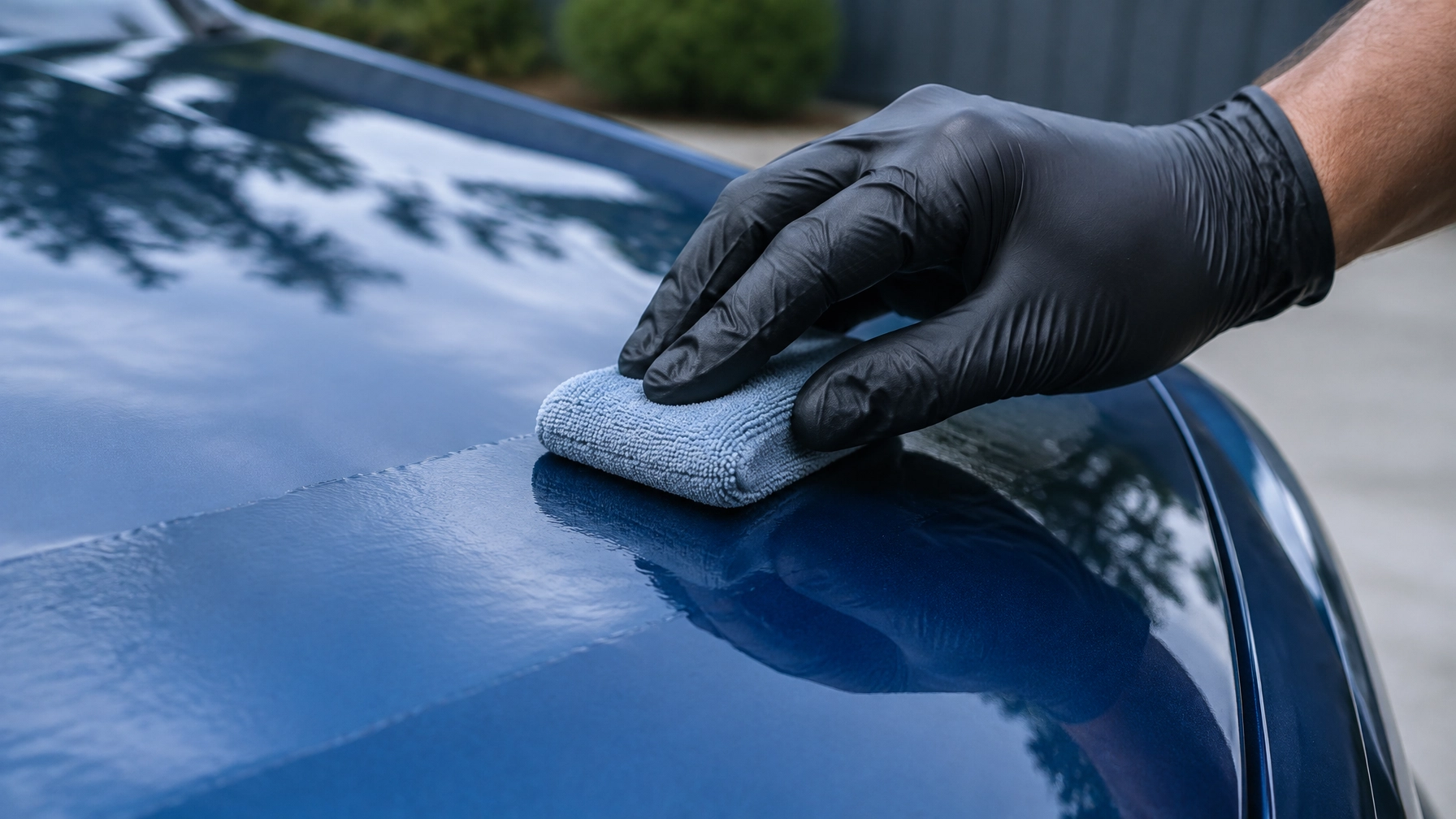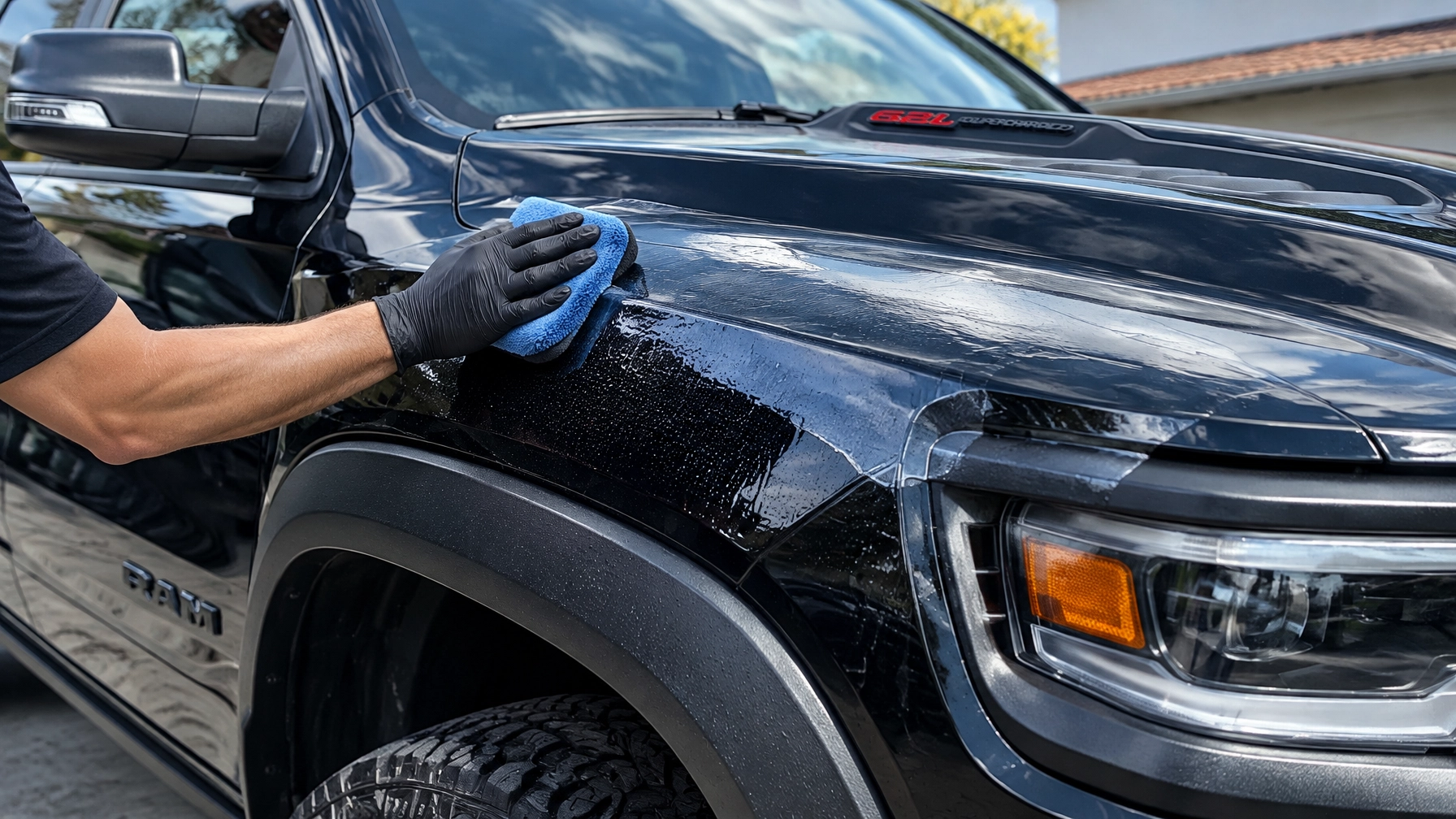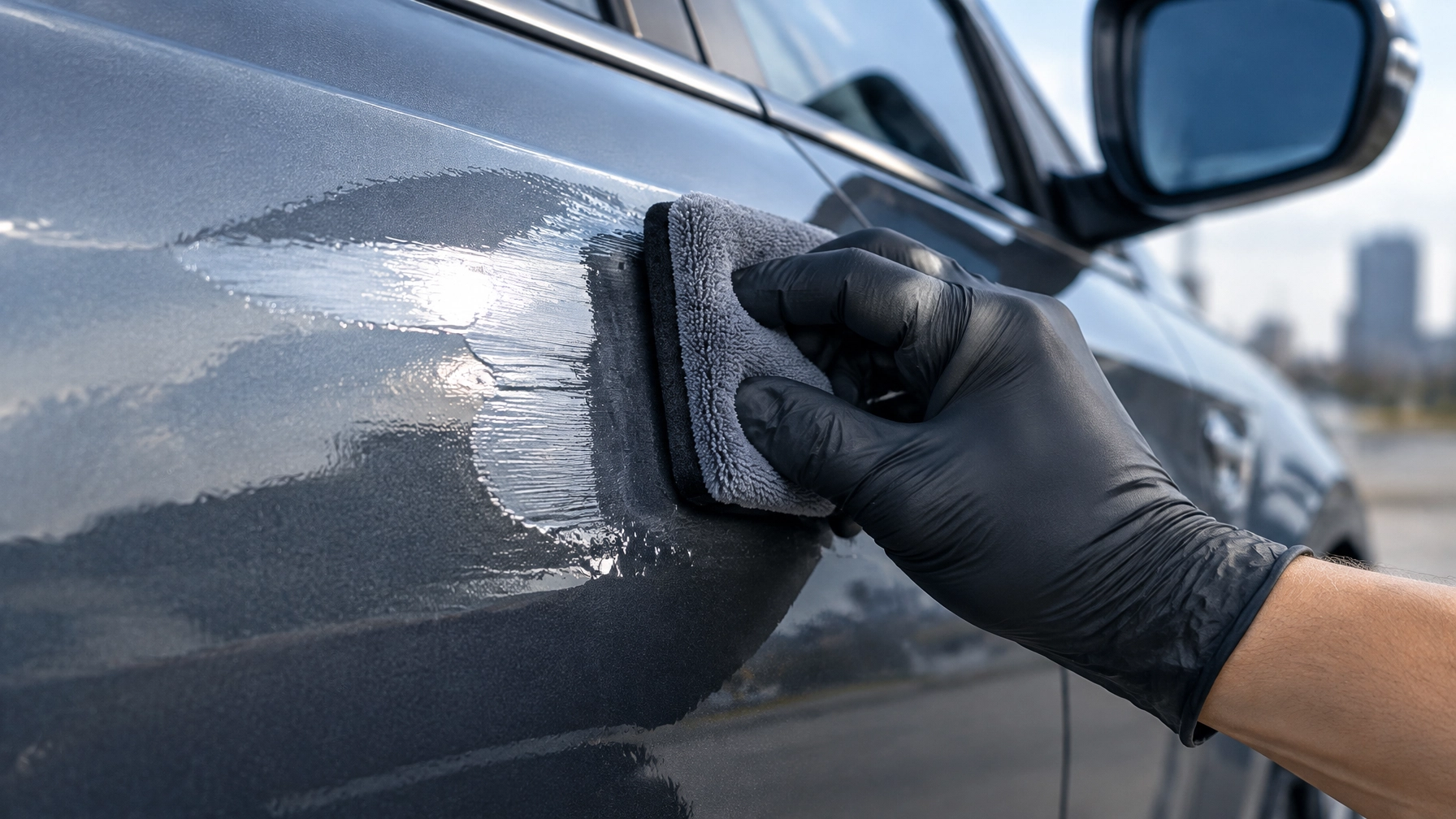
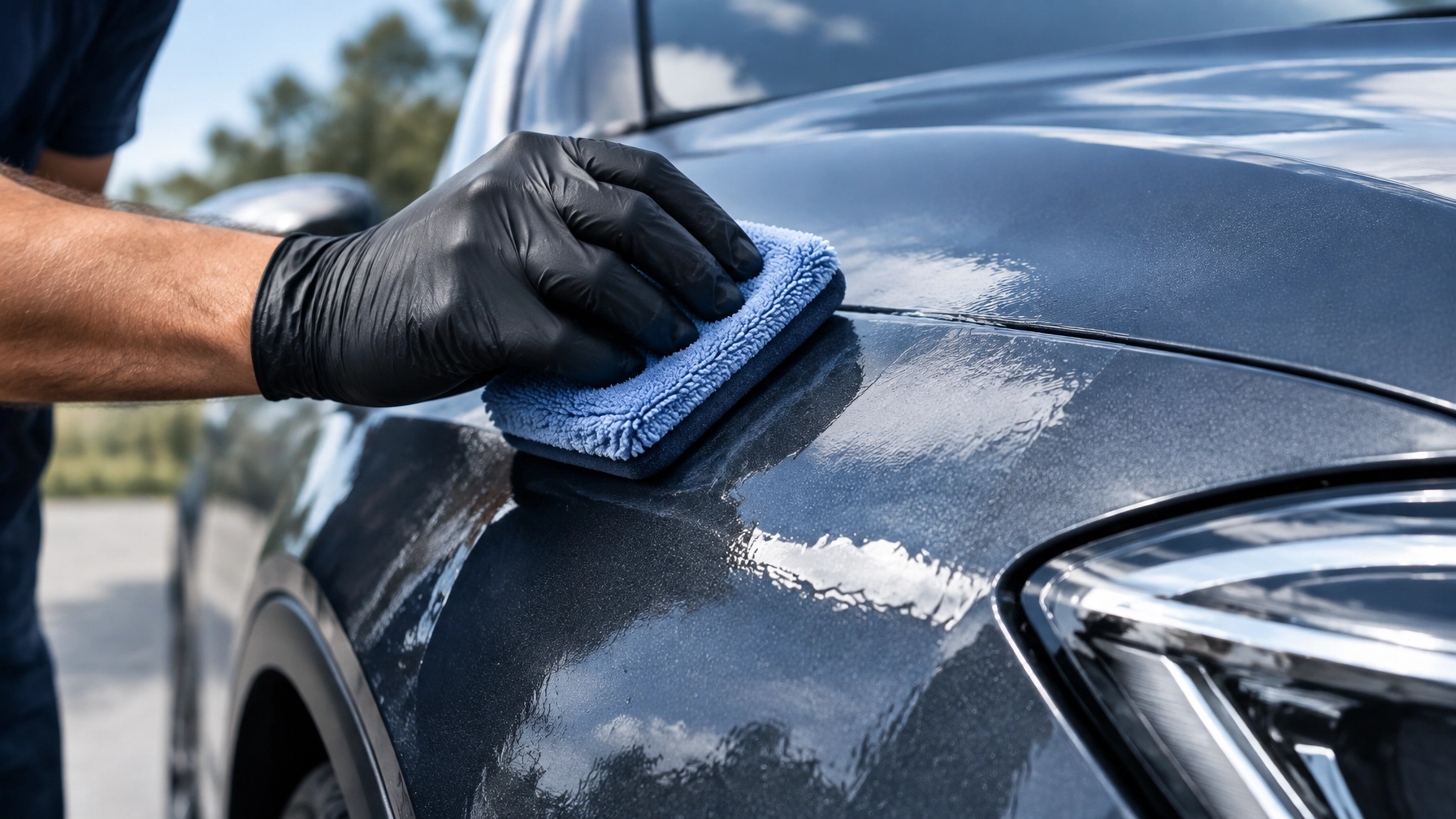
Houston's climate doesn't just test your patience during summer: it actively attacks your vehicle's exterior paint. The combination of 95-degree heat, Gulf Coast humidity hovering around 75%, relentless UV exposure, and mineral-heavy thunderstorms creates the perfect storm for hard water spots, oxidation, fading, and contamination settling into every exposed chip. Hand-applied Liquid Paint Protection Film (LPPF) is the primary defense because it forms a physical barrier against road debris and chips, while automotive ceramic coating pairs with it to boost water beading and help minerals release before they etch the finish.
Between refinery air quality in Pasadena, coastal moisture in League City, and stop-and-go traffic throughout Houston's freeway corridors, your vehicle's exterior faces accelerated deterioration every single day.
Why Does Houston's Climate Attack Your Car's Exterior Paint?
Houston's weather creates three distinct threats to your paint system. The heat problem starts when exterior panels sit under direct summer sun and surface temperatures climb fast, pushing clear coat stress higher with every 95-degree afternoon. UV exposure breaks down the resins in unprotected paint, accelerating oxidation, fading darker colors, and flattening the gloss that gives a vehicle that mirror-like finish.
Humidity is the second assault. Our Gulf Coast moisture keeps water on the surface longer after morning dew, pop-up storms, and overnight parking. When that water is loaded with minerals, it evaporates and leaves deposits behind. Those deposits turn into hard water spots that bond to the finish and become tougher to remove with each weather cycle.

The third factor is airborne contamination. Houston's industrial corridor pumps fine particulates, pollen, chemical fallout, and roadway grime into the air. These contaminants stick to warm paint, settle into pores and imperfections, and work deeper into every chip and weak point during rain events. Without a protective barrier, that contamination stays in direct contact with the paint instead of releasing during routine washing.
How Do Water Spots Take Over After Houston Thunderstorms?
Water spots start the moment mineral-heavy rain dries on hot paint. Houston thunderstorms leave behind calcium, magnesium, and other deposits that stay on the surface after the water evaporates. On a dark vehicle parked outside in Pearland, Friendswood, or South Houston, those minerals can bake into the clear coat fast.
At first, the spotting looks like a light film. Then it etches. Once minerals sit through repeated heat cycles, they create sharp-edged marks that standard washing often cannot remove safely. That is why customers searching for paint protection near me usually notice the problem after the first heavy storm of the season.
Regular washing helps, but it does not change surface tension on its own. Water still sits flatter on bare paint, especially on worn or oxidized panels. Automotive ceramic coating changes that behavior by increasing hydrophobic performance, so water beads tighter and releases faster along with the minerals it carries. That faster shedding is noticeable from the first rainstorm.
Hand-applied Liquid Paint Protection Film adds the stronger first line of defense. It creates a sacrificial barrier between the environment and the painted surface underneath, reducing direct exposure while also protecting against the rock chips and roadway impacts that give contaminants a place to collect.
What Does Heat Damage Actually Look Like on Exterior Paint?
Oxidation appears first as lost depth and uneven gloss. The clear coat starts to look tired, especially on horizontal surfaces like the hood, roof, and trunk that absorb the most UV exposure. Dark paint turns chalkier. Metallic finishes lose clarity. What used to reflect sharply begins to look flat.

Heat damage also makes existing defects worse. Small chips from freeway driving through Houston, Deer Park, Webster, or Alvin become collection points for grime, moisture, and mineral deposits. Once contamination settles into those openings, each storm and each hot afternoon compounds the issue. That is how minor surface damage turns into broader deterioration.
You also see heat stress in the way water behaves. On healthy protected paint, water beads and moves. On bare or compromised paint, it spreads, hangs, and dries in place. That longer dwell time increases mineral bonding and raises the chance of visible spotting after every rain event.
This is where LPPF stands out. Because it is hand-applied as a dedicated protection layer, it takes the abuse first. If a rock impact leaves a blemish, the surface can be re-leveled to restore a smooth finish instead of leaving the damage visually locked into the panel.
How Does Exterior Paint Protection Address These Problems?
Professional paint protection starts with surface preparation. Decontamination removes bonded fallout, road film, and mineral residue that ordinary washing leaves behind. Clay treatment targets embedded contamination. Paint correction follows when needed to reduce swirls, scratches, and oxidation before protection is locked in.
Hand-applied Liquid Paint Protection Film comes first because it delivers the physical barrier. It stands up to road debris, bug acids, and freeway grit while shielding the paint from the chips that expose vulnerable edges. This matters on Houston-area highways where stop-and-go traffic and construction zones constantly throw debris at lower panels, hoods, and front ends.

Automotive ceramic coating pairs seamlessly with that barrier. The coating bonds at the surface level and changes how water behaves, improving hydrophobic performance so rain, grime, and the minerals carried in stormwater release faster and safer. That means easier maintenance, less spotting, and a finish that stays cleaner between washes.
The combined system is practical, not complicated. LPPF handles impact defense and chip resistance. Ceramic coating boosts gloss, slickness, and washability. Together, they help Houston drivers fight heat, humidity, oxidation, and mineral-rich rain without relying on constant aggressive polishing.
What Should Houston Drivers Include in a Complete Paint Protection Package?
A complete exterior protection package starts with proper prep. That means a thorough wash, chemical decontamination, clay treatment when necessary, and paint correction if swirls, oxidation, or etched water spots are already present. Protection only performs as well as the surface underneath it.
LPPF should be the first recommendation when chips and road abuse are part of the conversation. It is hand-applied one vehicle at a time, giving high-impact areas the added defense they need against freeway debris, gravel, and daily commuting wear. For drivers in Houston, Pasadena, Clear Lake, Galveston, and League City, that barrier matters year-round.
Ceramic coating is the smart complementary layer. It helps water bead tighter, reduces contaminant bonding, and makes routine washing faster and safer. Whether you want full-vehicle protection or want to pair exterior paint protection with glass ceramic coatings and wheel ceramic coatings, the goal stays the same: reduce direct environmental stress and simplify maintenance.
The best package depends on how and where the vehicle is driven. Daily freeway commuters, outdoor-parked vehicles, and darker paint colors usually benefit the most from combining LPPF with ceramic coating rather than choosing one layer alone.
How Often Should Houston Drivers Service Their Exterior Protection?
Houston's climate demands regular exterior maintenance to prevent permanent paint damage. Vehicles parked outdoors need closer attention because UV exposure, storm runoff, and industrial fallout stack up fast. Garage-kept vehicles still face oxidation, mineral spotting, and road contamination every time they drive.
Daily commuters and highway drivers benefit most from a protection-first schedule. Frequent travel through Houston, Pearland, Friendswood, South Houston, and Deer Park increases chip exposure and keeps contaminants cycling across the paint. If your vehicle sees constant freeway miles, LPPF becomes even more valuable because it protects where polishing cannot.
Between professional services, wash the vehicle correctly and quickly after storms when possible. The goal is to remove minerals before they bake in. Avoid letting sprinkler water or thunderstorm residue sit for days on warm panels. If water behavior changes and the surface stops beading cleanly, it is time to inspect the protection and refresh what needs attention.
Signs you need immediate paint correction or protection service include visible hard water spots, fading on horizontal panels, rough-feeling paint after washing, or a growing number of chipped areas collecting grime. Those are signs the finish is already taking direct damage.
Does In-Shop Paint Protection Make Exterior Care Easier?
Yes. Bringing your vehicle to our shop makes exterior paint protection easier to fit into a busy schedule without cutting corners on process. Customers drive in from Houston, Pearland, Pasadena, Friendswood, League City, and South Houston, along with surrounding service areas including Deer Park, Galveston, Clear Lake, Webster, and Alvin. Work is performed in a controlled environment where stable temperature, humidity, and dust levels support proper bonding and curing, and your vehicle is ready as soon as the protection has cured.
The owner-operated approach means meticulous attention to every vehicle. Each car receives one-at-a-time treatment rather than rushed volume processing. Over 10 years of experience working specifically with Houston's climate challenges ensures your paint protection is selected and installed with real local conditions in mind.
Professional exterior paint protection is not just about appearance. It is about protecting your investment from Houston heat, humidity, UV exposure, storm minerals, and daily road debris before those conditions create avoidable correction work. LPPF handles the impact defense. Ceramic coating supports easier maintenance and better water behavior. Together, they give Houston drivers a more durable path forward.
Ready to find the right fit for your vehicle? Schedule a consultation for hand-applied LPPF and ceramic coating at 281-626-9384.