Liquid Paint Protection Film in Houston creates a hand-applied protective layer that helps defend your vehicle’s paint against rocks, road debris, heat, humidity, and daily driving wear.
Houston roads are demanding. Daily commutes along I-10, I-45, Beltway 8, Highway 288, and shipping corridors expose front-end paint to gravel, tire debris, road film, and industrial contaminants. Summer temperatures around 95°F, intense UV exposure, thunderstorms, and high humidity add more stress.
Without protection, repeated impacts create chips, while sunlight and contamination accelerate fading, oxidation, and surface etching.
Liquid Paint Protection Film, or LPPF, gives Houston drivers a practical way to add physical protection without relying on ceramic coating alone. It also delivers a smooth, glossy finish designed for long-term vehicle care.
What Makes Houston Roads Hard on Vehicle Paint?
Houston’s combination of traffic, heat, humidity, and roadway debris creates constant wear on exposed paint.
A vehicle traveling through stop-and-go traffic in Pasadena or South Houston encounters tire kick-up from trucks, loose gravel, sand, and abrasive road film. Vehicles commuting between Pearland, League City, Friendswood, Webster, and Clear Lake experience similar exposure on busy freeway corridors.
The front bumper, hood, fenders, mirrors, headlights, and rocker panels receive the most abuse because they face debris directly. A single sharp stone can penetrate unprotected clear coat and leave a permanent chip.
Houston’s climate increases the consequences. UV exposure gradually weakens the appearance of paint, while humidity and rain keep contaminants active on the surface. Bird droppings, bug residue, tree sap, refinery fallout, and mineral deposits can etch paint when they remain on a hot panel.
LPPF creates a sacrificial barrier before those hazards reach the factory finish.
How Does Hand-Applied LPPF Protect Against Rocks and Road Debris?
Hand-applied LPPF forms a continuous cured polymer layer over properly prepared paint, helping distribute the force of light-to-moderate impacts and reduce surface abrasion.
The process begins with vehicle inspection, washing, decontamination, and surface preparation. If the paint contains embedded grit, tar, or bonded contaminants, those particles can affect adhesion and finish quality. Proper preparation creates a clean foundation for the protective material.
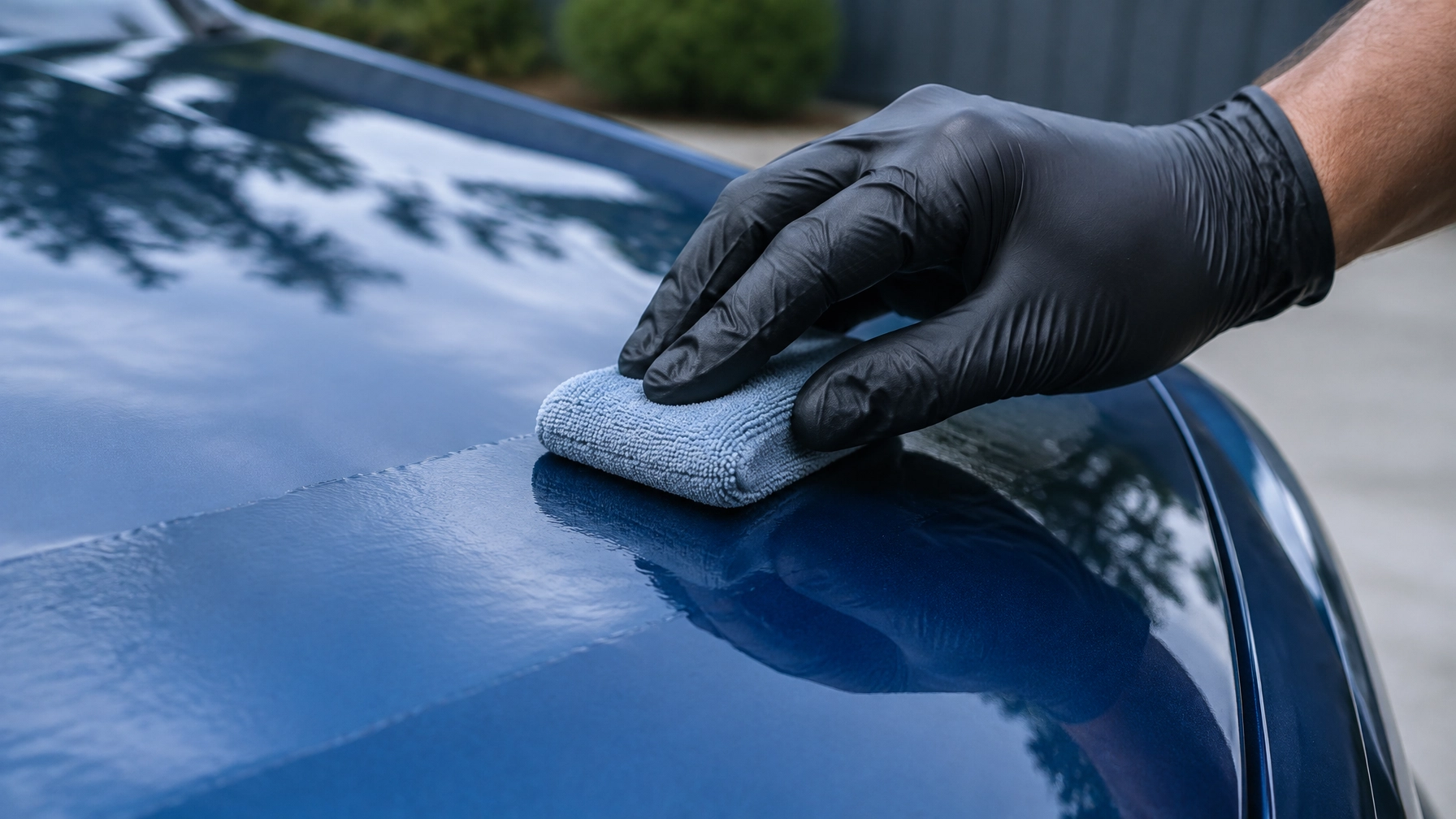
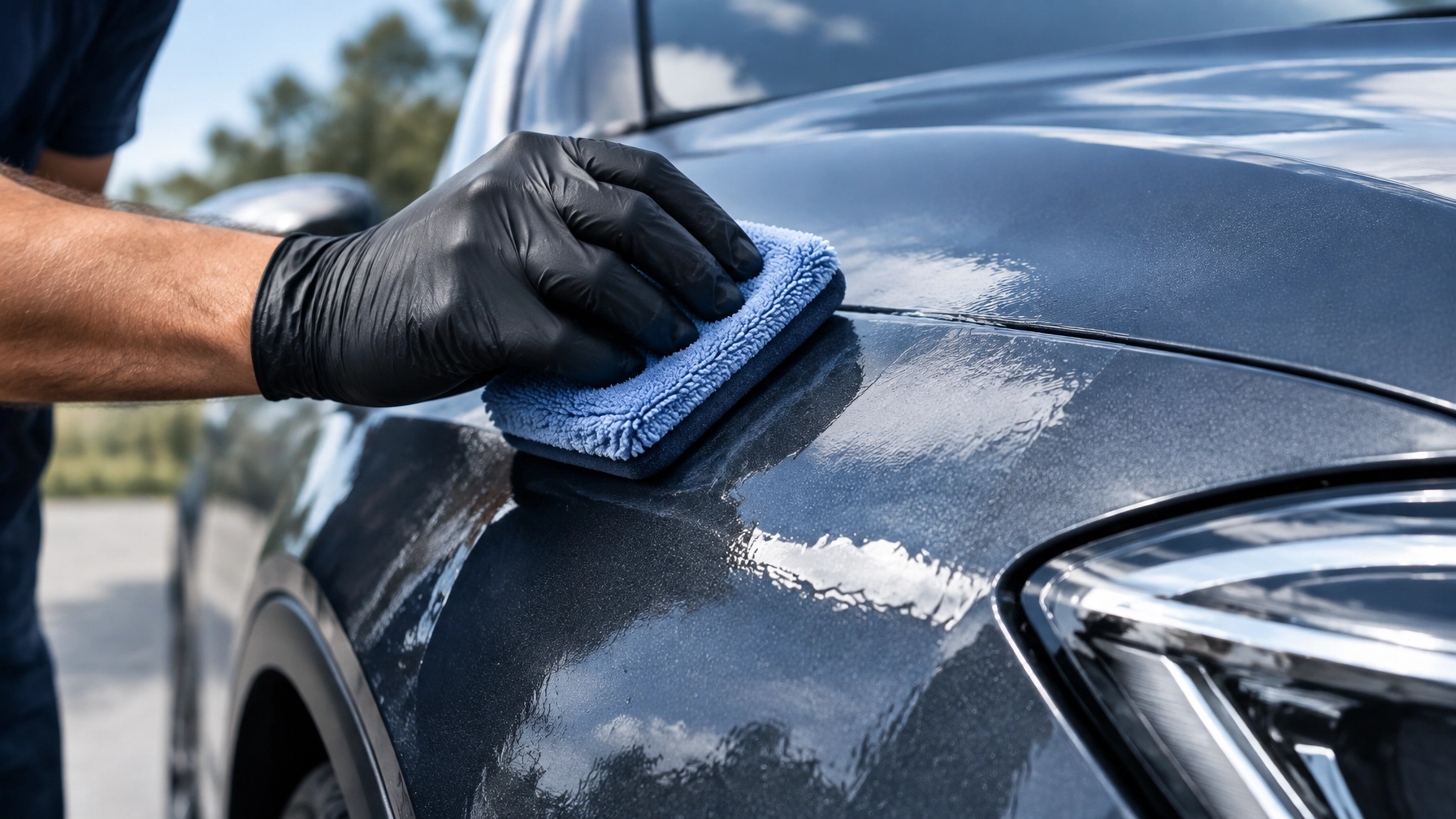
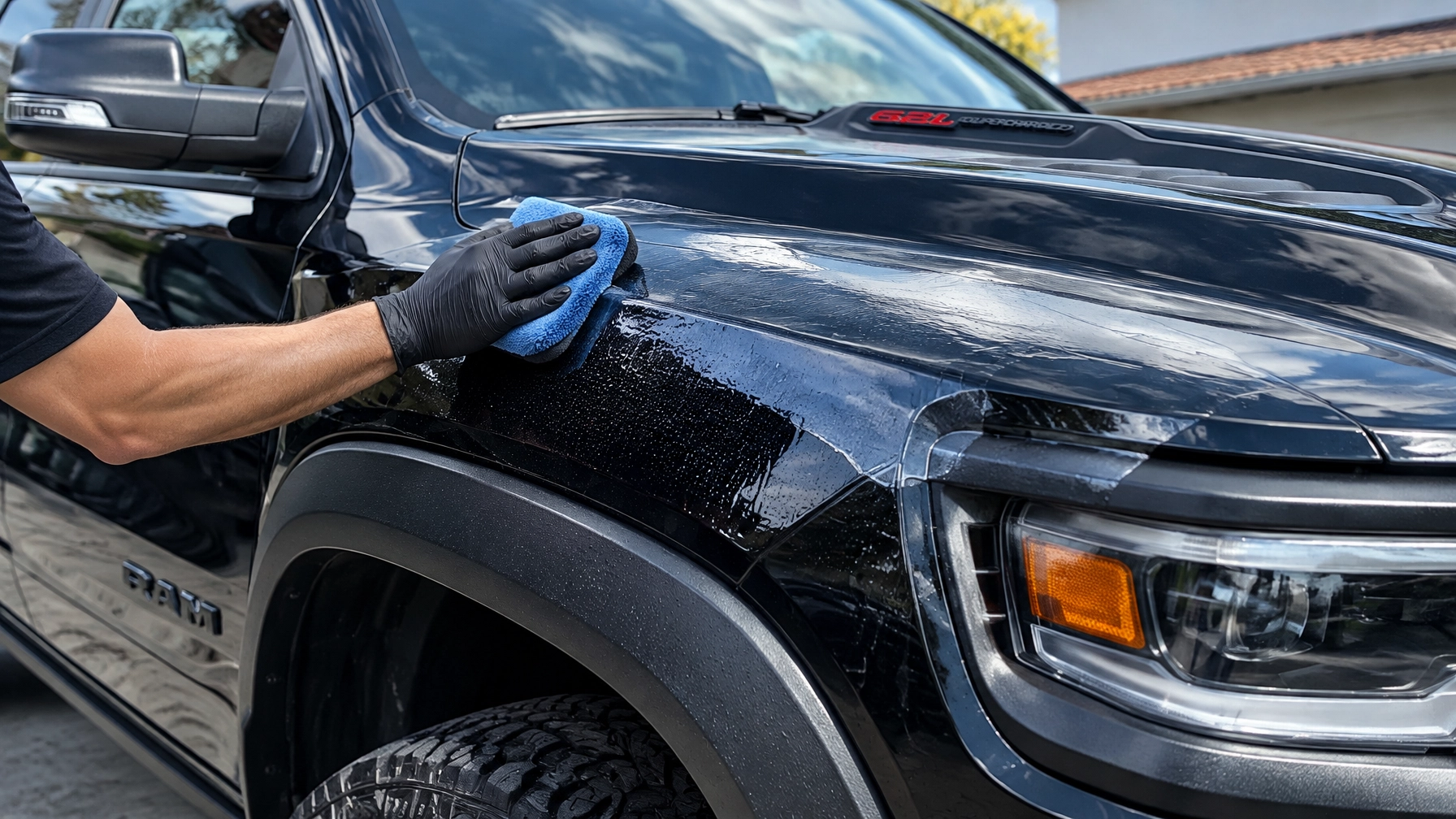
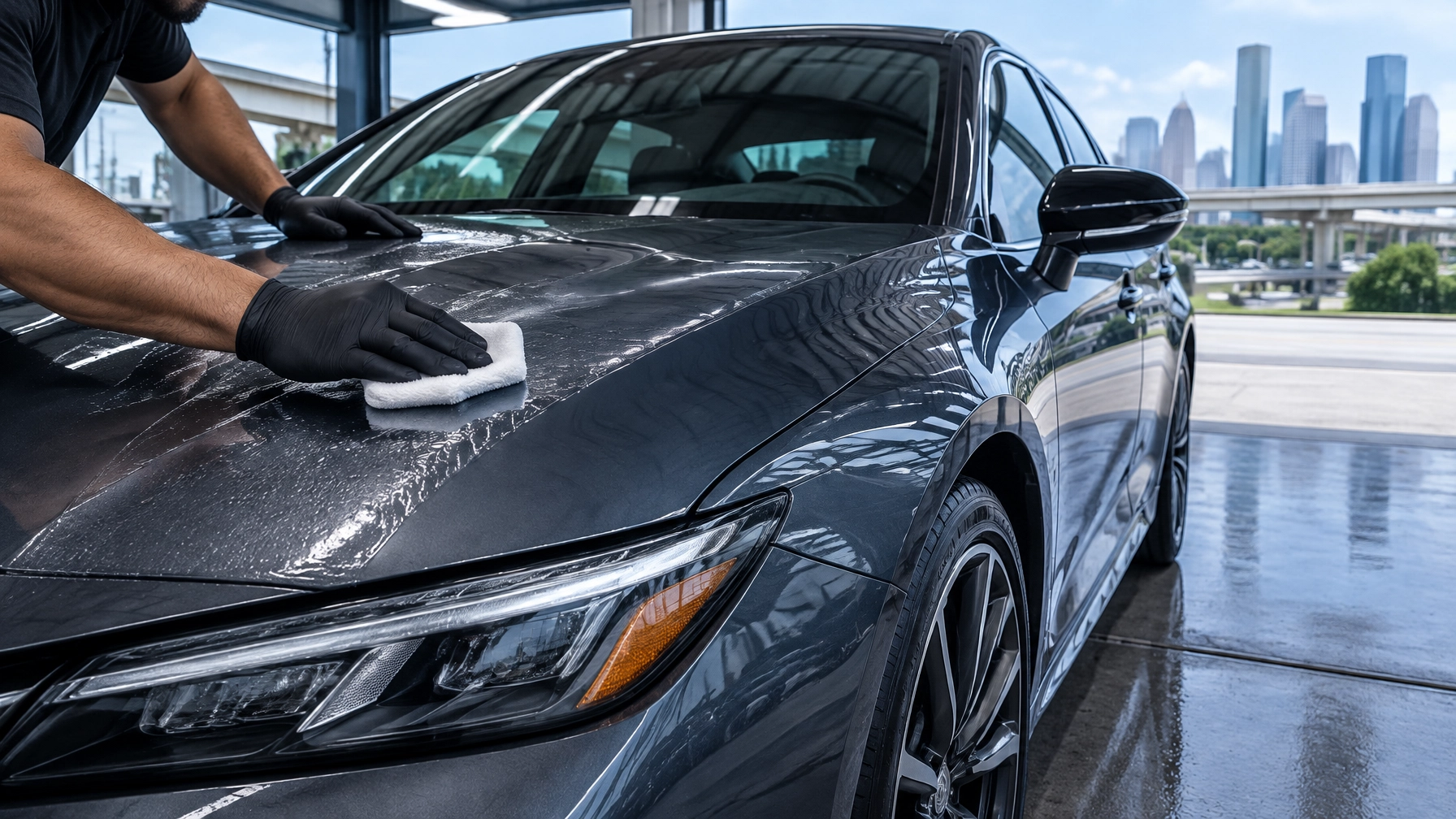
The LPPF is then applied by hand using professional microfiber applicator pads. This allows the installer to control coverage across body lines, curves, edges, and other complex areas. The material is carefully leveled so the finished surface remains smooth and visually consistent.

Once cured, the layer helps protect against:
- Light-to-moderate rock impacts
- Road gravel and tire debris
- Light scratches and wash-related marring
- Bug residue and bird droppings
- UV exposure and surface fading
- Road film and chemical contamination
- Daily contact around door cups, edges, and loading areas
LPPF does not make paint chip-proof. A large or sharp stone traveling at highway speed can still penetrate the protective layer. The difference is that the LPPF absorbs and manages more of the everyday abuse before it reaches the original finish.
That additional barrier can preserve paint clarity for years instead of leaving the front end exposed after only a few months of commuting.
Which Vehicle Areas Benefit Most From LPPF in Houston?
The highest-impact areas should receive priority because they face the greatest concentration of road debris.
For many Houston commuters, a partial front package protects the partial hood, partial fenders, front bumper, headlights, side mirrors, A-pillars, and leading roof edge. A full front package extends protection across the complete hood and fenders.
Full-vehicle coverage may be appropriate for owners who drive frequently, maintain a luxury vehicle, operate on gravel roads, or want consistent protection across every painted panel. Door edges, rocker panels, rear quarter panels, trunk ledges, and door cups also experience frequent contact and loading wear.

The best coverage depends on your driving pattern and vehicle condition. A daily commuter traveling between Alvin and Houston may need a different plan than a collector vehicle driven occasionally around Friendswood.
LPPF coverage can be customized instead of forcing every vehicle into the same package.
How Does LPPF Compare With Traditional PPF?
LPPF and traditional PPF both protect paint, but they use different application methods and offer different performance characteristics.
Traditional PPF is a preformed polyurethane sheet installed over selected panels. Its greater physical thickness generally provides stronger protection against severe stone impacts, especially on high-risk areas such as the front bumper, hood, and fenders.
LPPF is applied as a liquid polymer by hand and cures directly over the prepared surface. Because it is not a pre-cut sheet, it can create continuous coverage across complex contours without traditional film seams or cut lines.
That seamless appearance is a major advantage for owners who want broad coverage and a consistent finish. LPPF also offers more physical protection than a conventional ceramic coating alone while remaining visually integrated with the vehicle’s paint.
Neither system is immune to damage. Traditional PPF may require panel replacement after severe tearing or deep gouging. LPPF may require localized repair or re-leveling after a significant blemish. Product chemistry, cured thickness, preparation, and installation quality all affect the final result.
For severe highway impact exposure, traditional PPF can remain the stronger option on specific leading panels. For drivers seeking seamless coverage, everyday impact resistance, and a repairable protective layer, LPPF is a compelling choice.
Can Ceramic Coating Replace Liquid Paint Protection Film?
No. Ceramic coating and LPPF solve different problems, and LPPF should lead the protection plan when rocks and road debris are the primary concern.
A ceramic coating forms a thin chemical bond with prepared paint. Its main strengths include hydrophobic water behavior, gloss enhancement, UV resistance, and easier maintenance. The coating helps water, mud, and contaminants release from the surface more easily during washing.
Ceramic coating is excellent for protecting against chemical fallout, bird residue, water spotting, and Houston’s intense sun. It is not designed to absorb the impact of a sharp rock traveling down I-45.
LPPF adds a thicker, more flexible physical barrier. Ceramic coating can then complement LPPF by adding hydrophobic performance and easier cleaning, provided the products are compatible.
The most complete approach often combines:
- LPPF on high-impact areas such as the bumper, hood, fenders, and mirrors.
- Automotive ceramic coating on remaining painted surfaces for gloss and easier maintenance.
- Wheel ceramic coating to help release brake dust and road grime.
- Glass ceramic coating to improve water runoff during Houston thunderstorms.
Explore automotive ceramic coating in Houston, wheel ceramic coating, and glass ceramic coating when planning a complete protection system.
How Does Re-Leveling Help After a Rock Impact?
Re-leveling allows certain minor LPPF blemishes to be restored without replacing an entire panel of protection.
A rock impact can leave a shallow depression or visible surface mark in the cured layer. When the paint beneath remains intact, an experienced installer can evaluate and re-level the affected area. The process restores a smooth appearance across the protective surface.
Re-leveling does not repair missing paint, deep punctures, collision damage, or damage that reaches the metal. It also does not eliminate the need for prompt cleaning after an impact.
This repairable characteristic gives LPPF a practical long-term advantage. Instead of treating every surface blemish as a full replacement event, the installer can determine whether localized restoration is appropriate.

The result is faster and safer maintenance for owners who want to preserve a mirror-like finish through years of Houston driving.
What Preparation Helps LPPF Perform Properly?
Thorough preparation determines how well LPPF bonds, levels, and looks after curing.
The process should include a detailed inspection, hand wash, chemical decontamination, removal of embedded road film, and clay treatment when necessary. Paint correction may also be required if the vehicle has swirl marks, oxidation, or light scratches.
Applying protection over contaminated or heavily marked paint locks those flaws beneath the finish. Paint correction creates a clearer foundation and improves the final appearance.
Visit paint correction services in Houston to see how polishing can restore clarity before LPPF or ceramic coating application.
Temperature and humidity also matter during installation. Houston’s high humidity and hot conditions require controlled application practices, appropriate curing time, and careful surface evaluation. A rushed application can create uneven results regardless of product quality.
How Does Ceramic Enthusiasts Approach LPPF Service?
Ceramic Enthusiasts provides owner-operated vehicle protection with over 10 years of hands-on experience serving Greater Houston.
Every vehicle receives one-car-at-a-time attention rather than being processed through a high-volume workflow. That approach allows for meticulous inspection, careful preparation, and focused application across every panel.
All LPPF work is performed in-shop in Houston for customers from Houston, Pearland, League City, Pasadena, Deer Park, South Houston, Galveston, Clear Lake, Webster, Friendswood, and Alvin. That one-car-at-a-time shop setting provides the controlled conditions needed for professional application, proper leveling, and curing.
Learn more about the company’s experience and service philosophy on the Ceramic Enthusiasts About Us page.
Whether you drive a daily commuter through Beltway 8 traffic, a truck along shipping routes, or a luxury vehicle across Houston’s suburbs, LPPF can help protect the finish from the wear that accumulates one drive at a time.
Call 281-626-9384 to schedule a consultation. Ceramic Enthusiasts can evaluate your vehicle, discuss LPPF coverage, and determine whether ceramic coating or specialized add-ons should be included in your protection plan.