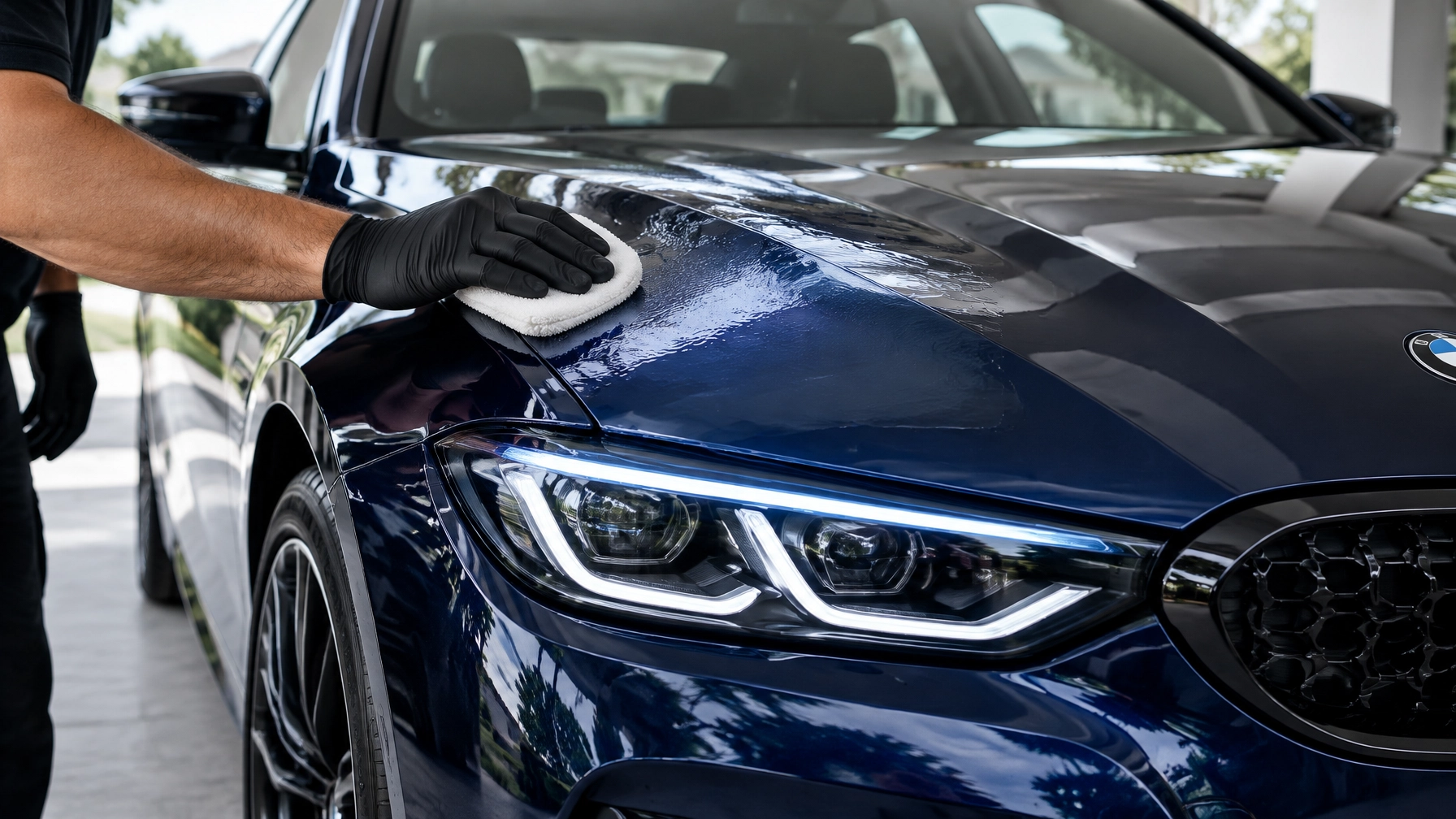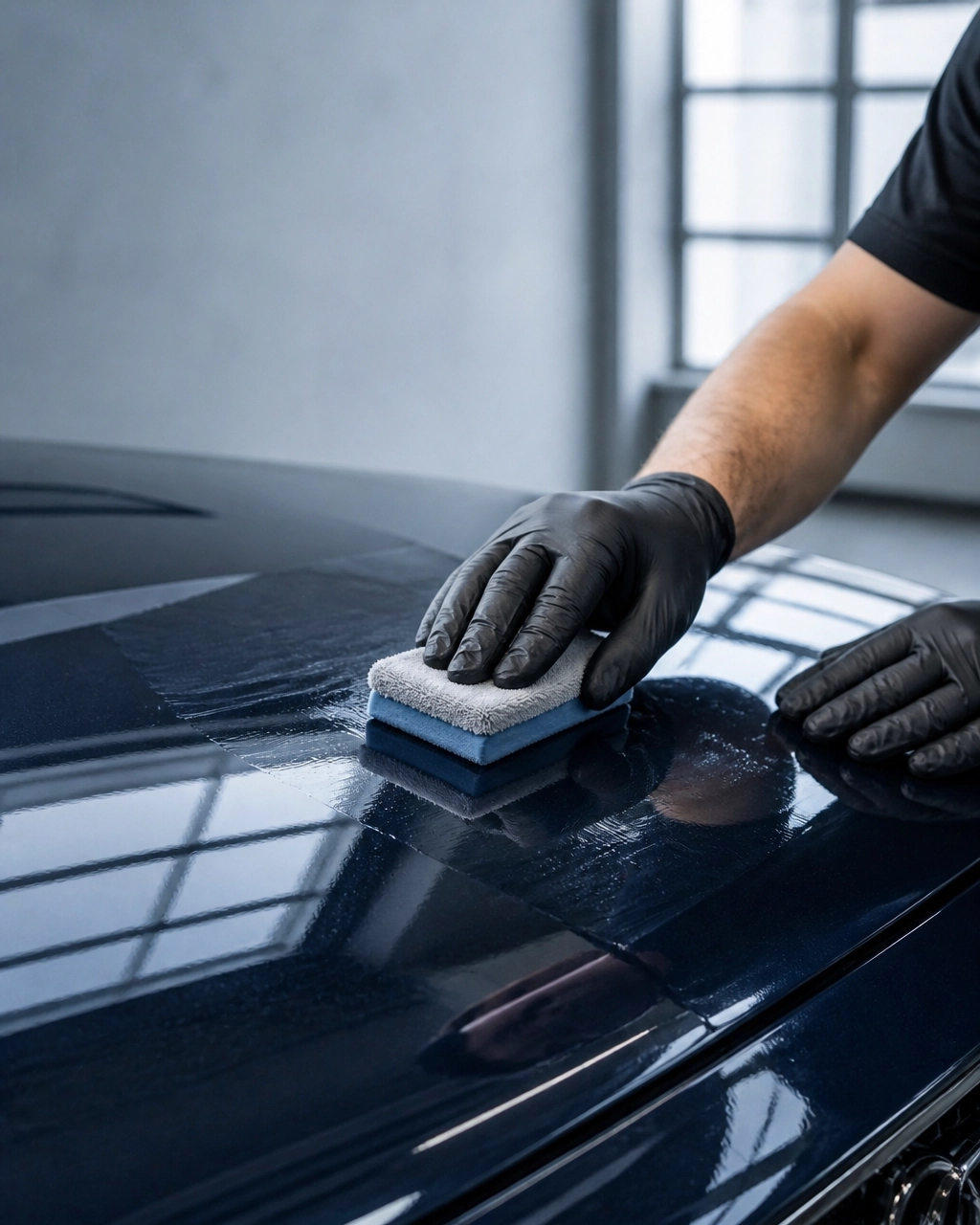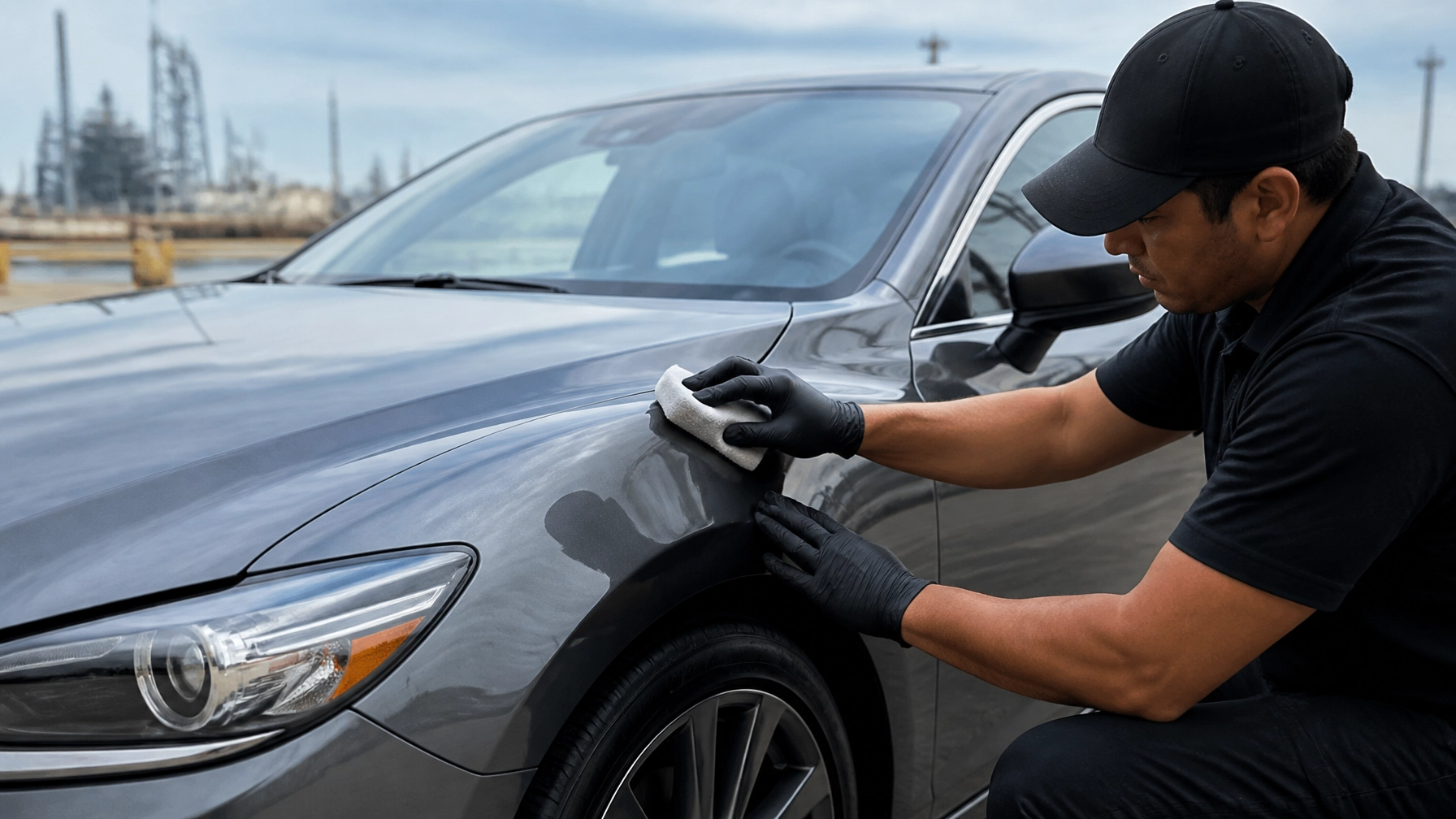
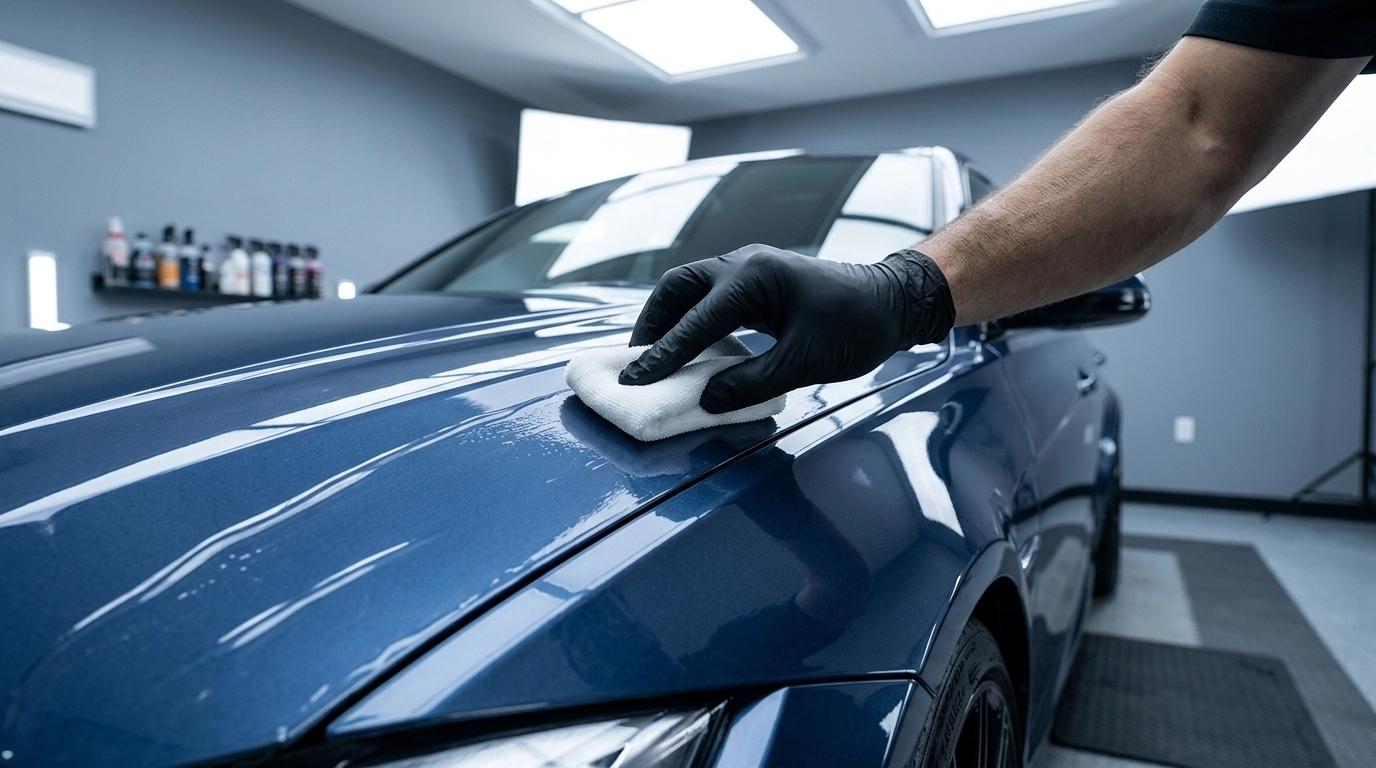
For Houston drivers, a professionally installed ceramic coating typically lasts three to five years, while outdoor-parked daily drivers often reach the lower end of that range.
The advertised lifespan tells only part of the story. Houston’s intense UV exposure, 95-degree summer temperatures, high humidity, thunderstorms, hard-water deposits, industrial fallout, and freeway debris all affect how long ceramic coating continues performing.
The right preparation and maintenance extend its useful life. However, drivers who want stronger protection against rock chips and road impacts should consider Liquid Paint Protection Film (LPPF) first.
How Long Does Ceramic Coating Last in Houston?
A quality professional ceramic coating provides approximately three to five years of meaningful protection for most Houston daily drivers.
Vehicles parked outside year-round typically experience about three to four years of strong hydrophobic performance. Garage-kept vehicles with careful maintenance can reach four to six years, especially when they receive annual inspections, decontamination, and compatible maintenance products.
Consumer spray ceramics usually last six to twelve months. Entry-level professional coatings commonly perform for two to three years. Premium-grade systems can last five years or longer under favorable conditions.
Those numbers assume professional preparation, controlled application, and proper maintenance.
Ceramic coating does not vanish suddenly when its rated period ends. Its hydrophobic properties gradually weaken first. Water beads become wider, the surface loses slickness, and contaminants begin bonding more easily.
The protective chemistry may still remain beneath the surface. A professional decontamination and coating-safe topper can sometimes restore performance before a full reapplication becomes necessary.
What Makes Houston Harder on Ceramic Coating?
Houston combines heat, UV exposure, humidity, and road contamination in ways that accelerate surface wear.
A 95-degree afternoon heats painted panels far beyond ambient temperature. Repeated expansion and contraction create thermal stress across the clear coat and coating layer. Intense UV exposure also gradually weakens the coating’s upper surface.
Humidity adds another problem. Moisture allows minerals and contaminants to remain active on the paint longer, especially when a vehicle air-dries after a storm or wash.
Houston drivers also face:
- Hard-water mineral deposits
- Acidic bird droppings and bug residue
- Tree sap baked onto the surface by sunlight
- Brake dust and iron particles
- Construction dust and gravel
- Industrial fallout near Pasadena, Deer Park, and the Ship Channel
- Road film from I-45, Beltway 8, Highway 288, and other busy corridors
Ceramic coating provides meaningful chemical and UV resistance. It does not make the surface immune to contamination or physical impact.
Without timely washing, mineral deposits can etch into the coating. Without physical protection, a rock striking the front bumper can still chip the paint.
How Does Preparation Affect Ceramic Coating Lifespan?
Professional preparation directly affects how long ceramic coating lasts because the coating bonds to the condition of the surface beneath it.
Every application should begin with a detailed inspection, chemical decontamination, mechanical decontamination, and clay treatment when necessary. These steps remove road film, iron particles, tree sap, and bonded contamination.
Paint correction follows when the surface contains swirls, scratches, oxidation, or haze. State-of-the-art polishing improves clarity and creates a cleaner foundation for the ceramic coating to bond with the clear coat.
Applying coating over neglected paint does not hide defects permanently. Instead, it can lock those defects beneath a semi-permanent protective layer.
Ceramic Enthusiasts focuses on one car at a time. This owner-operated approach provides meticulous attention during preparation, application, leveling, and inspection.
With over 10 years of experience, the process remains deliberate rather than rushed. A cleaner foundation produces stronger adhesion, better gloss, and more consistent performance through Houston’s weather cycles.
Which Maintenance Habits Extend Ceramic Coating Life?
Proper maintenance can make the difference between a coating that underperforms early and one that protects for years.
Use a pH-neutral automotive soap and clean microfiber wash media. A foam pre-rinse or two-bucket hand-wash method removes loose grit before contact washing begins.
Dry the vehicle instead of allowing Houston water to evaporate on the panels. Mineral deposits become more difficult to remove after baking in direct sunlight.
Remove bird droppings, bug splatter, and tree sap quickly. These contaminants contain acids or organic compounds that can etch the coating when exposed to heat and UV for extended periods.
Avoid automatic brush washes. Spinning brushes and abrasive cloth strips introduce marring while harsh chemicals gradually reduce coating performance.
A practical maintenance schedule includes:
- Wash every one to two weeks, depending on driving conditions.
- Dry thoroughly after every wash or storm.
- Remove bird droppings and bugs as soon as possible.
- Schedule annual decontamination.
- Use a compatible ceramic booster when recommended.
- Inspect the coating before Houston’s harshest summer months.
The automotive ceramic coating service includes the preparation and application steps required for durable, climate-specific protection.
How Can You Tell When Ceramic Coating Needs Attention?
Reduced water beading does not always mean the coating has failed.
Surface contamination can suppress hydrophobic performance even when the ceramic layer remains intact. A rough-feeling panel usually indicates bonded contamination. Decontamination may restore the slick surface and water behavior.
Schedule a professional inspection when:
- Water spreads flat after washing
- The surface feels rough after a normal wash
- Water spots remain after careful drying
- The finish looks dull in direct sunlight
- Dirt begins bonding more quickly
- A maintenance topper no longer restores performance
The correct solution depends on the cause. Decontamination may restore a contaminated coating. Light polishing may be necessary for surface marring. Full paint correction and reapplication become appropriate when the coating has reached the end of its useful life.
A new coating should never be applied over neglected paint without evaluating the surface first.
How Does Liquid Paint Protection Film Last Longer Under Road Stress?
Liquid Paint Protection Film provides a stronger physical barrier than ceramic coating alone.
LPPF is a hand-applied liquid protection system made from a flexible blend of polyurethane and acrylic polymers. After application and curing, it forms a solid-state protective film over the vehicle’s paint.
Its flexible polymer structure helps absorb the force of light to moderate rock impacts, road debris, scratches, and daily wear. Ceramic coating creates a thin chemically bonded layer with excellent gloss, hydrophobicity, and chemical resistance. LPPF adds greater physical protection against the damage Houston commuters see on front bumpers, hoods, mirrors, and leading edges.
That difference matters on roads connecting Houston with Pearland, League City, Clear Lake, Webster, and Galveston. Frequent freeway driving exposes front-facing paint to gravel, construction debris, and road debris kicked up by trucks.
LPPF also avoids many traditional film concerns, including visible seams, bubbling, peeling, and panel replacement after isolated damage.
The Liquid Paint Protection Film service explains available coverage options, from partial front protection to complete exterior coverage.

Can LPPF Be Re-Leveled After a Rock Impact?
Yes. Re-leveling is one of LPPF’s most valuable advantages.
When a rock impact creates a minor blemish in the LPPF, the affected area can often be re-leveled to restore a smooth finish. The process does not require removing an entire panel or repainting the vehicle.
That makes LPPF especially practical for daily drivers traveling through South Houston, Pasadena, Deer Park, Friendswood, and Alvin. The protection remains serviceable after an impact instead of becoming a permanent visual defect.
Ceramic coating does not provide the same re-leveling benefit after a rock strike. Its primary strengths remain chemical resistance, UV protection, surface slickness, and easier maintenance.
LPPF carries a 10-year warranty on its own. When ceramic coating is applied as a top coat, the warranty upgrades to a lifetime warranty, subject to applicable service terms.
Which Protection Is Right for Your Houston Vehicle?
LPPF is the stronger first choice when your main concern is rock chips, freeway debris, and physical road damage.
Ceramic coating is the right complementary layer when your priority is gloss, hydrophobic performance, UV exposure, chemical contaminants, and faster washing.
The most complete strategy combines both services. LPPF protects high-impact areas, while ceramic coating protects the remaining painted surfaces and adds a uniform mirror-like finish.
This combination works well for:
- Daily commuters on Houston freeways
- Vehicles parked outdoors
- Luxury and performance vehicles
- New vehicles being protected early
- Long-term owners preserving resale value
- Drivers near industrial and shipping corridors
- Vehicles frequently traveling between Houston, Pearland, League City, and Galveston
Wheel ceramic coating and glass ceramic coating can also be added during the same service. These upgrades help reduce brake-dust adhesion and improve water behavior on exterior glass.
How Can Ceramic Enthusiasts Help You Choose?
The correct protection depends on your vehicle’s current paint condition, parking environment, driving routes, and long-term ownership plans.
Ceramic Enthusiasts evaluates the finish before recommending a service. Paint correction, decontamination, LPPF, and ceramic coating work together when the goal is long-term protection rather than temporary shine.
As an owner-operated business, Ceramic Enthusiasts gives each vehicle focused, unhurried attention. Mobile detailing is also available for customers who prefer professional service at home or work in Houston and surrounding areas.
If you are comparing ceramic coating and LPPF near me, call 281-626-9384 to schedule a consultation. We will help determine whether ceramic coating, hand-applied LPPF, or a combination of both fits your vehicle and driving conditions.
A ceramic coating can protect your finish for years in Houston. LPPF adds the physical shield needed for the road. Together, they preserve a cleaner, glossier, more durable vehicle through the heat, humidity, and traffic that define life in Southeast Texas.
What Should You Do Next?
Start with a professional surface evaluation before choosing a protection package.
Call 281-626-9384 to connect with Ceramic Enthusiasts, or review the Liquid Paint Protection Film service and automotive ceramic coating service pages before scheduling.
A consultation determines the right level of protection faster and safer than guessing from an advertised lifespan.