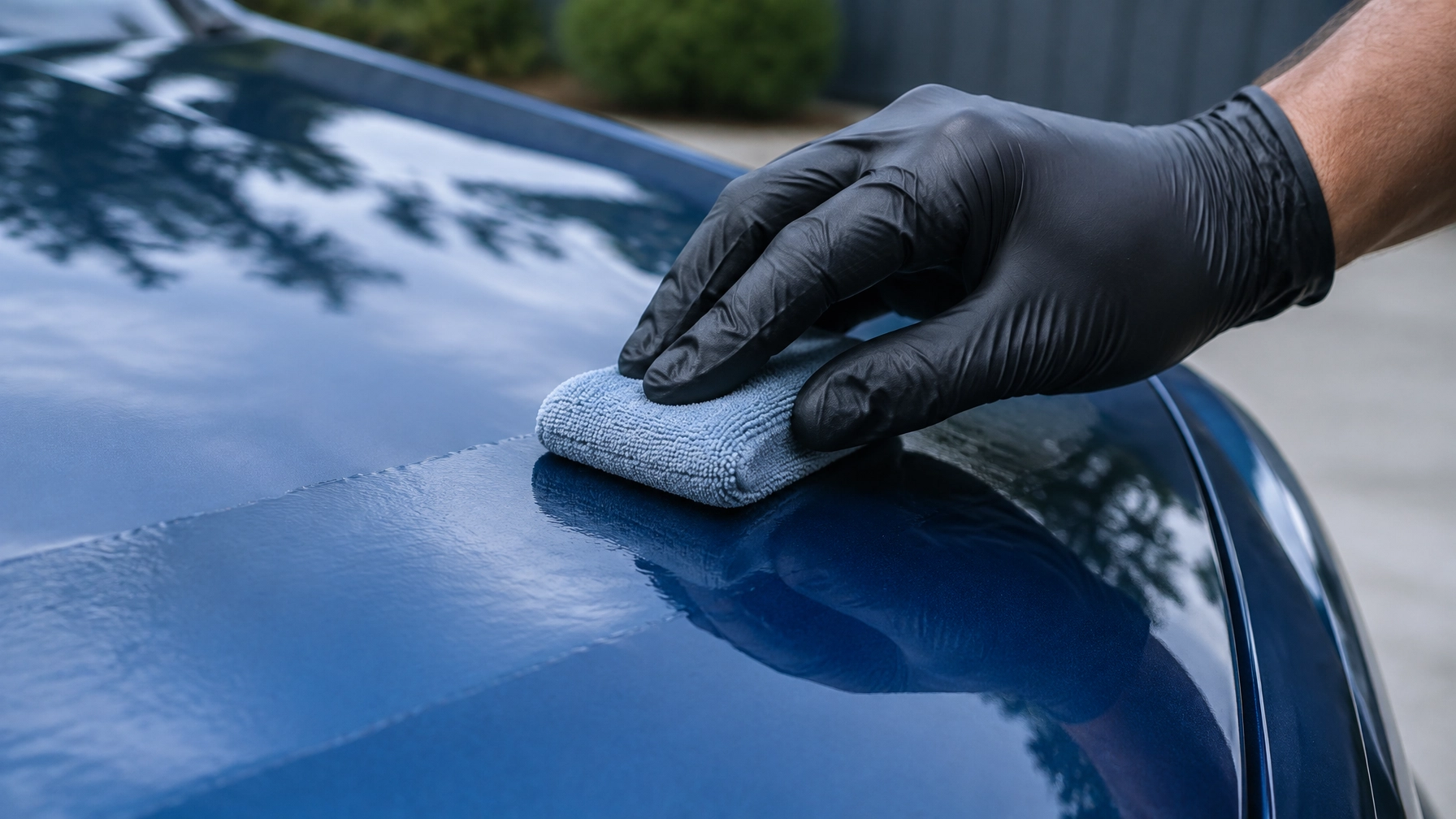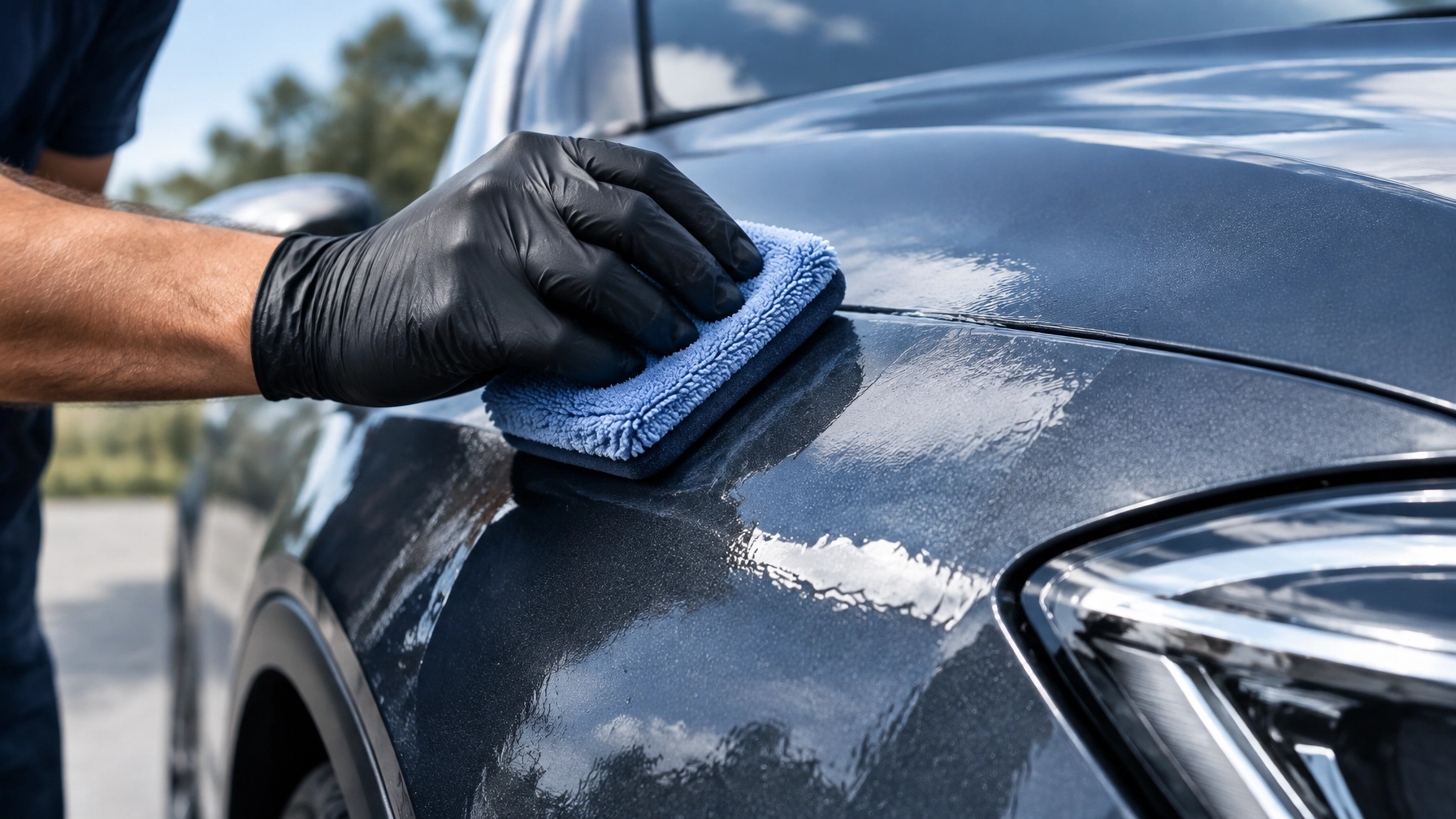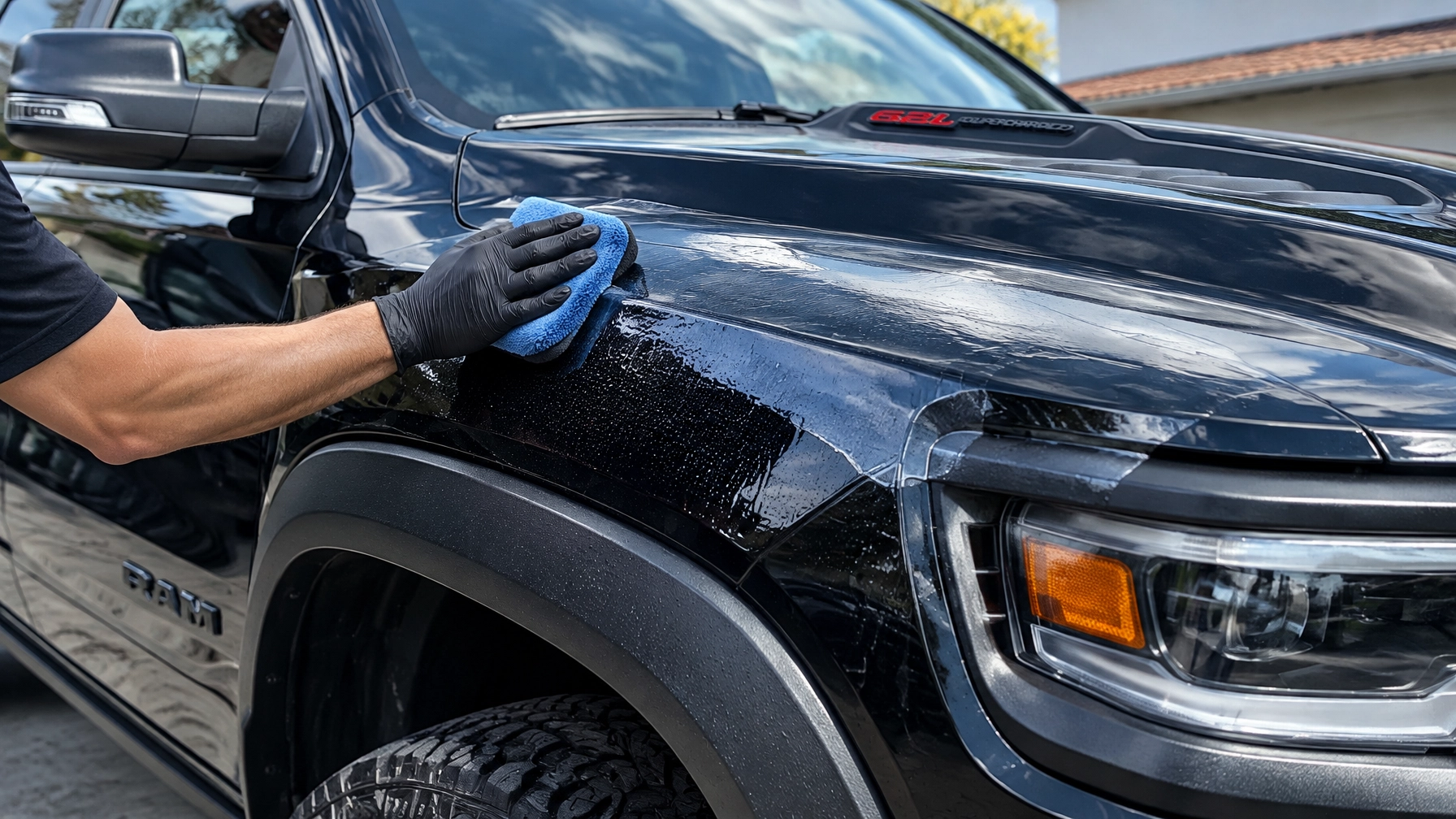
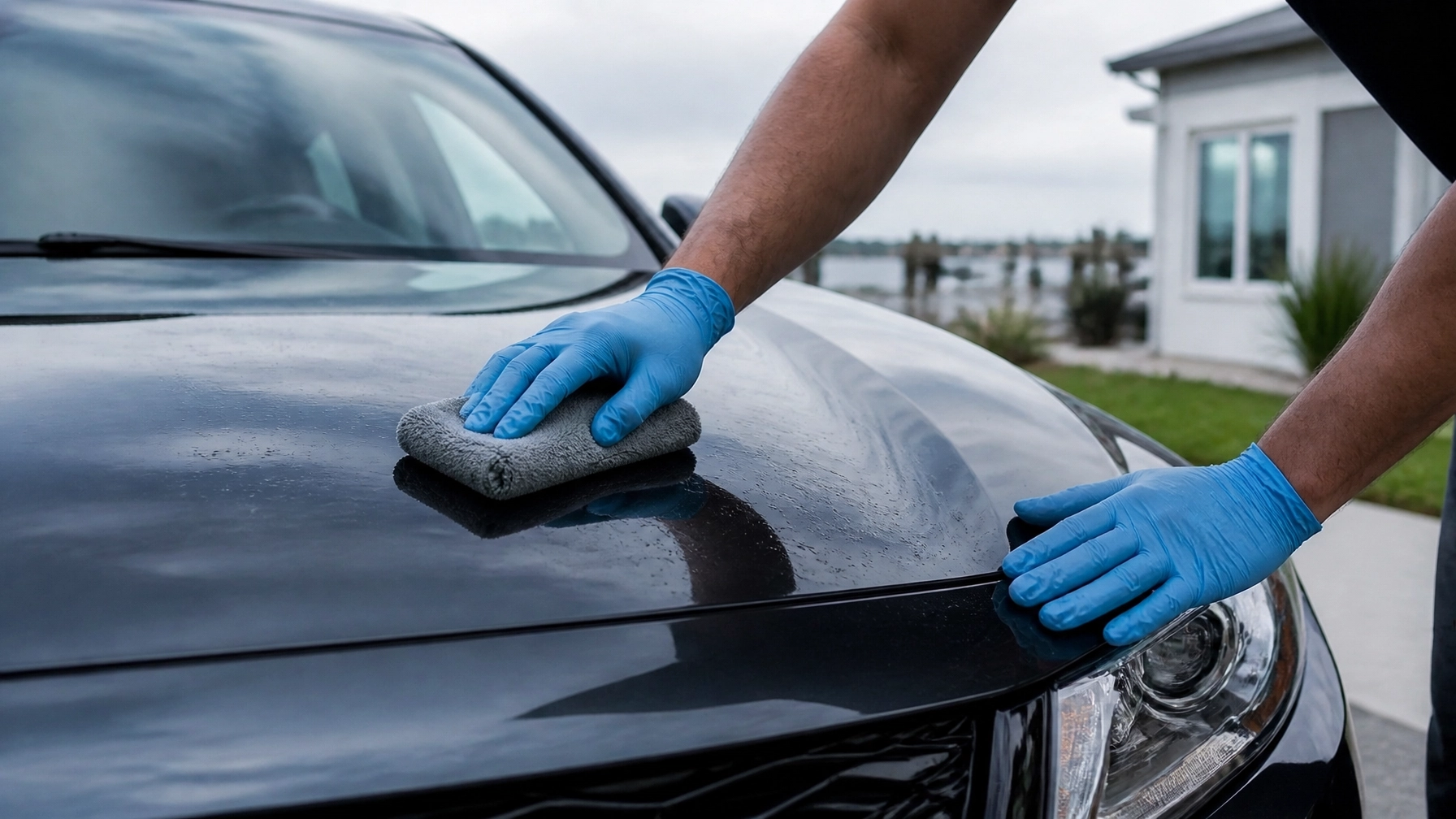
Galveston drivers face salt air, humidity, UV exposure, and road debris every day, making professional car detailing in Galveston essential for preserving paint clarity and long-term vehicle value.
A vehicle parked near Galveston Beach, Galveston Bay, or the shipping corridors around Texas City is exposed to more than ordinary road dust. Fine salt particles settle onto the hood, roof, glass, wheels, rocker panels, and undercarriage.
Then the chemistry begins.
What Makes Galveston Salt Air So Damaging to Vehicle Paint?
Galveston salt air damages paint because salt is hygroscopic: it pulls moisture from the atmosphere and holds that moisture against the vehicle’s surface.
Coastal humidity often remains above 70%, especially around Galveston, Dickinson, Clear Lake, and League City. Salt particles do not simply land on the paint and remain dry. They attract microscopic water droplets, creating a damp, conductive film that stays active between washes.
That salty film accelerates oxidation. It also bonds to the clear coat, where heat and ultraviolet exposure make the problem worse. When the surface reaches approximately 95 degrees during a Texas summer, moisture and contaminants can quickly become baked onto the finish.
Without consistent washing, the damage builds in layers:
- Salt bonds to clear coat texture.
- Moisture remains trapped against the surface.
- UV exposure accelerates oxidation and fading.
- Road grime adheres to the salty film.
- Existing chips and scratches become corrosion entry points.
The result is a finish that looks dull, feels rough, and becomes increasingly difficult to restore.
How Does Salt Film Cause Oxidation, Pitting, and Corrosion?
Salt film accelerates oxidation by keeping the paint surface damp while acting as an electrolyte around exposed areas.
Clear coat is designed to protect the color coat beneath it, but it is not an invisible force field. Repeated exposure to salt, humidity, UV radiation, and industrial fallout gradually weakens its surface. As the clear coat loses integrity, the finish becomes more vulnerable to staining and chemical etching.
Salt also collects inside microscopic scratches and rock chips. These areas expose thinner paint or bare metal, allowing moisture and salt to reach the underlying material. Micro-corrosion can begin before visible rust appears.
The same process affects exterior metal components:
- Chrome trim can develop pitting.
- Aluminum wheels can show oxidation around chips.
- Door edges and panel seams can corrode.
- Wheel wells can retain salt-heavy road spray.
- Undercarriage hardware can rust faster near the coast.
A car that looks clean after a rainstorm may still have an active salt residue left behind. Rainwater does not reliably remove the entire film, especially from lower panels, wheel wells, and crevices.
Which Areas of a Galveston Vehicle Need the Most Protection?
High-impact zones need physical protection first, while the remaining painted surfaces benefit from a hydrophobic ceramic barrier.
Daily driving between Galveston and Houston exposes the front of your vehicle to sand, gravel, construction debris, and freeway traffic. Beach access roads create additional risk from blowing sand and salt spray.
Liquid Paint Protection Film is the primary recommendation for these vulnerable areas. It is a hand-applied protective layer that uses a flexible polyurethane and acrylic polymer blend. Once cured, it forms a resilient sacrificial film over the paint.
Common LPPF coverage areas include:
- Front bumper
- Full or partial hood
- Front fenders
- Side mirrors
- Headlights
- Rocker panels
- A-pillars
- Door edges and cups
- Leading edge of the roof
LPPF provides more impact protection than ceramic coating alone. If a rock impact creates a blemish, the affected area can be re-leveled to restore a smooth finish instead of replacing an entire panel.
That matters on I-45, the causeway, and busy coastal routes where road debris is unavoidable.

How Does Ceramic Coating Help Protect Cars Near Galveston Bay?
Ceramic coating creates a semi-permanent hydrophobic barrier that reduces how easily salt, water, and contaminants bond to the clear coat.
A professional automotive ceramic coating chemically bonds with the prepared paint surface. Its surface-tension properties cause water to bead and move away instead of spreading across the panel. Contaminants still require maintenance, but they release faster during a proper wash.
Ceramic coating also helps defend against:
- UV-related fading and oxidation
- Salt residue and coastal humidity
- Bird droppings and bug acids
- Industrial fallout
- Road film and traffic grime
- Minor washing-related marring
Ceramic coating is not designed to stop rock chips. LPPF remains the stronger choice for impact-prone panels. Ceramic coating complements LPPF by adding gloss, UV resistance, hydrophobic behavior, and easier maintenance across the rest of the vehicle.
Many Galveston-area drivers benefit from LPPF on the front end and ceramic coating on the remaining painted surfaces. That combination addresses both major coastal threats: impact damage and chemical exposure.
What Does Professional Coastal Vehicle Preparation Include?
Professional protection begins with decontamination and paint evaluation, not simply applying a product over a dirty surface.
Salt film, iron particles, water minerals, and industrial residue must be removed before a protective layer can bond correctly. The preparation process typically includes:
- A careful exterior wash to remove loose contamination.
- Chemical decontamination to dissolve bonded road film and fallout.
- Clay treatment when the paint still feels rough.
- Paint inspection under controlled lighting.
- Paint correction when oxidation, swirls, or etching affect clarity.
- Panel preparation before LPPF or ceramic coating application.
- Controlled hand application and leveling.
- Final inspection for uniform coverage and finish.
Paint correction is especially important when salt exposure has created hazing or surface oxidation. Polishing restores clarity by refining the damaged upper layer before protection is installed.
Sealing contamination underneath a coating only preserves the problem. Thorough preparation produces a cleaner bond and a more noticeable mirror-like finish.

How Often Should You Wash a Car in Galveston?
Coastal vehicles should be washed every one to two weeks, with an additional wash after beach days, heavy rain, or extended exposure near the bay.
A rinse removes loose salt before it has time to remain active against the finish. A complete wash removes the bonded film that water alone leaves behind.
Use a careful two-bucket method:
- One bucket holds pH-neutral car shampoo.
- The second bucket holds clean water for rinsing the wash mitt.
- Wash from the top down.
- Rinse the mitt frequently.
- Use separate tools for wheels and painted panels.
- Never dry-wipe salt or beach dust from the paint.
Dry the vehicle thoroughly after washing. Pay special attention to mirrors, emblems, door jambs, panel gaps, wheels, and lower trim. Trapped water can carry dissolved salt into seams and crevices.
After a beach day, rinse the undercarriage and wheel wells with fresh water. After heavy rain, wash the vehicle rather than assuming the storm cleaned it. Rain can redistribute salt and minerals across the paint without removing them completely.

How Does In-Shop Service Protect Coastal Vehicles?
Customers from Galveston and bay-area communities such as Clear Lake, Webster, League City, Dickinson, Texas City, and Friendswood bring their vehicles to our shop for professional preparation and protection.
Our controlled shop environment matters for coastal vehicles. Salt film and contamination are removed thoroughly before protection is applied, and every car is serviced one at a time in a controlled environment with stable temperature, humidity, and dust control for proper bonding and curing, all under direct owner oversight.
Ceramic Enthusiasts is owner-operated, with over 10 years of experience protecting vehicles in Houston’s heat and humidity. Each vehicle receives one-car-at-a-time attention rather than rushed, high-volume service.
That approach allows for meticulous inspection, careful decontamination, and precise hand-applied protection. Products and procedures are selected for the regional conditions your vehicle actually faces, including intense UV exposure, humidity, freeway debris, refinery-area fallout, and coastal salt.
The benefit is practical: faster and safer maintenance, cleaner surfaces between washes, and protection designed for years rather than months.
Which Galveston Car Protection Service Fits Your Driving?
LPPF is the primary recommendation when rock chips, sand, and road debris are your biggest concerns.
Ceramic coating is the complementary option when you want durable UV resistance, hydrophobic performance, deeper gloss, and easier washing across the vehicle. Paint correction belongs underneath either service when oxidation, swirl marks, or salt etching have reduced surface clarity.
Whether you commute from Galveston to Houston, visit the beach every weekend, or live near Galveston Bay, the right protection strategy combines professional preparation with consistent maintenance.
Your first rainstorm after protection should make the difference noticeable. Water should bead more cleanly, salt should release faster, and the surface should remain smoother between washes.
How Can You Schedule Car Detailing in Galveston?
Start with a consultation so the vehicle’s age, paint condition, driving habits, and coastal exposure can be evaluated.
Ceramic Enthusiasts can help determine whether your vehicle needs LPPF, ceramic coating, paint correction, or a combination of services. The goal is to match the protection to your actual use rather than recommend unnecessary coverage.
Call Ceramic Enthusiasts at 281-626-9384 to schedule a Galveston-area consultation.
Protect your vehicle before salt air becomes visible damage.