Houston drivers face intense UV exposure, high humidity, freeway debris, refinery fallout, and sudden thunderstorms every week. For serious impact protection, Liquid Paint Protection Film (LPPF) should come first, followed by ceramic coating when additional gloss, hydrophobic performance, and easier maintenance are priorities.
The ceramic coating vs wax comparison still matters. Wax creates temporary shine and a sacrificial layer. Ceramic coating forms a semi-permanent bond with the clear coat and protects for years with proper care.
For most daily drivers in Houston, Pearland, Pasadena, League City, Friendswood, and South Houston, ceramic coating delivers substantially longer protection than wax. For drivers concerned about rock chips, LPPF provides the stronger starting point.
What should Houston drivers choose before comparing ceramic coating vs wax?
Houston drivers should evaluate hand-applied Liquid Paint Protection Film (LPPF) before choosing between ceramic coating and wax.
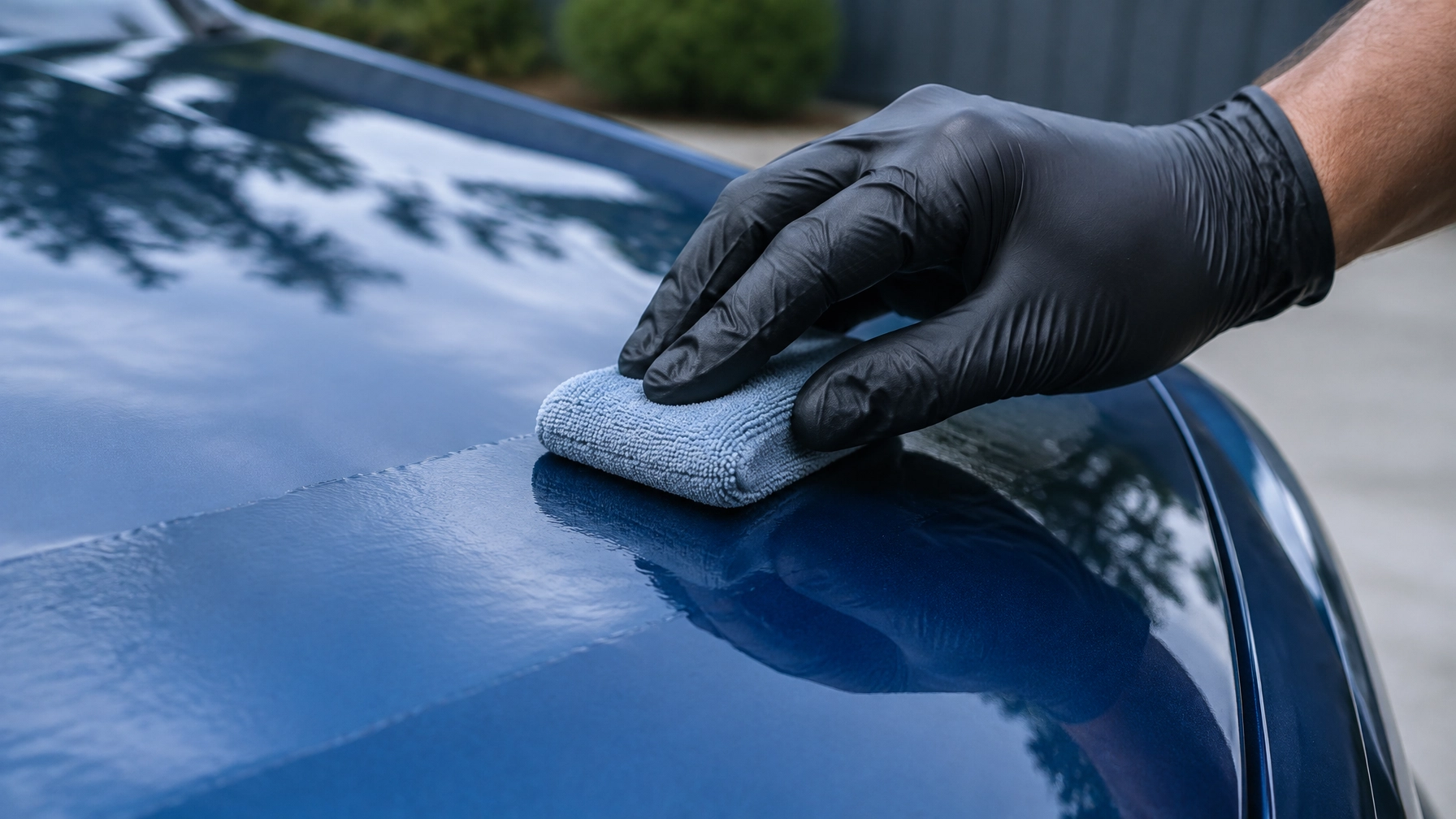
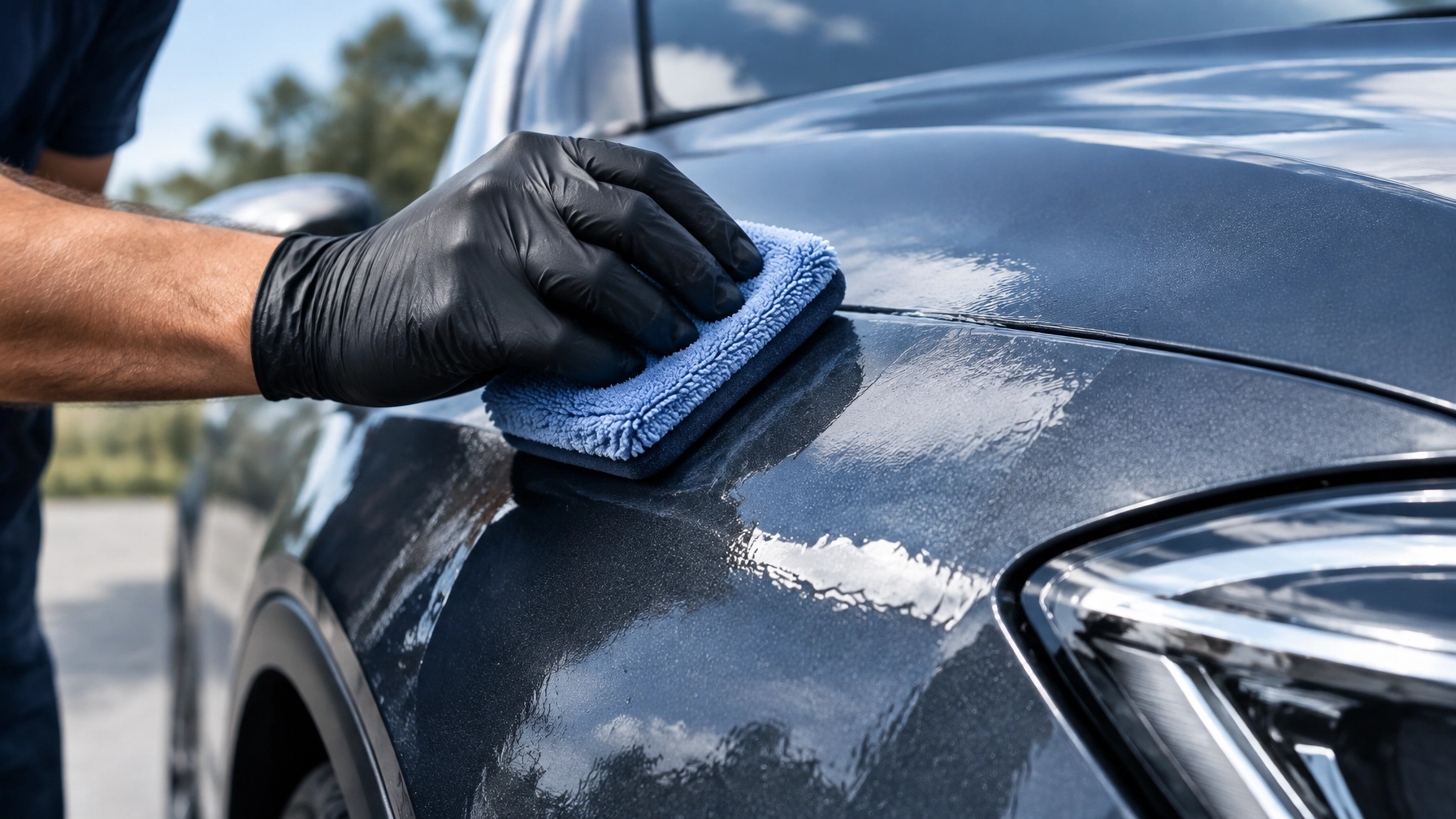
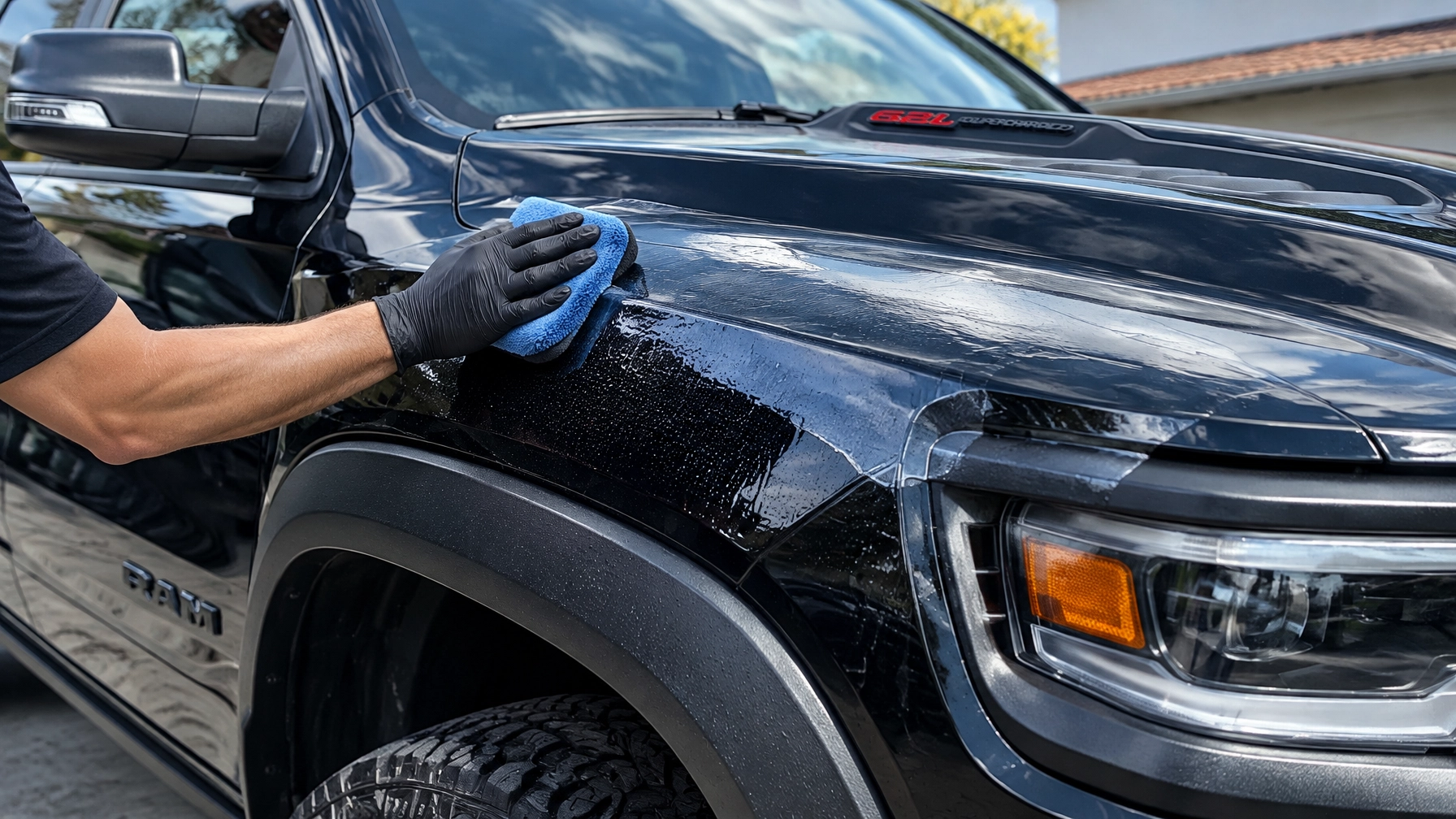
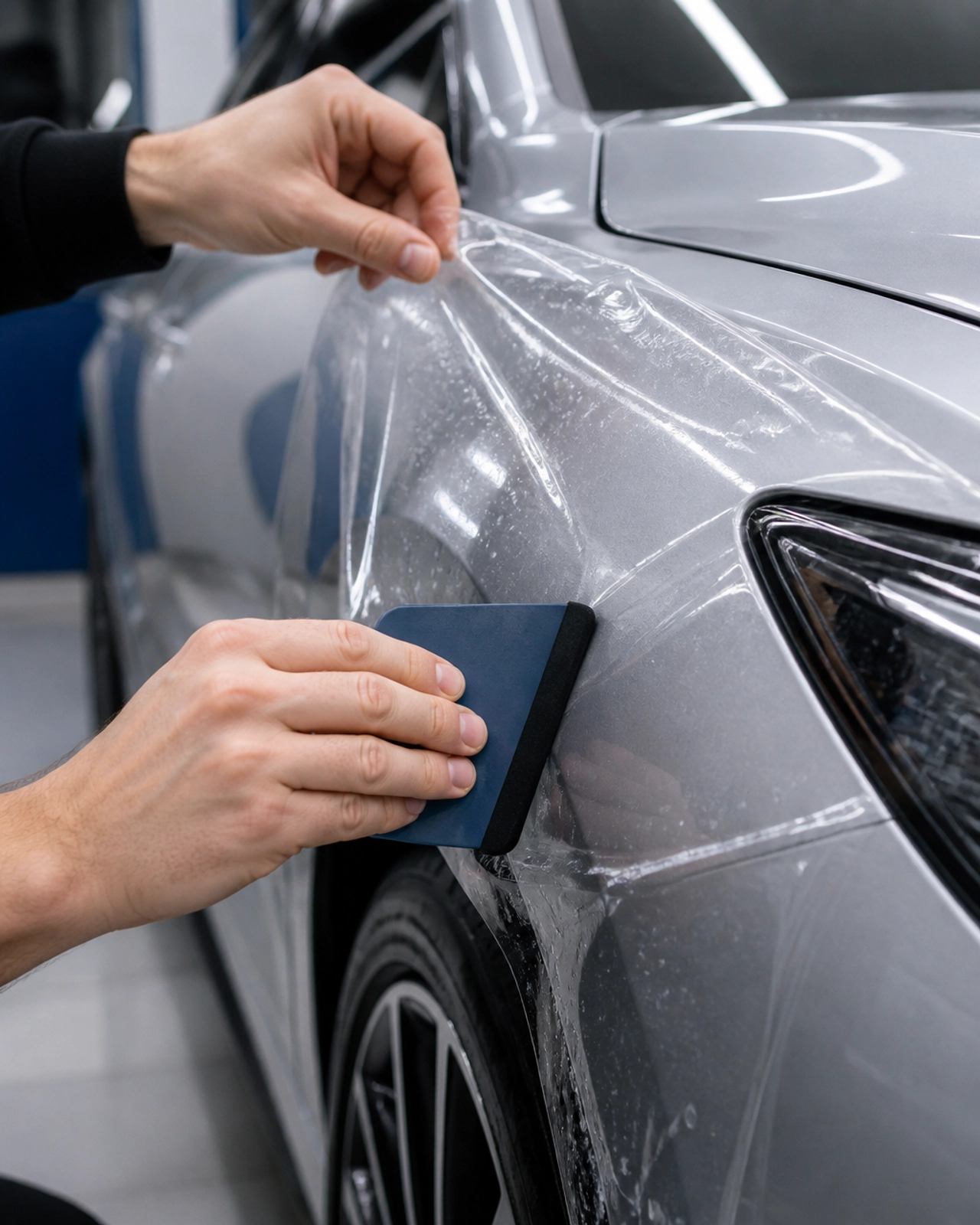
LPPF cures into a solid-state protective film made from a flexible blend of polyurethane and acrylic polymers. It creates a physical barrier between vulnerable paint and rocks, road debris, light scratches, and everyday wear.
The process is performed by hand. The film is positioned, worked, and leveled across the panel using specialized hand tools. It does not rely on pre-cut kits or a rushed, machine-only application.

LPPF also offers an important maintenance advantage. If a rock impact creates a minor blemish, the affected area can often be re-leveled to restore a smooth finish without removing the entire protection system.
That makes LPPF the primary recommendation for vehicles regularly traveling I-45, Highway 288, Beltway 8, and the Gulf Freeway. Ceramic coating and wax address surface protection, while LPPF helps absorb physical impact.
How does wax protect your paint in Houston?
Wax protects paint by placing a temporary sacrificial layer over the clear coat.
Traditional carnauba and synthetic waxes improve gloss, create initial water beading, and offer limited protection against light contamination. They can make a freshly washed vehicle look warmer and deeper without requiring a lengthy installation process.
The limitation is durability.
Houston’s summer heat can push panel temperatures well beyond 95 degrees. Strong UV exposure, frequent rain, high humidity, automatic washing, and road film gradually break down the wax layer. In Texas conditions, wax may require reapplication every few weeks to a few months.
Without frequent reapplication, the beading disappears first. Then the surface becomes less slick, contaminants bond more easily, and the clear coat receives less protection from UV exposure and acidic residue.
Wax remains practical for garage-kept vehicles, weekend cars, and owners who enjoy frequent detailing. It is not the most efficient long-term solution for a daily commuter parked outside in Houston.
How does ceramic coating outperform wax over time?
Ceramic coating outperforms wax through chemical bonding, greater durability, and stronger hydrophobic performance.
A premium ceramic coating uses silica-based chemistry that bonds with the prepared clear coat and cures into a hard, semi-permanent layer. Wax sits on top of the paint and gradually wears away. Ceramic coating becomes part of the vehicle’s protective surface.
That difference changes how the vehicle performs through dozens of weather cycles.
Ceramic coating helps defend against:
- UV exposure and oxidation
- Bird droppings and bug acids
- Road film and industrial fallout
- Mineral deposits from rain and sprinklers
- Houston humidity and heavy moisture
- Frequent washing and everyday contamination
The coating also changes surface tension. Water beads tightly and sheets away more efficiently, carrying loose dirt and grime with it. This hydrophobic behavior is noticeable from the first rainstorm.

Professional ceramic coatings commonly provide protection measured in years rather than months. With proper washing and periodic maintenance, they maintain gloss and water behavior far longer than traditional wax.
For drivers searching for ceramic coating Houston, the local climate makes professional preparation and product selection especially important.
Which option makes maintenance easier?
Ceramic coating makes routine maintenance faster and safer than repeated waxing.
A coated vehicle still requires regular washing. The difference is how easily dirt, water, and contaminants release from the surface. Because the coating reduces surface adhesion, a gentle hand wash removes grime more efficiently and reduces aggressive scrubbing.
This is why many Houston vehicle owners search for an easy maintenance ceramic coating. The benefit is not a maintenance-free vehicle. The benefit is less effort during every wash and less frequent protection work.
Recommended maintenance includes:
- Wash with a pH-neutral automotive soap.
- Use clean microfiber towels and safe wash media.
- Avoid abrasive automatic car wash brushes.
- Remove bird droppings and bug residue promptly.
- Schedule periodic decontamination as needed.
- Refresh the coating with an approved maintenance product.
Wax requires the same careful washing, plus repeated preparation and reapplication. Over several years, that creates dozens of additional appointments or weekend projects.
Ceramic coating reduces the amount of work required to preserve a clean, glossy finish.
Can ceramic coating prevent rock chips?
No, ceramic coating is not designed to absorb high-speed rock impacts.
Ceramic coating provides excellent protection against chemical contamination, UV exposure, water spotting, and light washing-related marring. It does not create the physical impact barrier needed for gravel and rocks thrown from construction trucks or heavily traveled Houston roadways.
LPPF is the better choice for impact-prone areas such as:
- Front bumpers
- Full or partial hoods
- Front fenders
- Side mirrors
- Headlights
- A-pillars
- Leading roof edges
- Rocker panels
The most comprehensive approach pairs hand-applied LPPF on high-impact zones with ceramic coating across the remaining painted surfaces. Ceramic coating can also be applied over LPPF to improve gloss, UV resistance, and hydrophobic performance.
This LPPF-and-ceramic combination protects against both physical impact and environmental deterioration.
What preparation makes ceramic coating last?
Proper preparation determines how well ceramic coating bonds and performs.
Every application should begin with a paint evaluation. The vehicle then receives thorough washing, chemical decontamination, mechanical clay treatment, and surface inspection. Iron particles, industrial fallout, brake dust, and embedded road film must be removed before polishing.
Paint correction follows when swirls, scratches, oxidation, or haze affect the finish. State-of-the-art polishing restores clarity and creates a level surface for the coating to bond with.
The final preparation stage removes polishing oils and residue. Only then can the coating create consistent molecular adhesion with the clear coat.

Applying ceramic coating over contaminated or heavily swirled paint locks those defects beneath the protection. Careful preparation prevents that outcome and produces the mirror-like finish Houston drivers expect.
Ceramic Enthusiasts uses an owner-operated, one-car-at-a-time process backed by over 10 years of experience. That focused workflow provides meticulous attention during every stage instead of rushing vehicles through an assembly line.
How does the LPPF-and-ceramic combination protect a Houston vehicle?
The combination creates two distinct layers of defense.
LPPF absorbs and disperses energy from light to moderate rock impacts, scratches, and road debris. Ceramic coating protects the surface against UV rays, bird droppings, bug residue, chemical contamination, and water spotting.
This matters in areas such as Pasadena and South Houston, where industrial traffic and shipping corridors increase contamination exposure. It also matters in Pearland, Friendswood, and League City, where daily commuters deal with freeway debris, stop-and-go traffic, thunderstorms, and extended sun exposure.
The LPPF layer can be re-leveled after certain blemishes. The ceramic layer makes both the film and the surrounding paint easier to clean.
Together, they provide stronger total protection than wax alone or ceramic coating alone.
Which protection package fits drivers in Houston and nearby cities?
The right package depends on how and where you drive.
Wax may fit your vehicle if you:
- Keep the vehicle primarily in a garage
- Drive limited miles
- Enjoy frequent hand-detailing
- Want short-term gloss before events
Ceramic coating may fit your vehicle if you:
- Want years of protection instead of repeated waxing
- Park outside in Houston’s sun and humidity
- Prefer faster, easier washing
- Want long-lasting gloss and water repellency
- Drive a daily commuter, luxury vehicle, or collector car
LPPF should be prioritized if you:
- Drive frequently on Houston freeways
- Regularly encounter construction trucks or gravel
- Want protection against rock chips and road debris
- Own a newer vehicle you want to preserve
- Want a repairable, resilient protective film
The complete protection approach includes LPPF plus ceramic coating.
Ceramic Enthusiasts serves drivers across Houston, Pearland, Pasadena, League City, Friendswood, South Houston, Clear Lake, Webster, Alvin, Deer Park, and Galveston. Customers bring their vehicles to our shop, where every car is worked on one at a time in a controlled environment with stable temperature, humidity, and dust control for proper bonding and curing, all under direct owner oversight.
Do you need ceramic coating near me or a full protection consultation?
Drivers searching ceramic coating near me should first determine whether their vehicle needs environmental protection, impact protection, or both.
A consultation allows us to evaluate the paint, discuss driving habits, identify high-impact areas, and recommend a package that fits the vehicle’s use. The process may include paint correction, hand-applied LPPF, ceramic coating, wheel ceramic coating, glass ceramic coating, or paint correction.
Start with the protection that addresses your biggest risk. For Houston commuters, that usually means LPPF first, with ceramic coating added for complete surface protection and easy maintenance.
Call 281-626-9384 to schedule a consultation with Ceramic Enthusiasts. We will help determine whether LPPF, ceramic coating, or the combined protection system makes the most sense for your vehicle.
What is the final answer in the ceramic coating vs wax comparison?
Ceramic coating provides real, long-term protection that wax cannot match in Houston’s heat, humidity, UV exposure, and frequent rain.
Wax remains useful for short-term shine and enthusiast maintenance. Ceramic coating delivers years-not-months durability, stronger hydrophobic behavior, and easier regular washing.
For the ultimate protection, lead with hand-applied LPPF on impact-prone areas and pair it with ceramic coating across the vehicle. That combination protects the finish from both Houston road debris and environmental contamination.
Learn more about Liquid Paint Protection Film in Houston, explore automotive ceramic coating services, or contact Ceramic Enthusiasts to discuss your vehicle.