Houston summers present a relentless assault on your vehicle’s exterior, combining triple-digit temperatures with some of the highest UV indices in the United States. While most drivers in Pearland and Sugar Land focus on their air conditioning systems during July and August, their car’s paint is silently undergoing a destructive chemical transformation. Without professional-grade protection, the combination of intense solar radiation and Gulf Coast humidity will inevitably lead to clear coat failure, oxidation, and a total loss of resale value. At Ceramic Enthusiasts, we have spent over a decade observing how the Texas climate destroys unprotected finishes, and the results are consistently devastating for those who rely on basic waxes.
How does Houston’s extreme summer heat specifically damage your car’s paint?
Direct sun exposure in Houston can raise the surface temperature of a dark-colored vehicle to over 160 degrees Fahrenheit. This extreme thermal load causes the metal panels and the layers of paint above them to expand and contract at different rates. Over time, this constant mechanical stress leads to microscopic fractures in the clear coat. These fissures allow moisture, oxygen, and environmental pollutants to penetrate deep into the paint layers, initiating the oxidation process from the inside out.
Furthermore, the intense heat softens the clear coat, making it significantly more susceptible to physical damage. When your paint is "soft" from sitting in a League City parking lot all afternoon, road debris, bird droppings, and even dust particles can become embedded in the surface much more easily than they would during the cooler winter months. This softening also means that any attempt to wipe away dust without proper lubrication will result in immediate marring and swirl marks. Professional protection is the only way to harden the surface and mitigate these thermal cycles.
Why do UV rays lead to clear coat failure and permanent oxidation?
Ultraviolet (UV) radiation acts as a high-energy catalyst that breaks down the molecular bonds of your car’s factory clear coat. Think of your clear coat as the "skin" of your car; just as human skin burns and ages under the sun, the polymers in automotive paint degrade through a process called photo-oxidation. As these bonds break, the paint loses its ability to reflect light, resulting in a dull, chalky appearance that is most noticeable on horizontal surfaces like the hood, roof, and trunk.
Once the clear coat has failed, the damage is often irreversible without a complete repaint. In areas like Friendswood and Pasadena, we frequently see vehicles where the clear coat has begun to flake or peel away in large sections. This is the final stage of UV damage. By applying a premium ceramic coating or Liquid Paint Protection Film (LPPF), you are essentially installing a sacrificial layer of UV inhibitors. These advanced coatings absorb and dissipate the radiation before it can reach the sensitive pigment layers of your vehicle, preserving the "showroom shine" for years rather than weeks.

What role does Houston’s high humidity and environmental fallout play in paint degradation?
Humidity acts as a powerful accelerant for every negative chemical reaction occurring on your vehicle's surface. In Houston, the humidity levels often hover between 70% and 95% during the summer, creating a "sauna effect" that keeps contaminants trapped against the paint. When you combine this moisture with the industrial fallout common near the Ship Channel or the refineries in Baytown and Texas City, you create a highly corrosive environment. Acidic pollutants mix with the humidity to etch deep into the clear coat, leaving permanent marks that cannot be washed away.
Water spotting is another critical issue during the Houston summer. When a sudden afternoon thunderstorm hits Sugar Land followed by immediate, intense sunlight, the raindrops on your car act as magnifying glasses for UV rays. As the water evaporates rapidly in the heat, it leaves behind concentrated mineral deposits. These "hard water spots" bond to the paint and, if left untreated, will etch into the surface, requiring professional paint correction to remove. A hydrophobic surface is the only effective defense against this cycle, as it forces water to bead up and roll off before it can evaporate and cause damage.
How does professional ceramic coating provide a chemical shield against summer elements?
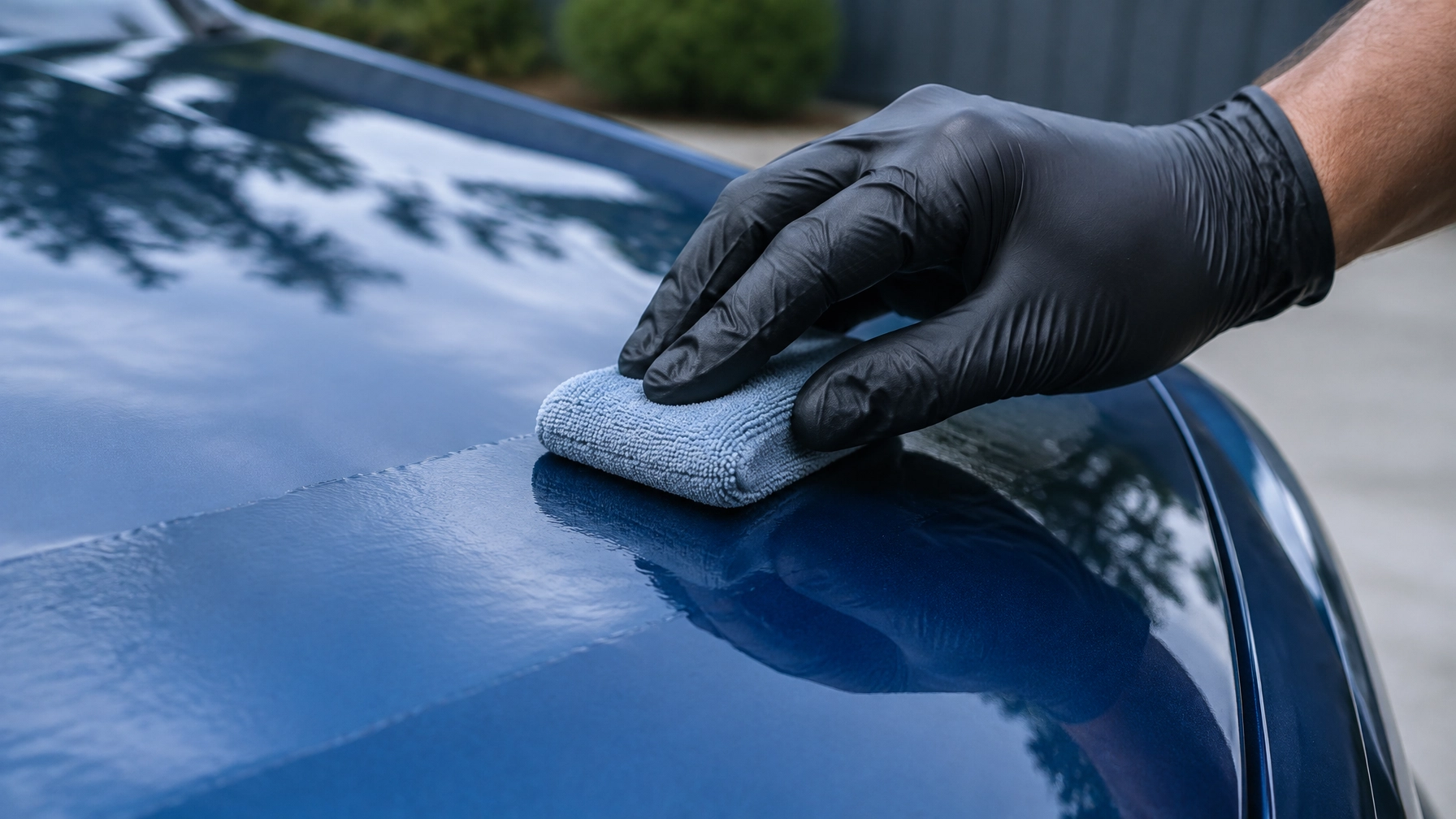
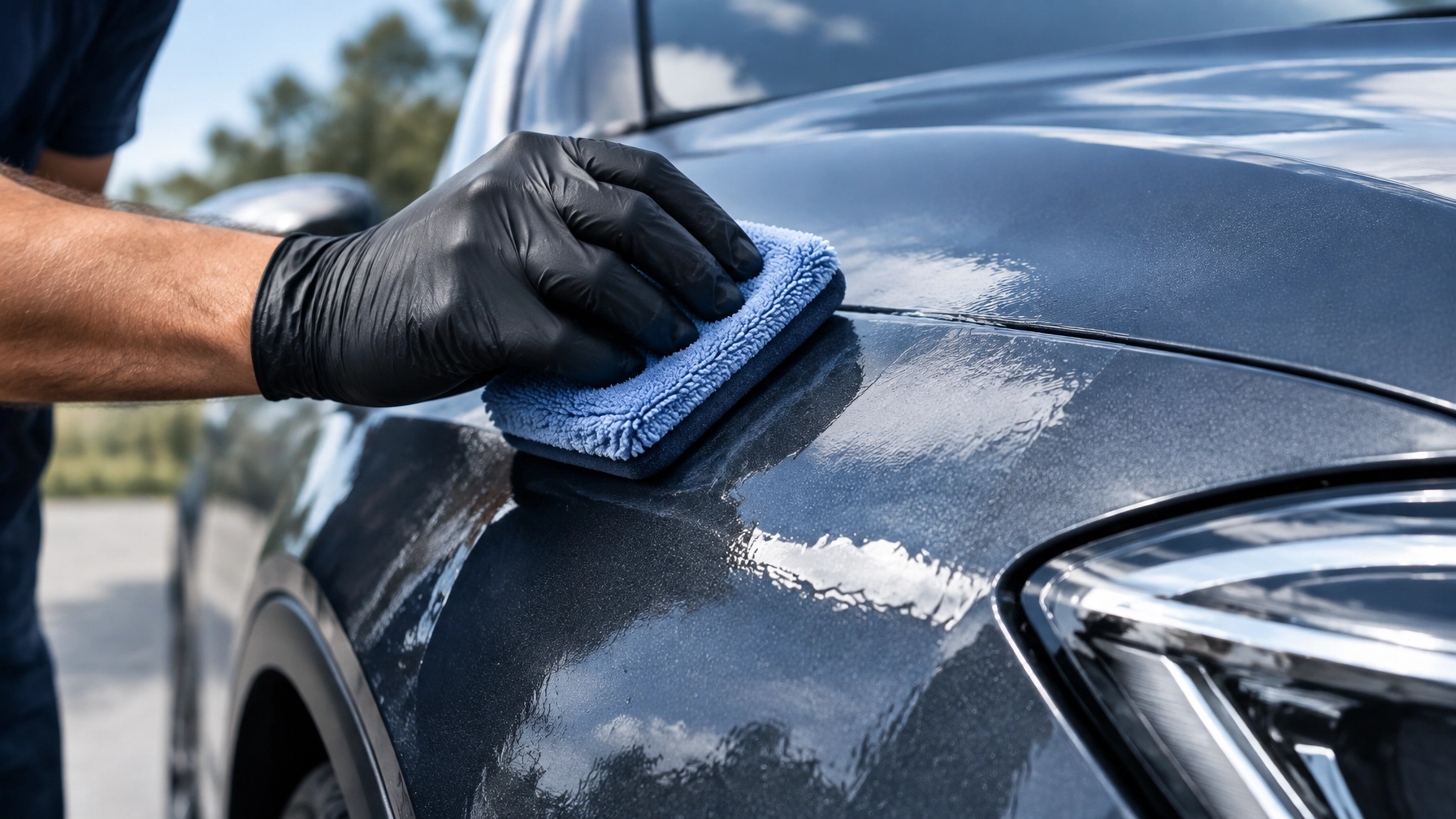
A professional ceramic coating is not a wax or a sealant; it is a semi-permanent nanostructure that chemically bonds to your vehicle’s factory clear coat. Utilizing high-quality Si02 (Silicon Dioxide), these coatings create a surface that is significantly harder and more resilient than the paint beneath it. Once cured, the coating forms a glass-like barrier that is essentially immune to the UV-induced oxidation that plagues unprotected cars in Pearland and Missouri City.
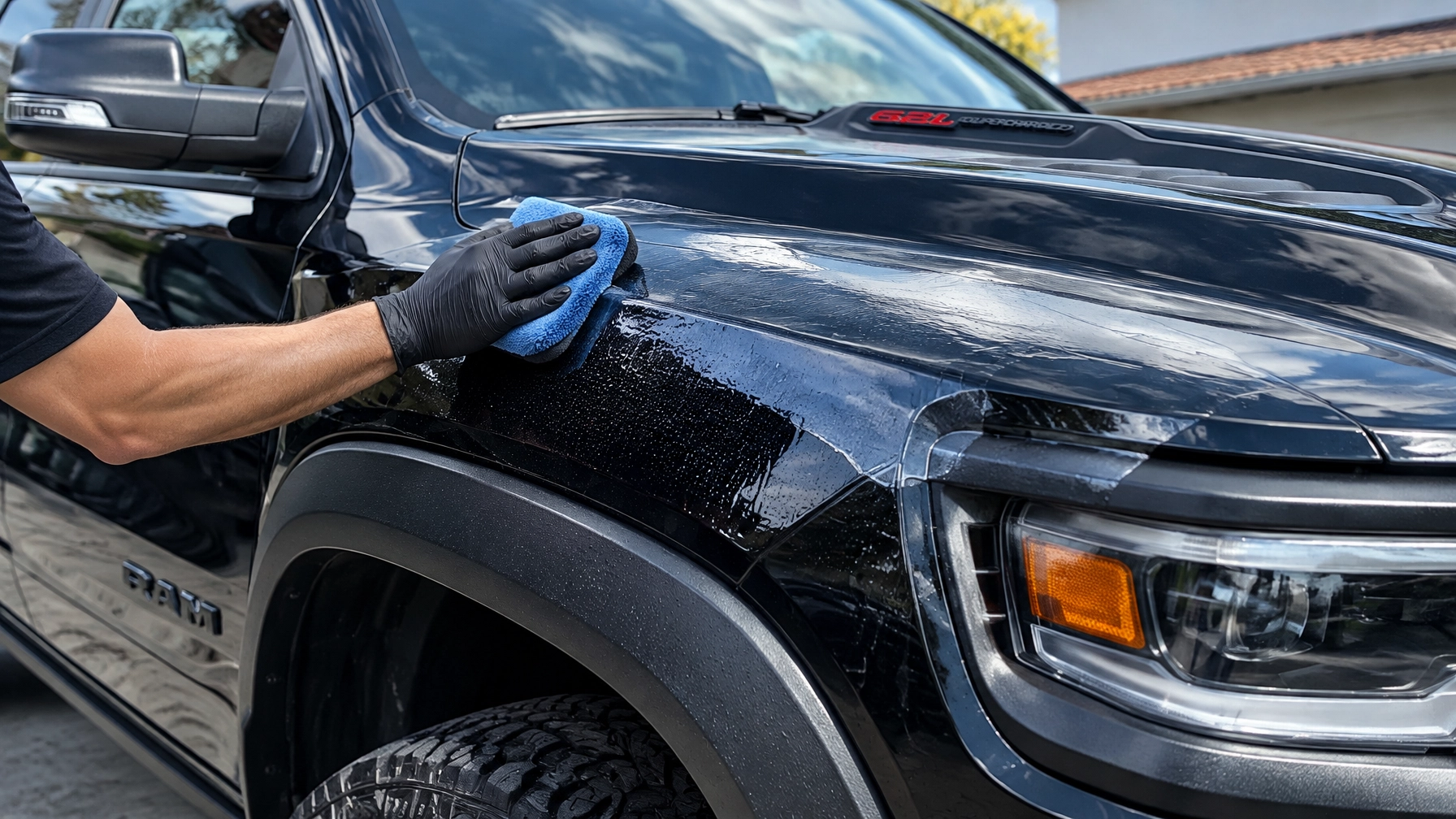
The primary advantage of a ceramic coating during a Houston summer is its extreme hydrophobicity. By creating a high surface tension, the coating prevents water, bird droppings, and tree sap from bonding to the paint. Contaminants simply sit on top of the coating, where they can be safely rinsed away. This also makes your maintenance washes faster and safer, as you don't need to use aggressive chemicals or heavy scrubbing to achieve a clean finish. At Ceramic Enthusiasts, our owner-operated approach ensures that every inch of the surface is meticulously decontaminated and polished before the coating is applied, ensuring a flawless molecular bond.

Why is hand-applied Liquid Paint Protection Film (LPPF) the ultimate defense for Houston drivers?
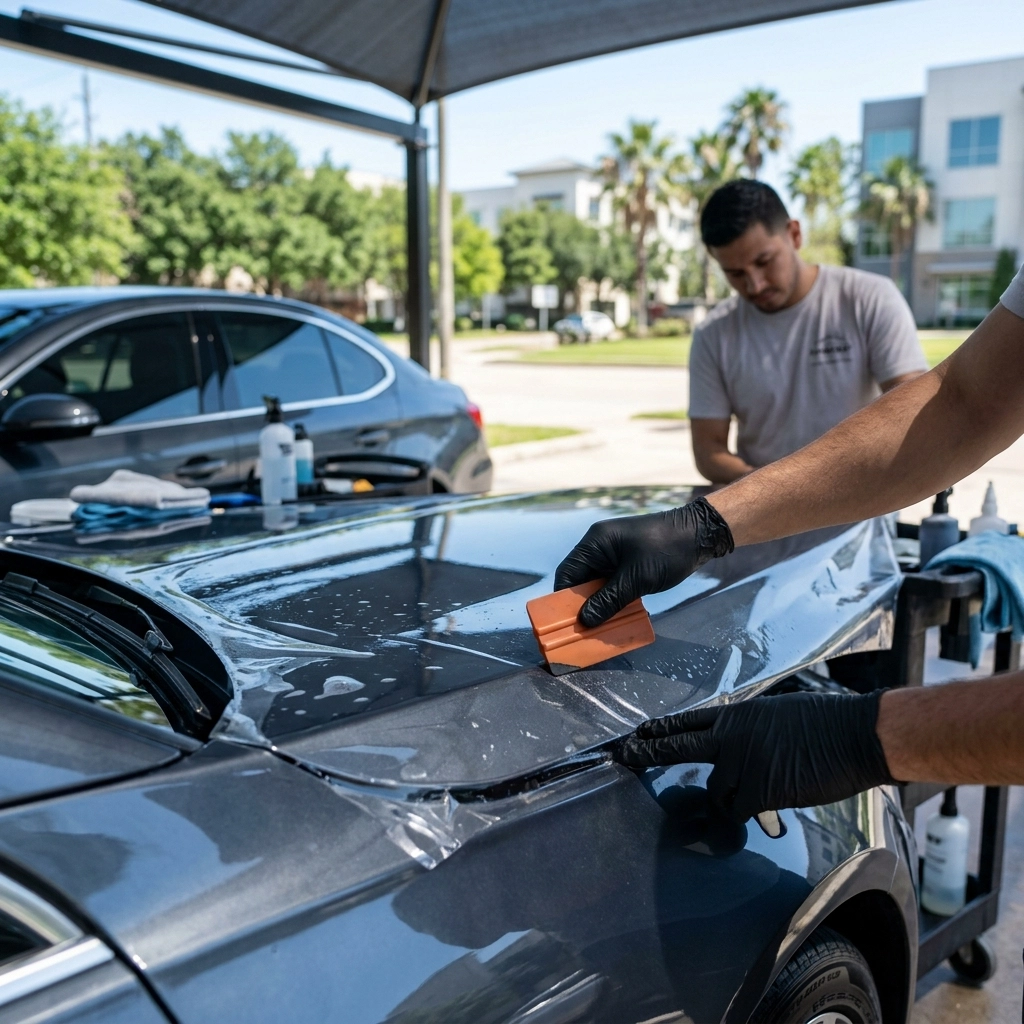
Liquid Paint Protection Film (LPPF) represents the pinnacle of automotive surface protection, specifically designed for those who want the benefits of traditional PPF without the visible seams or edges. Unlike traditional films that are cut from sheets, our LPPF is a hand-applied process. This meticulous method allows our technicians to ensure total coverage, following the exact contours of your vehicle's bodywork with precision that machines cannot replicate. The result is a thick, durable barrier that provides physical protection against rock chips, road debris, and heavy scratching.
For the Houston driver, LPPF offers a unique "re-leveling" property. When the sun beats down on a vehicle protected by LPPF in League City or Bellaire, the heat actually works in your favor. Minor swirl marks and light scratches in the film's surface will disappear as the polymer structure resets itself under the warmth of the Texas sun. This keeps your car looking flawless even in the face of daily commuting through construction zones or high-traffic corridors. Because it is hand-applied, the finish is incredibly clear, enhancing the natural depth of your paint while providing a level of impact resistance that ceramic coatings alone cannot match.

Can you combine ceramic coating and LPPF for maximum protection?
Absolutely. In fact, for the highest level of protection available in the Houston market, we recommend a layered approach. By applying a ceramic coating over the top of Liquid Paint Protection Film, you gain the best of both worlds: the impact resistance of the LPPF and its ability to be re-leveled after a rock impact, combined with the extreme slickness and chemical resistance of the ceramic coating. This "best-in-class" setup ensures that your vehicle is defended against both physical debris and chemical environmental hazards.
Whether you are driving a luxury sedan in Sugar Land or a heavy-duty truck in Deer Park, this combination provides a virtually impenetrable shield. The ceramic layer makes the LPPF even easier to clean and adds an extra level of gloss that makes the paint look "wet" even in the driest heat. At our shop, we treat every vehicle with a one-car-at-a-time focus, ensuring that these complex layers are applied in a controlled environment for maximum longevity. You can see the results of these combined treatments in our gallery.
How can you tell if your vehicle is already suffering from summer sun damage?
If you notice that your car’s paint feels rough to the touch even after a wash, or if water no longer beads up and rolls off the surface, your protection has likely failed. Other early warning signs include a slight "cloudiness" in the reflection or a loss of depth in the color. In Houston, these symptoms often appear within just six months of a standard dealership wax application. If you see white, chalky patches on the roof or hood, you are already experiencing clear coat failure, and immediate action is required to prevent the damage from spreading.
Protecting your investment from the Houston summer is not a luxury; it is a necessity for anyone who cares about the longevity and value of their vehicle. From our locations in Pearland to League City, we provide the technical expertise and meticulous attention to detail required to stand up to the Texas sun. Don't wait until the clear coat begins to peel to seek professional help.
To determine the best protection package for your vehicle and schedule a consultation with our expert team, contact Ceramic Enthusiasts today at 281-626-9384. We are ready to help you navigate the dangerous Houston summer with confidence.