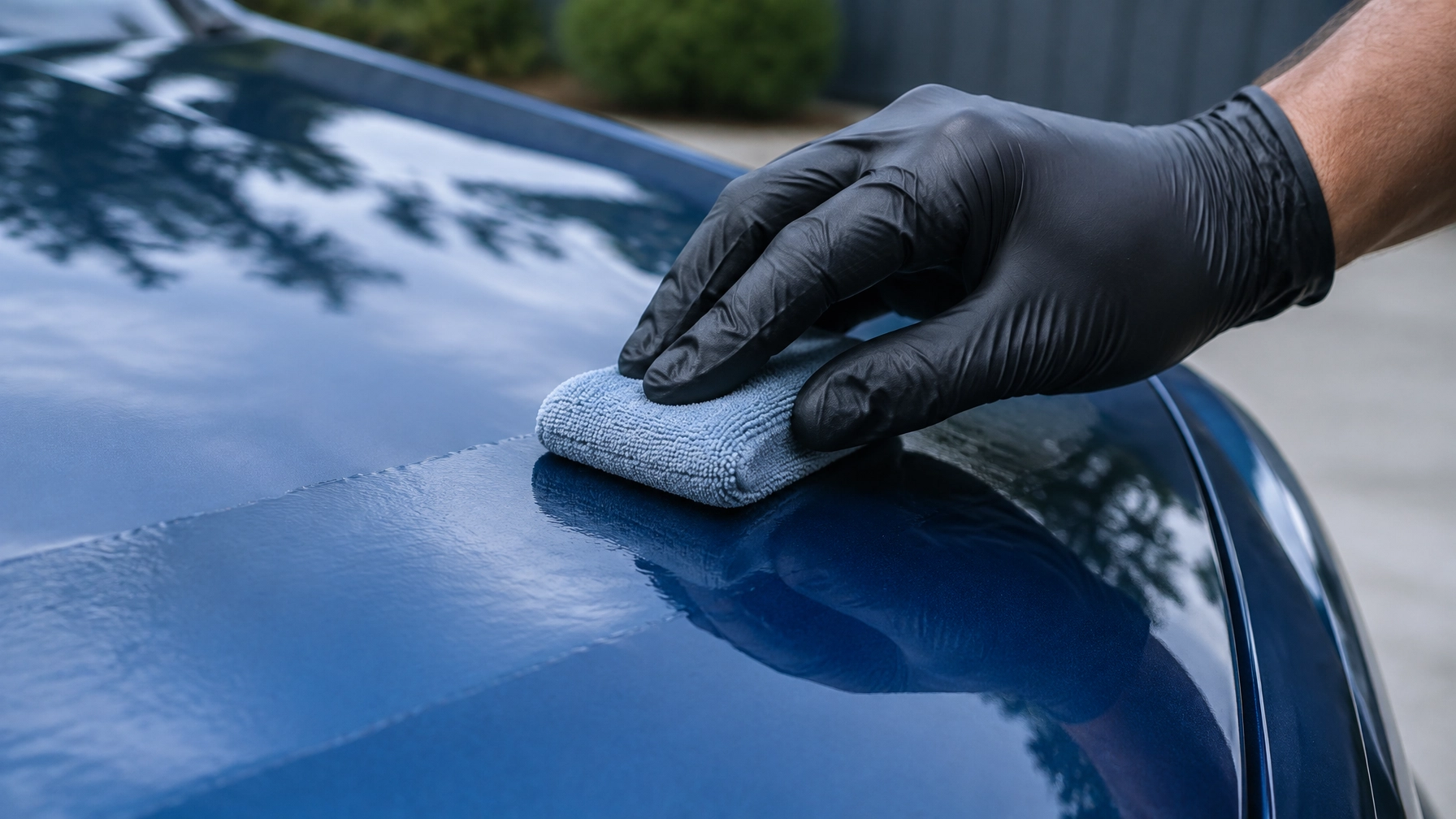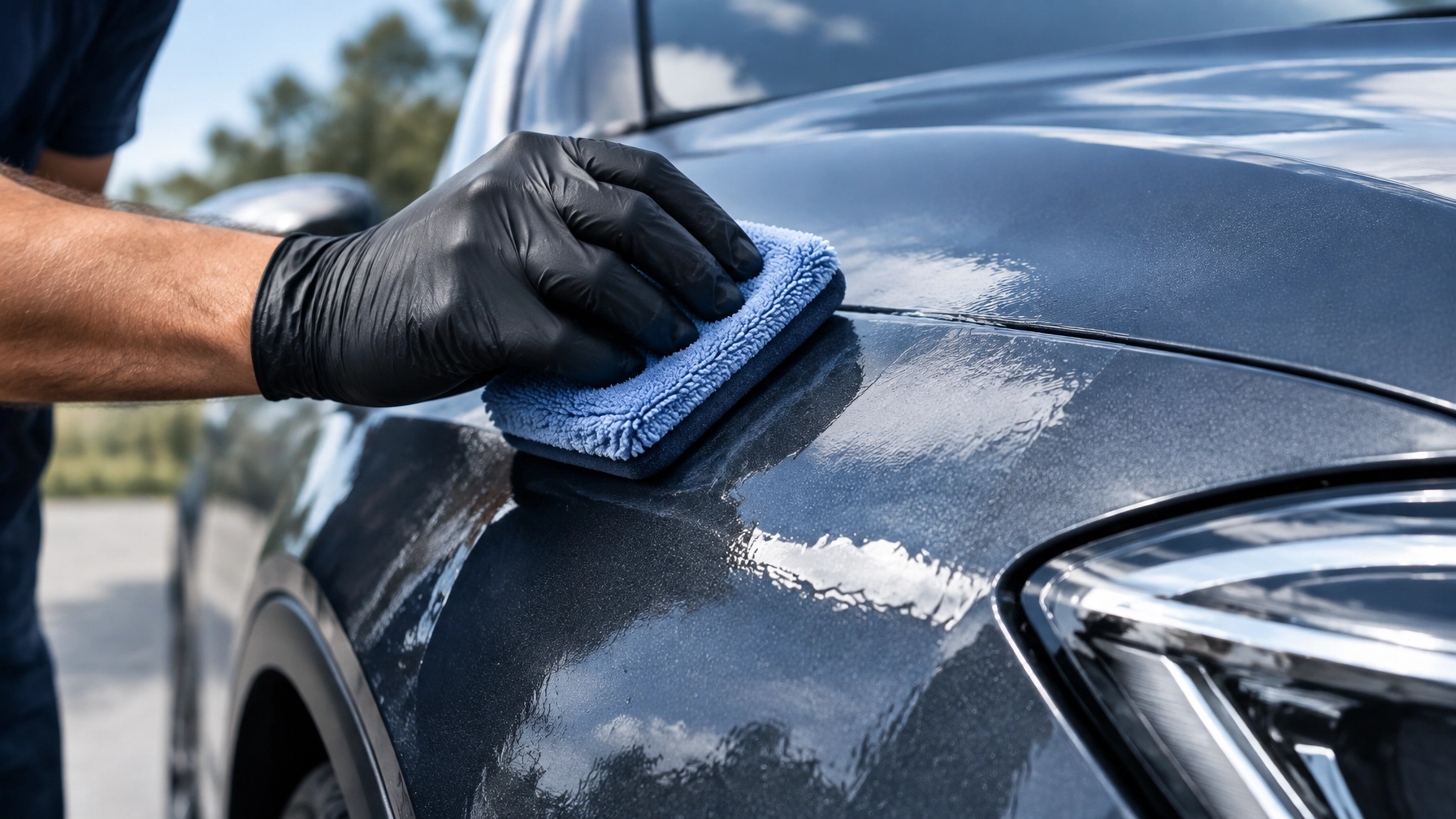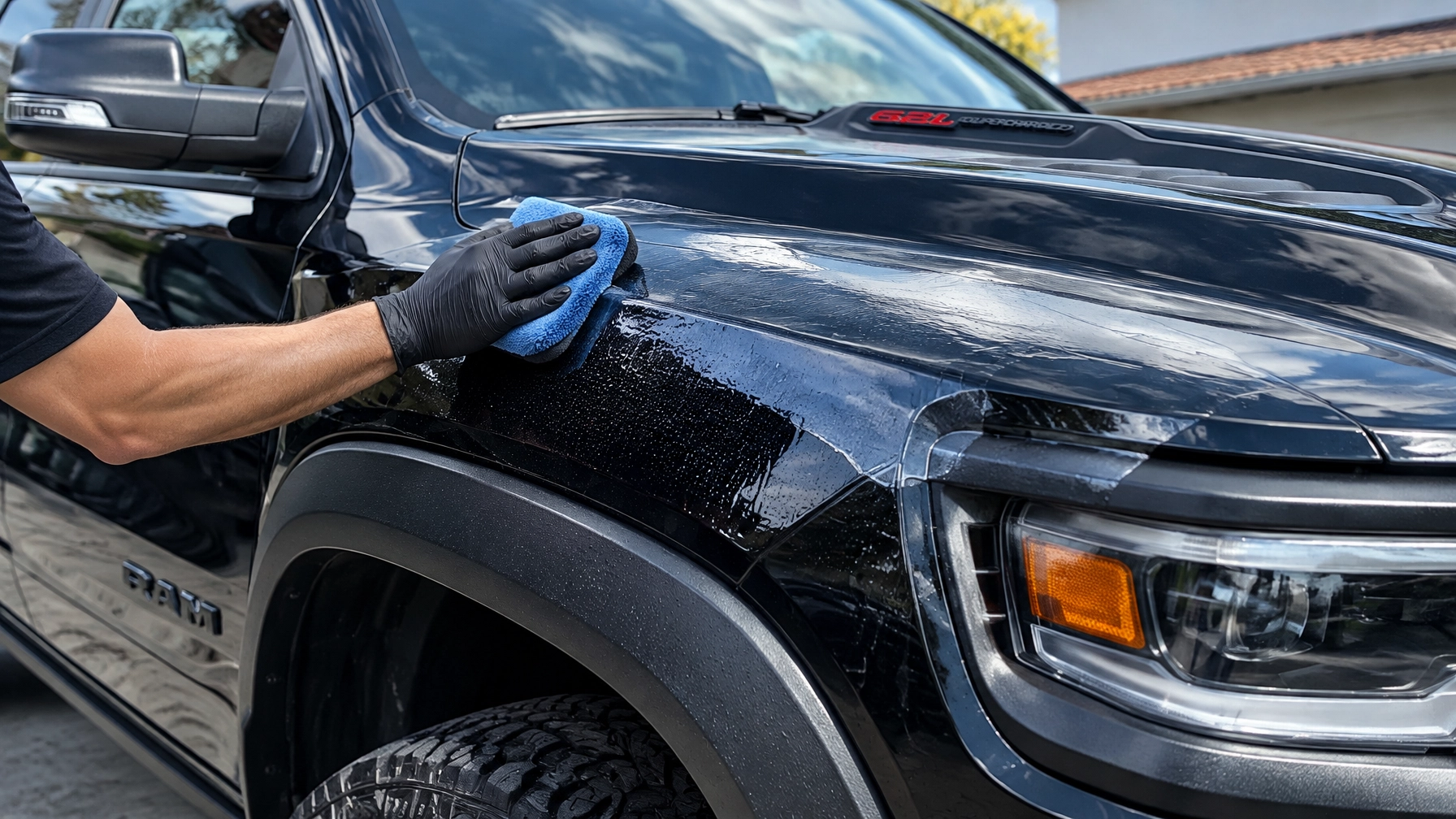
Most people think "gloss" is just a fancy word for a clean car. At Ceramic Enthusiasts, we know it’s actually a matter of physics. If your vehicle in Houston or Sugar Land looks dull even after a wash, you aren't looking at "dirty" paint: you’re looking at damaged light. Paint correction is the process of fixing that light, and it is the absolute foundation for everything we do. Whether you are preparing for a ceramic coating or our hand-applied Liquid Paint Protection Film (LPPF), the clarity of your finish depends entirely on the prep work.
What is the actual science behind a glossy finish?
Gloss is the result of specular reflection. When light hits a perfectly flat, leveled surface, it bounces back at the same angle it arrived. This creates a mirror-like effect that your brain interprets as high gloss and deep color. If you’ve ever seen a car in a Pearland showroom that looked like it was dripping wet, you were witnessing high-intensity specular reflection.
For a vehicle to achieve this "wet look," the clear coat must be microscopically smooth. Any deviation from a flat plane interferes with the light's path. In professional detailing, we measure this with gloss meters that quantify the reflection. Without a leveled surface, the most expensive coating in the world cannot create true depth. We focus on the science of the surface first, ensuring that the light behaves exactly how it should before we lock it in with protection.
How do swirl marks and scratches act as "light traps"?
Swirl marks, micro-marring, and "spider-webbing" are not just aesthetic flaws; they are optical light traps. When light hits a scratch, it doesn't bounce back cleanly. Instead, the jagged edges of the scratch act like tiny prisms, scattering the light in dozens of different directions. This is known as diffuse reflection.

This scattering is why black cars in League City often look "grey" or "hazy" in direct sunlight. The light is being redirected away from your eyes, killing the contrast and depth of the paint. On a microscopic level, these scratches are valleys and peaks in your clear coat. Every time you use an automated car wash or a dirty towel, you are adding more "traps" that prevent the light from reflecting properly. Paint correction removes these traps by surgically leveling the clear coat until the valleys and peaks are gone, allowing the light to flow uninterrupted once again.
Which specific steps are involved in professional paint correction?
Professional paint correction is a multi-stage process that requires meticulous attention and over a decade of experience. We don't just "buff" the car; we reshape the clear coat through controlled abrasion.
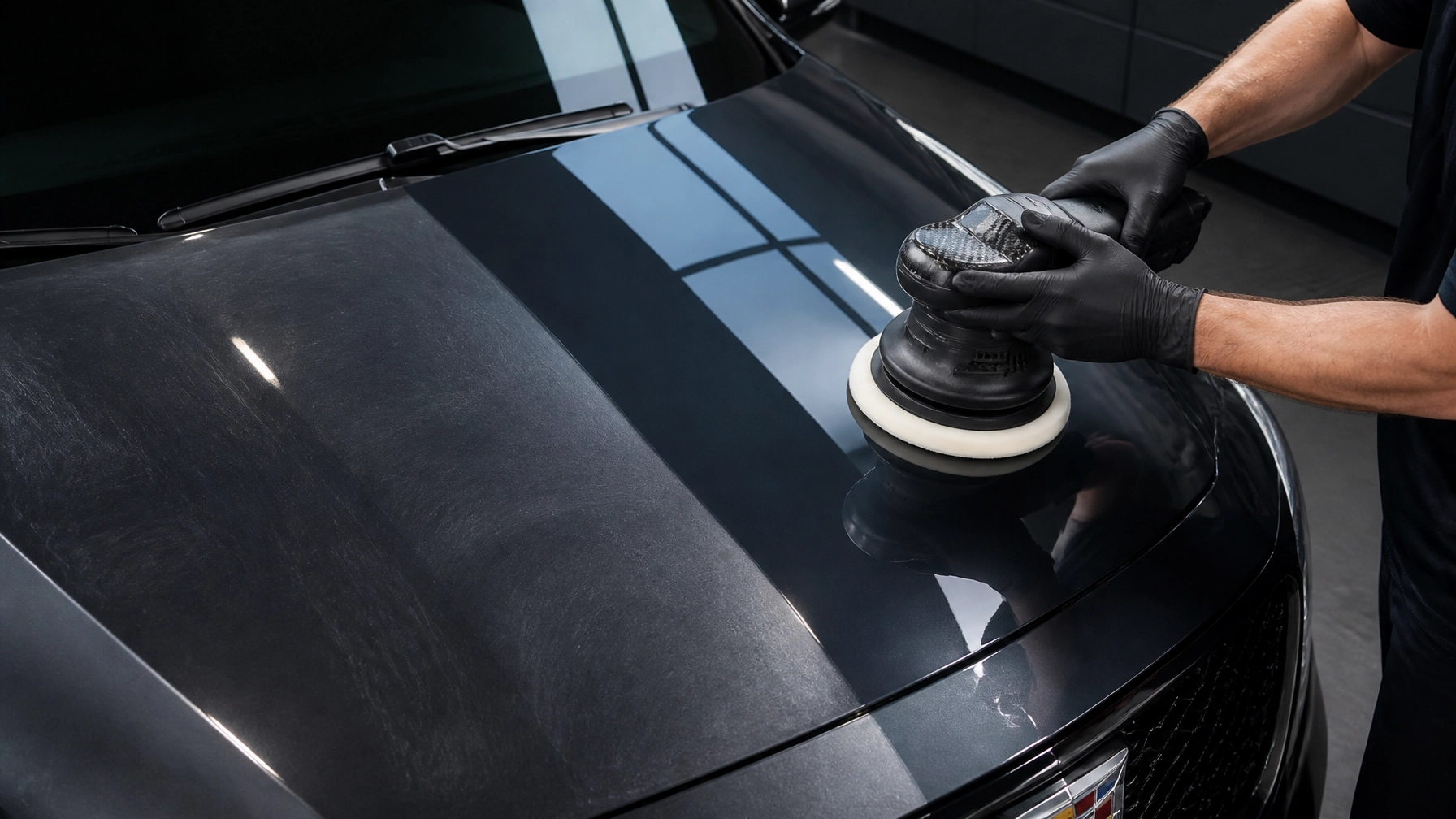
The first stage is typically compounding. We use a heavy-cut abrasive paste and a specific pad to remove deeper defects, oxidation, and heavy swirl marks. This stage does the "heavy lifting" of leveling the surface. However, compounding can leave behind its own micro-haze because the abrasives are aggressive.
The second stage is finishing or polishing. This is where the magic happens. We switch to a ultra-fine polish and a soft finishing pad to remove any remaining haze from the compounding stage. This refines the surface to a jewel-like finish. Because we operate one car at a time, we can spend hours on a single panel in our Friendswood studio, ensuring every square inch meets our standards. We don't rush the process; we refine it until the paint’s "soul": its original color and clarity: is fully restored.
Why is Houston’s environment particularly hard on your vehicle’s clear coat?
Driving in the Houston area presents unique challenges that most national detailing chains don't account for. Our intense heat, high humidity, and the fallout from local refineries create a cocktail of contaminants that eat away at your clear coat.
When your car sits in 95-degree heat in a Pasadena parking lot, the pores of the paint expand. This allows industrial fallout, bird droppings, and acid rain to bond deeper into the surface. Over time, these contaminants cause etching and oxidation that cannot be washed away. This environmental stress makes the paint look "tired" and old.
Without professional paint correction to remove this damaged upper layer, your vehicle will continue to degrade. Our 10+ years of experience in the Houston climate has taught us which products and techniques stand up to this specific environmental abuse. We tailor our correction process to handle the heavy mineral deposits and chemical etching common in League City and Baytown, restoring the barrier that protects your investment.
Can paint correction be skipped before ceramic coating or LPPF?
Technically, you can put a coating over uncorrected paint, but you shouldn't. Ceramic coatings and Liquid Paint Protection Film (LPPF) are semi-permanent and transparent. If you apply them over swirl marks and scratches, you are effectively "locking in" the damage for years.

Furthermore, protection products bond best to a surgically clean, leveled surface. If the clear coat is full of microscopic valleys (scratches), the coating cannot bond as uniformly. Our hand-applied LPPF process, for example, relies on a smooth foundation to ensure the film lays perfectly and offers maximum impact resistance. When we perform paint correction first, we create a pristine surface that allows the coating or film to bond at a molecular level. This results in better durability, higher hydrophobicity, and a finish that looks better than it did the day it left the dealership in Houston or Pearland.
Do you really need a "one-car-at-a-time" approach for these results?
Most high-volume shops are focused on "turn and burn" metrics. They may spend two hours on a "full detail" and call it finished. At Ceramic Enthusiasts, we believe that true paint correction cannot be rushed. Achieving a mirror-like finish requires checking the work under specialized lighting from multiple angles to ensure every defect is gone.

By focusing on one car at a time, we provide unhurried, personalized attention to every vehicle that enters our care. This owner-operated model ensures that the person you talk to on the phone is the same person meticulously leveling your paint. Whether it's a daily driver in Alvin or a luxury sedan in Sugar Land, the process remains the same: state-of-the-art polishing, premium-grade products, and a refusal to cut corners. This meticulous approach is the only way to achieve the level of gloss that distinguishes a professional correction from a standard detail.
How does paint correction simplify your long-term maintenance?
Once the paint is corrected and protected, your maintenance routine becomes significantly faster and safer. A leveled surface is naturally more hydrophobic: water and contaminants have fewer "valleys" to get stuck in.
When you combine a corrected finish with a ceramic coating, dirt and brake dust barely stick to the surface. You’ll find that a simple touchless wash or a gentle two-bucket wash in your South Houston shop bay is all it takes to maintain that "just detailed" look. Because the light is reflecting properly, you won't feel the need to scrub the paint to make it shine, which further prevents new swirl marks from forming. It is an investment that pays dividends in both the appearance and the ease of care for your vehicle.

Ready to restore the soul of your vehicle?
If your car has lost its luster and you're tired of seeing swirl marks every time the sun hits the hood, it’s time for a professional intervention. At Ceramic Enthusiasts, we combine scientific precision with a decade of hands-on experience to deliver results that exceed expectations. We serve vehicle owners throughout Houston, Pearland, League City, and the surrounding areas who demand the best for their cars.
Don't settle for a temporary shine when you can have a permanent restoration. Let us evaluate your vehicle's finish and determine the best correction and protection package for your needs.
Connect with us today to schedule your consultation: 281-626-9384